
This article's table of contents introduction:
- Table of Contents
- Introduction to Industrial Explosion Proof Blower
- What Is a High Pressure Centrifugal Fan?
- Core Design Principles of Explosion Proof Technology
- Key Applications Across High-Risk Industries
- Critical Selection Criteria – What Engineers Must Know
- FAQ: Common Questions About Explosion Proof Blowers
- SEO-Optimized Conclusion & Next Steps
** The Ultimate Guide to Industrial Explosion Proof Blower: High Pressure Centrifugal Fan for Hazardous Environments
Table of Contents
- Introduction to Industrial Explosion Proof Blower
- What Is a High Pressure Centrifugal Fan?
- Core Design Principles of Explosion Proof Technology
- Key Applications Across High-Risk Industries
- Critical Selection Criteria – What Engineers Must Know
- FAQ: Common Questions About Explosion Proof Blowers
- SEO-Optimized Conclusion & Next Steps
Introduction to Industrial Explosion Proof Blower
In environments where flammable gases, combustible dust, or volatile vapors exist, standard ventilation equipment is a liability. An Industrial Explosion Proof Blower is not just a fan—it is a safety-critical system engineered to prevent ignition at the source. These blowers are mandatory in chemical plants, oil refineries, grain silos, pharmaceutical manufacturing facilities, and wind turbine enclosures where hydrogen or methane may accumulate.
Modern high-pressure explosion-proof centrifugal fans are built to withstand extreme pressure differentials while ensuring that no spark, arc, or heat build-up can escape into the hazardous atmosphere. Unlike conventional fans, they incorporate non-sparking materials (such as aluminum bronze impellers), sealed motor enclosures, and grounding mechanisms that comply with ATEX, IECEx, and NEC Class I/II/III standards.
Why does this matter for SEO? Users searching for "explosion proof blower" or "high pressure centrifugal fan for hazardous locations" need precise, technical, and actionable information. This guide synthesizes the latest industry best practices, safety codes, and engineering insights.
What Is a High Pressure Centrifugal Fan?
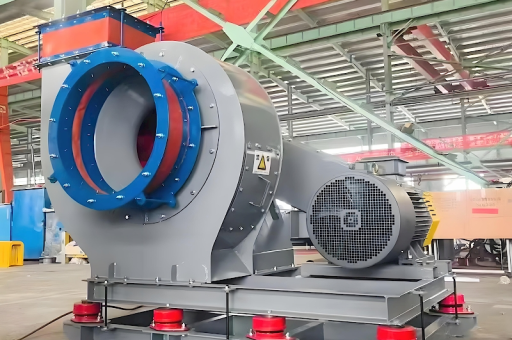
A high-pressure centrifugal fan is a mechanical device that moves air or gas by converting rotational kinetic energy into steady flow. In an explosion-proof context, these fans deliver high static pressure (often exceeding 2000 Pa) and are used to push air through long ductwork, filter systems, or into process vessels.
Key components of a high-pressure centrifugal fan:
- Impeller: Designed for high-speed rotation. In explosion-proof models, this is constructed from non-ferrous alloys to prevent frictional sparking.
- Housing: Typically cast iron or stainless steel with a reinforced structure to contain internal explosions.
- Motor: Totally enclosed, fan-cooled (TEFC) or specifically designed for Class I Division 1 environments.
- Shaft seal & bearings: Sealed to prevent gas ingress and lubricant leakage.
Unlike axial fans, centrifugal units generate higher pressure, making them suitable for pushing through restrictive filters, long pneumatic conveyor lines, and wind turbine nacelles where cooling must be forced through tight gaps.
Core Design Principles of Explosion Proof Technology
To meet safety standards, an industrial explosion proof blower must follow these engineering principles:
- Non-sparking construction: The impeller and casing gap must be tight enough to prevent impact ignition. Materials like phosphor bronze, stainless steel, or aluminum alloys are used.
- Cooling and thermal management: Surface temperatures must stay below the auto-ignition temperature of the surrounding gas or dust. Temperature codes (T1–T6) are strictly enforced.
- Sealed electrical components: All wiring, terminals, and motor windings are encapsulated or enclosed in explosion-proof junction boxes.
- Pressure containment: If an internal explosion occurs, the housing must withstand the pressure and cool the escaping gases to safe temperatures (flame path principle).
Example for wind turbine applications: In a direct-drive wind turbine enclosure, hydrogen can accumulate during battery venting. An explosion-proof high-pressure centrifugal fan ensures forced ventilation without creating an ignition source.
Key Applications Across High-Risk Industries
Oil & Gas Refineries
These facilities require continuous ventilation for confined spaces around storage tanks and processing units. High-pressure centrifugal fans push heavy vapors away from sensitive areas.
Chemical Processing Plants
Where volatile solvents are handled, explosion-proof blowers maintain negative pressure in glove boxes, reactors, and storage rooms.
Pharmaceutical Cleanrooms
Some zones require both sterile air and explosion-proof rating due to alcohol or solvent vapors used in sterilization.
Grain Storage & Food Processing
Combustible dust (e.g., grain flour, sugar) demands a high-pressure fan with dust-ignition-proof (DIP) certification. Here, the wind turbine enclosure analogy holds: just as a wind turbine must cool its gearbox without introducing sparks, a grain mill must ventilate without igniting suspended dust.
Wind Turbine Cooling Systems
Modern wind turbines use explosion-proof centrifugal fans inside nacelles to protect against hydrogen gas from backup battery systems, as well as oil mist from hydraulic systems.
Critical Selection Criteria – What Engineers Must Know
When choosing an industrial explosion proof blower, engineers should evaluate:
- Classification of Hazardous Area: Is it Class I (gas), Class II (dust), or Class III (fibers)? Temperature class and gas group (A, B, C, D) determine material compatibility.
- Static Pressure Requirement: High-pressure centrifugal fans are rated up to 5000 Pa or more. Calculate the total system resistance including ducts and filters.
- Flow Rate (CFM or m³/h): Must match the required air changes per hour (ACH) for the environment.
- Certification: Look for ATEX (EU), IECEx (international), or NEC/CEC (North America). These certifications prove the fan has been tested for explosive atmospheres.
- Material of Construction: For corrosive environments (e.g., chlorine plants), use stainless steel or coated aluminum. For non-sparking requirements, use bronze impellers.
- Mounting & Maintenance: In tight spaces such as a wind turbine nacelle, a compact inline design is preferred. Ensure bearings are accessible for periodic lubrication.
FAQ: Common Questions About Explosion Proof Blowers
Q1: Can a standard high-pressure centrifugal fan be used in a hazardous area?
No. Standard fans are not spark-proof or temperature-controlled. Using them in classified areas violates OSHA, NFPA, and local codes and creates serious explosion risk.
Q2: What is the difference between an explosion-proof motor and an explosion-proof fan?
An explosion-proof motor is just one component. An explosion-proof blower includes the motor, housing, impeller, and seals—all engineered to contain or prevent ignitions. The entire assembly must be certified.
Q3: How does an explosion-proof centrifugal fan prevent dust explosions?
It incorporates smooth surfaces, minimal tight gaps, and heat management. Dust-ignition-proof (DIP) fans also feature sealed bearings and external cooling fins to keep surface temperatures below the dust cloud's flash point.
Q4: Are explosion-proof blowers suitable for wind turbine nacelle cooling?
Absolutely. As wind turbine enclosures become more compact, the risk of hydrogen gas accumulation from batteries increases. An industrial explosion proof blower with high static pressure ensures safe, forced ventilation in this confined, vibration-prone setting.
Q5: How often should I inspect an explosion-proof high-pressure fan?
Per NFPA 70B and manufacturers’ guidelines, quarterly visual inspections and annual full disassembly checks are recommended. Look for corrosion, impeller wear, and seal integrity.
SEO-Optimized Conclusion & Next Steps
Selecting the right Industrial Explosion Proof Blower – High Pressure Centrifugal Fan is a matter of both operational efficiency and human safety. From chemical refineries to wind turbine nacelles, these fans provide reliable, spark-free airflow under extreme conditions.
To make the best choice for your facility:
- Verify the hazardous area classification with a certified engineer.
- Match fan materials to the specific gas or dust group.
- Always prioritize certified units from manufacturers with ATEX, IECEx, or NEC approvals.
Remember: In explosion-proof applications, there is no second chance. A single spark can lead to catastrophic loss. By investing in a properly rated, high-pressure centrifugal explosion-proof blower, you protect your assets, your people, and your compliance.
For more technical specifications and application examples involving explosion-proof fans and wind turbine cooling systems, consult the latest edition of IEC 60079 and NFPA 497.





