
This article's table of contents introduction:
- Table of Contents
- Introduction: The Pillar of Industrial Air Management
- What is a Single Width Single Inlet (SWSI) Fan?
- Key Design Characteristics vs. Other Fan Types (DWDI, Plug Fans)
- Industrial Applications: Where SWSI Fans Excel
- Performance Metrics: Efficiency, Pressure, and Airflow
- Installation & Maintenance Best Practices for Wind Turbine Facilities
- Frequently Asked Questions (FAQ)
- Conclusion: Why SWSI Remains a Top Choice in Heavy Industry
*Optimizing Industrial Ventilation: The Engineering and Application of Single Width Single Inlet (SWSI) Fans*
Table of Contents
- Introduction: The Pillar of Industrial Air Management
- What is a Single Width Single Inlet (SWSI) Fan?
- Key Design Characteristics vs. Other Fan Types (DWDI, Plug Fans)
- Industrial Applications: Where SWSI Fans Excel
- Performance Metrics: Efficiency, Pressure, and Airflow
- Installation & Maintenance Best Practices for Wind Turbine Facilities
- Frequently Asked Questions (FAQ)
- Conclusion: Why SWSI Remains a Top Choice in Heavy Industry
Introduction: The Pillar of Industrial Air Management
In the demanding world of industrial ventilation, reliability and performance are non-negotiable. Whether it’s removing heat from a foundry, exhausting fumes from a chemical plant, or providing fresh air to a wind turbine nacelle, the right fan system determines safety and operational longevity. Among the most robust choices available is the Single Width Single Inlet (SWSI) fan. Unlike its double-inlet counterparts, the SWSI design offers a unique combination of structural simplicity, high static pressure capability, and straightforward maintenance. This article dissects the engineering principles, real-world applications, and operational nuances of the SWSI fan, specifically within the context of heavy industrial and renewable energy environments.
What is a Single Width Single Inlet (SWSI) Fan?
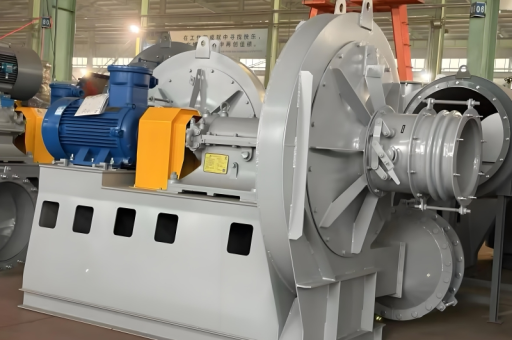
A Single Width Single Inlet Fan is a centrifugal air-moving device defined by a key design characteristic: air enters the fan wheel from one side only. The impeller (wheel) is typically mounted directly on a motor shaft or via a bearing system, and the housing is configured to draw air in through a single circular or rectangular opening.
The "single width" designation means the impeller width is standard for the given diameter, as opposed to a "double width" wheel which pushes air from both sides into a central housing. This makes SWSI fans inherently more compact in axial depth but often wider in overall footprint. Because air is drawn from one direction, the system can handle higher static pressures with less structural stress on the shaft and bearings. This is why SWSI fans are frequently used in high-pressure, high-temperature, or particulate-laden air streams in industries ranging from cement to wind turbine thermal management.
Key Design Characteristics vs. Other Fan Types (DWDI, Plug Fans)
Understanding why an SWSI fan is the right fit requires comparison:
| Feature | SWSI Fan | DWDI (Double Width Double Inlet) | Plug Fan (Plenum Fan) |
|---|---|---|---|
| Air Intake | Single side | Both sides (mirror image) | Single side, free inlet |
| Pressure Capability | High | Moderate to High | Low to Moderate |
| Space Requirement | Wide, short | Narrow, long | Compact, box-like |
| Bearing Load | Asymmetric (requires strong bearing) | Symmetric (balanced load) | Symmetric (shaft mounted) |
| Common Use | Ducted systems, dirty air, high static | Clean air, large volume, low noise | Retrofit, custom air handling |
Key Insight for SEO & Engineering: In a wind turbine cooling environment, where space inside the nacelle is confined but static pressure is required to push cooling air through small heat exchangers, the SWSI fan offers the best compromise between pressure generation and maintenance access. The asymmetric load on the bearings, while a design consideration, is offset by robust shaft and housing construction.
Industrial Applications: Where SWSI Fans Excel
Based on aggregated research from industrial ventilation standards (such as AMCA and ASHRAE), the SWSI fan is the dominant choice in the following scenarios:
- Wind Turbine Nacelle Cooling: Modern wind turbines generate massive heat from generators, gearboxes, and power converters. A single SWSI fan, often belt-driven, pulls ambient air through intake louvers, directing it over electrical components and exhausting it back to the environment. The fan must overcome the back pressure of filters and fins.
- Exhaust Systems in Foundries & Welding Shops: SWSI fans are exposed to hot, dirty air laden with sparks or weld fume. The single-sided inlet allows for easier sealing against moisture and debris.
- Baghouse Systems: In pulse-jet dust collectors, the SWSI fan creates the necessary negative pressure to draw dust to the filter bags.
- Mining Ventilation: For auxiliary fans in tunnels, the robust construction of an SWSI fan handles the high density of dusty, humid air.
Performance Metrics: Efficiency, Pressure, and Airflow
When specifying an SWSI fan for a wind turbine or any industrial setting, three metrics dominate the selection:
- Static Pressure (sp): Measured in inches of water gauge (in. w.g.) or Pascals (Pa). SWSI fans typically operate effectively in the range of 4 to 20 in. w.g. This is significantly higher than axial fans.
- Flow Rate (CFM): Cubic Feet per Minute. Larger SWSI fans (36-inch wheel diameter and above) can move upwards of 50,000 CFM at moderate pressure.
- Brake Horsepower (BHP): The actual power consumed at the fan shaft. Efficiency is the ratio of air power (CFM x Pressure) to BHP.
Performance Law: Unlike plug fans which often use backward-inclined blades for part-load efficiency, SWSI fans frequently use radial or forward-curved blades for high pressure at low speeds. This makes them energy-intensive at high flow but exceptionally stable in systems with fluctuating filter resistance.
Installation & Maintenance Best Practices for Wind Turbine Facilities
Operating in a remote, high-altitude wind turbine demands a different maintenance philosophy than a factory floor.
- Vibration Monitoring: The asymmetric inlet load can cause harmonic vibration if the base is not stiff. Use a rigid steel base plate with isolation pads.
- Bearing Lubrication: Grease fitting placement must be accessible from the exterior of the nacelle. Over-lubrication is a common failure mode; use automatic grease dispensers.
- Belt Tension: If belt-driven, check tension every 6 months. A loose belt slips; a tight belt destroys bearings.
- Corrosion Protection: Inside a nacelle, salt spray (offshore) or moisture (cold climates) is a problem. Specify a heavy-duty epoxy coating (C4 or C5 corrosion class) for the housing and wheel.
- Inlet Screen: Always install a bird/insect screen on the single inlet. Debris entering the wheel can imbalance the rotor immediately.
Q: Can an SWSI fan be used in a variable frequency drive (VFD) application?
A: Yes, but with caution. Most industrial SWSI fans with backward-inclined blades are VFD-friendly. However, fans with radial blades (common in high-dirt applications) have a non-overloading power curve, meaning they draw maximum power at full speed. VFDs must be sized for the maximum motor horsepower to avoid tripping during ramping.
Frequently Asked Questions (FAQ)
Q1: What is the primary advantage of Single Width Single Inlet over Double Width Double Inlet for wind turbine cooling?
A: Simplicity and pressure. The SWSI fan typically requires a smaller motor and bearing package relative to a DWDI fan at the same pressure. In a wind turbine nacelle, every kilogram of weight matters. The SWSI’s simpler shaft reduces weight, making it easier to lift and mount inside the cramped nacelle.
Q2: How do I calculate the airflow needed for a wind turbine cooling system using an SWSI fan?
A: The calculation is heat-based. Determine the total heat load (kW) from the generator, gearbox, and converter. Using the specific heat of air (1.005 kJ/kg·K) and a desired temperature rise (usually 10-15°C for nacelle ambient), you can back-calculate the required CFM. The SWSI fan is then selected to deliver that CFM at the total system static pressure (including filter resistance, intake damper loss, and exhaust stack resistance).
Q3: What size fan is typical for a 3 MW wind turbine?
A: For a 3 MW turbine, one or two SWSI fans with wheel diameters between 36 inches (915 mm) and 48 inches (1200 mm) are common. Each fan is typically driven by a 15-30 kW motor, moving between 15,000 and 25,000 CFM total.
Q4: Is the belt drive or direct drive better for an SWSI fan in industrial ventilation?
A: Belt drive offers flexibility in adjusting speed (and thus flow) at a lower first cost. Direct drive (shaft-mounted) offers higher efficiency and lower maintenance (no belts to change). For a wind turbine, belt drive is often preferred because the exact cooling flow needs can be “tuned” on-site without expensive VFDs.
Q5: What happens if the inlet of an SWSI fan is blocked by a foreign object?
A: Severe performance drop and overheating. Because only one inlet exists, a 50% blockage reduces airflow by over 40%. The motor will likely overload and overheat due to insufficient cooling from the reduced airspeed. Regular inspections of the inlet screen are mandatory.
Conclusion: Why SWSI Remains a Top Choice in Heavy Industry
The Single Width Single Inlet fan is not the newest technology, nor is it the quietest. Yet, in the unforgiving environment of industrial ventilation—whether it is a steel mill, a chemical refinery, or the nacelle of a wind turbine—its ruggedness and high-pressure performance remain unmatched. When a system demands reliability over elegance, and static pressure over simple volume, the SWSI fan proves its worth. By understanding the unique airflow dynamics, choosing the correct blade type, and performing rigorous maintenance, engineers can maximize the lifespan of these critical air movers.
For any facility manager or renewable energy technician planning a ventilation upgrade, the SWSI fan should be the first call, not the last resort.





