
This article's table of contents introduction:
- Table of Contents
- Introduction: The Role of ID Boiler Fans in Industrial Systems
- Understanding Low Pressure Industrial ID Boiler Fans
- Key Features: Free Standing Design, CE & ISO Approval
- Technical Specifications and Performance Metrics
- Installation Considerations and Maintenance Best Practices
- Frequently Asked Questions (FAQ)
- Conclusion: Why Compliance and Design Matter for Long-Term Operations
*
High-Efficiency Low Pressure Industrial ID Boiler Fan: Free Standing Design with CE & ISO Approval – A Comprehensive Guide*
Table of Contents
- Introduction: The Role of ID Boiler Fans in Industrial Systems
- Understanding Low Pressure Industrial ID Boiler Fans
- Key Features: Free Standing Design, CE & ISO Approval
- Technical Specifications and Performance Metrics
- Installation Considerations and Maintenance Best Practices
- Frequently Asked Questions (FAQ)
- Conclusion: Why Compliance and Design Matter for Long-Term Operations
Introduction: The Role of ID Boiler Fans in Industrial Systems
In industrial boiler systems, the Induced Draft (ID) fan plays a critical role by drawing combustion gases out of the boiler and maintaining negative pressure within the furnace. Among the various types available, the Low Pressure Industrial ID Boiler Fan with a Free Standing configuration and CE & ISO Approval has become a preferred choice for many facilities due to its reliability, safety compliance, and energy efficiency.
This article delves into the design, approval standards, and operational benefits of such fans. We will also answer common queries to help engineers and procurement professionals make informed decisions.
Understanding Low Pressure Industrial ID Boiler Fans
A low pressure ID fan is specifically designed for systems where the static pressure requirement is relatively low—typically below 1000 Pa—but where a high volume of gas flow is necessary. These fans are commonly used in:
- Small-to-medium scale steam boilers
- Heat recovery systems
- Biomass and coal-fired industrial furnaces
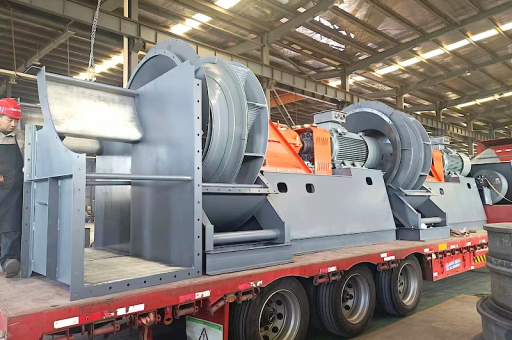
The fan works by creating a vacuum that pulls flue gases through the boiler, heat exchangers, and finally into the chimney. The free standing design means the fan is not directly mounted on the boiler structure, reducing vibration transmission and allowing flexible placement within the plant layout.
Key Features: Free Standing Design, CE & ISO Approval
Free Standing Configuration
- Floor-mounted base frame provides excellent stability.
- Isolates the fan from boiler-induced vibrations.
- Easier to access for maintenance and inspection.
- Allows use of larger motors and impellers without structural constraints.
CE Approval
CE marking indicates that the product complies with EU safety, health, and environmental protection standards. For industrial fan systems, CE approval typically covers:
- Low Voltage Directive (LVD)
- Machinery Directive
- Electromagnetic Compatibility (EMC)
ISO Approval
ISO certification (e.g., ISO 9001 for quality management, ISO 14001 for environmental management) ensures that the fan is manufactured under strict quality control processes. It guarantees:
- Consistent product performance
- Traceability of materials
- Continuous improvement practices
Both CE and ISO approvals are frequently required by international buyers and insurance companies, especially in Europe, the Middle East, and Southeast Asia.
Technical Specifications and Performance Metrics
While exact specifications vary by manufacturer, a typical Low Pressure Industrial ID Boiler Fan with free standing design offers:
| Parameter | Typical Range |
|---|---|
| Air Volume | 5,000 – 80,000 m³/h |
| Static Pressure | 200 – 1000 Pa |
| Impeller Diameter | 500 – 1500 mm |
| Motor Power | 2 – 75 kW |
| Operating Temperature | Up to 250°C (with cooling wheel optional up to 400°C) |
| Material Options | Carbon steel, Corten steel, Stainless steel |
The fan housing is often reinforced to withstand corrosion from acidic flue gases. Dynamic balancing of the impeller is a standard procedure to minimize noise and vibration.
Note: For systems requiring high-temperature resistance, a cooling disc or shaft insulation is recommended. For integration with renewable energy systems like a wind turbine, the fan can serve as a backup draft unit during low wind periods.
Installation Considerations and Maintenance Best Practices
Installation:
- The fan base should be placed on a concrete foundation with vibration dampeners.
- Inlet ducting must be designed to avoid turbulence and pressure drops.
- Proper alignment between the motor and impeller shaft is critical.
- Ensure the electrical wiring matches the motor’s voltage and phase requirements.
Maintenance:
- Weekly: Visual inspection of belt tension, oil levels, and vibration.
- Monthly: Clean impeller blades to prevent dust buildup and imbalance.
- Quarterly: Check bearings and replace lubricant if necessary.
- Annually: Full inspection of housing, seals, and CE/ISO compliance documentation.
A well-maintained Low Pressure ID Boiler Fan can operate reliably for over 10 years, even under continuous duty cycles.
Frequently Asked Questions (FAQ)
Q1: What is the main difference between a forced draft (FD) fan and an induced draft (ID) fan?
A: An FD fan pushes air into the boiler, while an ID fan pulls combustion gases out. A low pressure ID fan is designed for the exhaust side with lower resistance, whereas FD fans often handle higher static pressures.
Q2: Why is free standing design preferred over inline mounting?
A: Free standing fans reduce vibration transfer to the boiler structure, allow easier access, and can be repositioned if the plant layout changes. They also support larger motors and impellers.
Q3: Are CE and ISO certifications mandatory for all industrial fans?
A: While not legally required everywhere, CE is mandatory in the European Economic Area. Many international projects also mandate ISO 9001 compliance. Without these approvals, insurance coverage may be limited.
Q4: Can a low pressure ID fan be used with a biomass boiler?
A: Yes, but the fan material must resist corrosion from acidic flue gases. Stainless steel or coated carbon steel is recommended. A self-cleaning impeller design is also beneficial.
Q5: How does this fan integrate with a wind turbine?
A: In hybrid energy systems, the boiler fan can be powered by electricity generated from a wind turbine, reducing grid dependency. Some plants also use wind turbines to assist with dilution air or cooling. However, the fan itself is not part of the wind turbine — the term refers to the power supply integration.
Conclusion: Why Compliance and Design Matter for Long-Term Operations
The Low Pressure Industrial ID Boiler Fan with a Free Standing design and CE & ISO Approval represents a robust, compliant, and efficient solution for modern industrial boiler systems. Its ability to handle moderate pressures while maintaining high flow rates makes it ideal for a wide range of applications—from steam generation to heat recovery.
When selecting a fan, always verify that the manufacturer provides the original CE declaration of conformity and valid ISO certificates. A compliant fan not only ensures operational safety but also simplifies export, insurance, and plant inspection processes. Combined with routine maintenance, this fan type delivers long service life and predictable performance, even when integrated with alternative energy sources like a wind turbine.
For engineers and plant managers, the choice is clear: invest in a proven, certified fan design, and you will see returns in reliability, efficiency, and peace of mind.





