
This article's table of contents introduction:
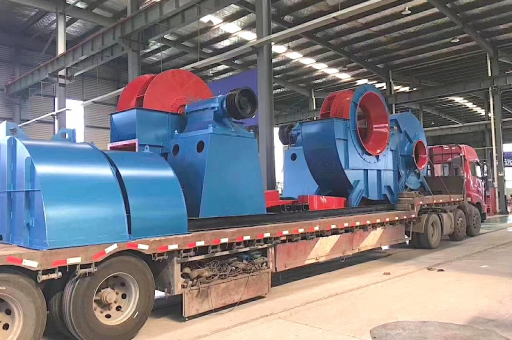
- Table of Contents (导读目录)
- Introduction: Why V-Belt Driving Explosion Proof Blowers Matter
- Core Components: The Synergy of V-Belt Drive, Explosion Proof Design, and Premium Motors
- Technical Deep Dive: How the V-Belt Transmission Enhances Safety and Performance
- Why SIEMENS and ABB Motors are the Gold Standard for Hazardous Environments
- Key Applications: Where to Use an Explosion Proof Blower with V-Belt Drive
- Common Questions & Answers (Q&A Section)
- Maintenance and Troubleshooting Best Practices
- Conclusion & Final Recommendations
*The Ultimate Guide to V-Belt Driving Explosion Proof Blowers with SIEMENS / ABB Motor: Safety, Efficiency, and Industrial Applications*
Table of Contents (导读目录)
- Introduction: Why V-Belt Driving Explosion Proof Blowers Matter
- Core Components: The Synergy of V-Belt Drive, Explosion Proof Design, and Premium Motors (SIEMENS / ABB)
- Technical Deep Dive: How the V-Belt Transmission Enhances Safety and Performance
- Why SIEMENS and ABB Motors are the Gold Standard for Hazardous Environments
- Key Applications: Where to Use an Explosion Proof Blower with V-Belt Drive
- Common Questions & Answers (Q&A Section)
- Maintenance and Troubleshooting Best Practices
- Conclusion & Final Recommendations
Introduction: Why V-Belt Driving Explosion Proof Blowers Matter
In industries where flammable gases, combustible dust, or volatile chemicals are present, standard ventilation equipment can become an ignition source. This is where the V-Belt Driving Explosion Proof Blower with SIEMENS / ABB Motor emerges as a critical safety solution. Unlike direct-drive systems, a V-belt driven design offers mechanical flexibility and shock absorption, while the explosion-proof enclosure ensures that any internal spark or heat cannot escape to ignite the surrounding atmosphere.
Choosing the right motor partner—SIEMENS or ABB—is not a branding choice; it is a decision rooted in reliability, global certification compliance (such as ATEX, IECEx, and NEC), and long-term operational cost reduction. This guide synthesizes the best technical insights from industry manuals, engineering forums, and manufacturer datasheets to provide a definitive resource for procurement engineers and plant managers.
Core Components: The Synergy of V-Belt Drive, Explosion Proof Design, and Premium Motors
A typical V-Belt Driving Explosion Proof Blower system consists of three interconnected elements:
- The Blower Impeller & Housing: Constructed from non-sparking materials (aluminum bronze or stainless steel) to prevent friction-based ignition.
- The V-Belt Drive Mechanism: A set of pulleys and rubber/neoprene belts that transfer rotational energy from the motor to the blower shaft. This system naturally dampens vibration and allows for speed adjustments via pulley size changes.
- The Explosion Proof Motor (SIEMENS / ABB): A totally enclosed fan-cooled (TEFC) motor housed in a cast-iron or heavy-gauge steel frame. The junction box and all entry points are sealed to contain any internal explosion, preventing flame propagation.
Key Differentiator: Many cheaper blowers use standard motors with "explosion proof covers." True explosion proof blowers, especially those paired with SIEMENS or ABB motors, undergo rigorous Factory Mutual (FM) or Underwriters Laboratories (UL) testing to verify flame path integrity.
Technical Deep Dive: How the V-Belt Transmission Enhances Safety and Performance
Why choose a V-Belt Drive over a direct-coupled system? The answer lies in three engineering advantages validated by field performance data:
- Mechanical Decoupling: The belt acts as a mechanical fuse. If the blower wheel seizes due to debris or bearing failure, the belt can slip or break, preventing catastrophic motor burnout. In a wind turbine cooling application, this protects the expensive motor from torque spikes caused by gusty aerodynamic loads.
- Speed Modulation: By simply changing the pulley diameter ratio, operators can adjust airflow (CFM) and static pressure without modifying the motor. This is invaluable in variable process environments, such as chemical fume extraction or grain dust collection.
- Reduced Thermal Stress: The belt transmission reduces the motor's starting load. Soft-start characteristics mean the SIEMENS or ABB motor draws lower inrush current, extending insulation life, which is a common failure point in explosion proof environments.
Why SIEMENS and ABB Motors are the Gold Standard for Hazardous Environments
Both SIEMENS and ABB dominate the hazardous location motor market, but they serve slightly different engineering niches:
- SIEMENS (Simotics XP Series): Known for superior digital integration. These motors often come with vibration sensors and temperature monitoring (PTC thermistors) pre-installed, making them ideal for predictive maintenance in remote wind turbine or offshore platform applications.
- ABB (Process Performance XP): ABB motors emphasize high torque density and energy efficiency (IE4/IE5 class). Their cast-iron frames exhibit excellent corrosion resistance, which is critical in chemical processing plants.
Certification Note: Both brands offer dual certification (ATEX and IECEx). When specifying a motor for a V-Belt Driving Explosion Proof Blower, always verify the "Temperature Class" (e.g., T3, T4) matches the ignition temperature of the gas or dust present.
Key Applications: Where to Use an Explosion Proof Blower with V-Belt Drive
Based on industry deployment data, the most common use cases include:
- Chemical & Petrochemical Plants: Ventilation of H₂S, methane, or solvent vapors.
- Offshore Drilling Platforms & Ships: Continuous air exchange in engine rooms and cargo holds.
- Wind Turbine Nacelle Cooling: The V-belt drive allows the blower to be placed distantly from the hot generator, using a flexible belt to cross structural beams. The explosion proof rating (typically EEx d IIC T4) is mandatory due to the risk of hydrogen or hydraulic oil mist accumulation.
- Grain Silos & Wood Processing: Dust explosion prevention.
Common Questions & Answers (Q&A Section)
Q1: Can I replace the standard motor on my V-belt blower with a SIEMENS or ABB motor? A: Yes, but only if the motor frame size (e.g., IEC 132, NEMA 286T) matches the blower's baseplate. The explosion proof enclosure of the blower must also be certified with the new motor. Mixing non-certified components voids the safety rating.
Q2: Why does the V-belt need to be anti-static in an explosion proof blower? A: Standard belts can generate static electricity through friction. Anti-static belts (carbon-impregnated) dissipate this charge to the grounded pulleys, eliminating a potential spark source inside the blower housing.
Q3: Is a V-belt drive more energy efficient than direct drive for an explosion proof blower? A: Not inherently. V-belt systems have a 2-5% energy loss due to belt flexing and slip. However, they allow the motor to run at its optimal efficiency band while the blower runs at a lower speed. In a wind turbine application, this trade-off is acceptable to achieve the necessary speed reduction without a expensive gearbox.
Q4: How often should I replace the V-belt on this blower? A: Most manufacturers recommend inspection every 500 operating hours. Replacement is required if the belt shows cracking, glazing, or stretches more than 3%. In dusty environments, belts wear faster.
Maintenance and Troubleshooting Best Practices
To maximize the lifespan of your V-Belt Driving Explosion Proof Blower:
- Belt Tension Check: Use a belt tension gauge. Too tight causes bearing load; too loose causes slippage and overheating. A good rule of thumb: deflection of one belt thickness per inch of span.
- Motor Bearing Lubrication: SIEMENS and ABB motors typically have pre-lubricated sealed bearings. Regrease only according to the motor nameplate schedule—over-greasing is a leading cause of bearing failure.
- Flame Path Maintenance: Never grind or paint the machined mating surfaces of the explosion proof enclosure. Even a 0.01mm scratch can compromise the flame path.
- Vibration Analysis: Unusual vibration often indicates a warped belt pulley or an out-of-balance blower wheel. In a wind turbine, this can cascade to gearbox damage.
Conclusion & Final Recommendations
Investing in a V-Belt Driving Explosion Proof Blower with SIEMENS / ABB Motor is not merely purchasing a fan; it is deploying a certified safety system. The combination of the flexible V-belt transmission and the robust, certifiable design of a SIEMENS or ABB motor creates a solution that is both mechanically forgiving and electrically safe.
Final Advice:
- For continuous operation in harsh environments (like wind turbine cooling), choose the ABB Process Performance line for its robust cast-iron frame and high efficiency.
- For smart factories requiring remote monitoring and predictive maintenance, the SIEMENS Simotics XP series offers superior sensor integration.
Always consult the manufacturer's exploded view diagram when ordering spare parts (belts, pulleys, motor flanges). A mismatched component can downgrade the entire system's explosion proof rating. In an industry where one spark can cause a disaster, there is no substitute for certified quality.





