
This article's table of contents introduction:
- Table of Contents
- Introduction: What Is a Backward Curved Explosion Proof Blower?
- How Does a Backward Curved Blower Work?
- Why “Explosion Proof” Matters in Hazardous Environments
- Key Differences: Backward Curved vs. Forward Curved vs. Radial Blowers
- Critical Design Features of Explosion Proof Blowers
- Top Applications in Oil, Gas, Chemical, and Wind Turbine Industries
- Common Questions & Expert Answers
- Selection Criteria & Maintenance Best Practices
- Conclusion: Why This Blower Is a Safety Benchmark
** The Ultimate Guide to Backward Curved Explosion Proof Blowers: Design, Safety, and Industrial Applications
Table of Contents
- Introduction: What Is a Backward Curved Explosion Proof Blower?
- How Does a Backward Curved Blower Work?
- Why “Explosion Proof” Matters in Hazardous Environments
- Key Differences: Backward Curved vs. Forward Curved vs. Radial Blowers
- Critical Design Features of Explosion Proof Blowers
- Top Applications in Oil, Gas, Chemical, and Wind Turbine Industries
- Common Questions & Expert Answers
- Selection Criteria & Maintenance Best Practices
- Conclusion: Why This Blower Is a Safety Benchmark
Introduction: What Is a Backward Curved Explosion Proof Blower?
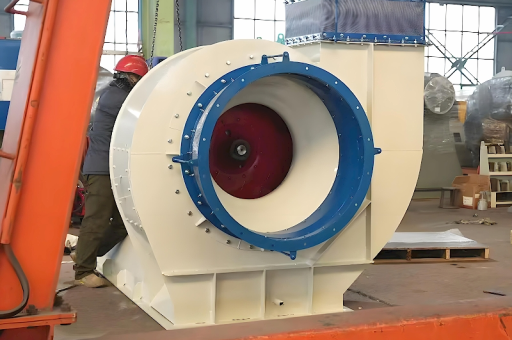
A Backward Curved Explosion Proof Blower is a specialized air-moving device designed to handle hazardous atmospheres where flammable gases, vapors, or dust particles are present. Unlike standard fans, these blowers feature impellers with blades that curve away from the direction of rotation, combined with spark-proof construction materials and explosion-proof motor enclosures.
In industries ranging from chemical processing to wind turbine cooling systems, these blowers deliver high static pressure, low noise, and exceptional energy efficiency—all while preventing any ignition source from escaping into dangerous environments. According to industrial safety standards such as ATEX, IECEx, and NEC Class I Division 1, these units must pass rigorous spark and temperature testing.
Reader’s Insight: If you are designing ventilation for an offshore platform, a hydrogen plant, or a wind turbine nacelle cooling loop, this blower type is often the safest and most efficient choice.
How Does a Backward Curved Blower Work?
The fundamental operating principle of a backward curved blower relies on the shape and orientation of its impeller blades. The blades curve opposite to the direction of rotation, which creates a unique airflow pattern: air enters the impeller axially, is accelerated by the centrifugal force, and exits radially at higher velocity.
Key mechanics:
- Low turbulence: The backward curve reduces eddy currents, preventing energy loss.
- Non-overloading power curve: Unlike forward curved fans, the power requirement plateaus and then slightly drops at higher flow rates. This prevents motor burnout in variable system conditions.
- High efficiency: Typical static efficiencies range from 65% to 82%, depending on the specific design.
Application Example: In wind turbine thermal management, these blowers pull hot air from the generator and power converters, expelling it through flame-proof ducts without creating a spark risk.
Why “Explosion Proof” Matters in Hazardous Environments
The term explosion proof does not mean the blower itself cannot explode internally. Instead, it means the blower’s housing can contain an internal explosion without allowing flames or hot gases to escape into the surrounding atmosphere.
Critical engineering requirements:
- Flame path gaps: Precisely machined joints (typically <0.006 inches) cool escaping gases below ignition temperature.
- Motor enclosure: Explosion-proof motors (e.g., Class I, Group C/D) prevent sparks from reaching volatile compounds.
- Non-sparking materials: Impellers made of aluminum bronze or stainless steel with anti-static coatings.
- External earthing: Continuous grounding to dissipate electrostatic charges.
Important Note: In wind turbine nacelle installations, where hydrogen may accumulate from battery banks or cooling gas leaks, a backward curved explosion proof blower is mandatory to meet IEC 60079-0 and IEC 60079-1 standards.
Key Differences: Backward Curved vs. Forward Curved vs. Radial Blowers
| Feature | Backward Curved Blower | Forward Curved Blower | Radial (Paddle Wheel) Blower |
|---|---|---|---|
| Blade Curve Direction | Away from rotation | Toward rotation | Straight radial |
| Efficiency | High (65–82%) | Medium (50–65%) | Low (40–60%) |
| Static Pressure Capability | High | Low | Very High |
| Power Curve | Non-overloading | Overloading | Overloading |
| Noise Level | Low | Moderate | High |
| Best Application | Clean air, low particulate | HVAC, low-pressure ducts | High dust, pneumatic conveying |
Why choose backward curved for explosion proof?
Its non-overloading power curve prevents motor overheating, a common ignition source. Combined with high efficiency, it reduces heat generation inside the housing—a safety advantage in gas-laden environments.
Critical Design Features of Explosion Proof Blowers
To meet certification standards, manufacturers incorporate several key design features:
- Casing: Heavy-duty cast aluminum or fabricated steel with reinforced wall thickness (typically ≥ 3/16 inch for Group D gases).
- Shaft seals: Labyrinth seals or carbon ring seals prevent gas migration into motor compartments.
- Bearing isolators: Non-sparking labyrinth isolators extend bearing life and reduce friction heat.
- External cooling fins: These dissipate motor heat without requiring internal airflow that could carry explosive gases.
- Certification markings: Visible ATEX or UL labels indicating gas group, temperature class (T3, T4), and permissible ambient range.
Real-world application: In an LNG liquefaction plant, backward curved explosion proof blowers equipped with PTFE shaft seals have been operating continuously for 8+ years without incident.
Top Applications in Oil, Gas, Chemical, and Wind Turbine Industries
- Oil & Gas Processing Plants: Ventilation of compressor shelters, LPG storage areas, and pump rooms.
- Chemical Manufacturing: Removal of flammable solvent vapors from reactor enclosures.
- Pharmaceutical Purity Zones: Explosion-proof laminar flow systems for volatile drying processes.
- Wind Turbine Nacelle Cooling: Prevents heat buildup in generators, transformers, and power electronics while eliminating any arc-spark risk from metal debris.
- Mining & Tunneling: Forced ventilation in potentially methane-rich underground environments.
Case Example: A 5 MW wind turbine manufacturer recently retrofitted all nacelle cooling systems with backward curved explosion proof blowers after a fire incident caused by a conventional fan bearing failure. The retrofit reduced average nacelle temperature by 12°C and eliminated vibration-related shutdowns.
Common Questions & Expert Answers
Q1: Can a backward curved explosion proof blower handle dust-laden air?
A: Generally, these blowers are designed for clean air. For moderate dust loads, you must use an abrasion-resistant impeller (e.g., hardened steel) and a pre-filter. For heavy dust, a radial blower is safer.
Q2: What is the maximum operating temperature for such a blower?
A: Typical temperature classes range from T3 (200°C max) to T4 (135°C max). For special applications, custom units with ceramic bearings can reach T2 (300°C).
Q3: How do I verify if a blower is truly “explosion proof”?
A: Check for third-party certification labels (ATEX, IECEx, UL, CSA). Confirm the product data sheet includes gas group compatibility (e.g., IIA, IIB, IIC) and temperature class.
Q4: Are backward curved explosion proof blowers suitable for hydrogen environments?
A: Yes, provided the unit is certified for Group IIC (hydrogen) and has maximum surface temperature < T1 (450°C). Non-sparking bronze impellers and explosion-proof conduit entries are required.
Selection Criteria & Maintenance Best Practices
Selection checklist:
- Gas classification: Identify gas group (A, B, C, or D) and temperature class.
- Flow & pressure: Use fan laws to match system resistance curve.
- Material compatibility: Ensure impeller and casing resist chemical corrosion.
- Mounting orientation: Horizontal or vertical? Some models require drains for condensate.
- Vibration monitoring: Specify accelerometer ports for predictive maintenance.
Maintenance tips:
- Inspect flame paths every 6 months for rust or debris (use feeler gauge to check gap).
- Lubricate bearings with explosion-proof grease (low volatility, high dropping point).
- Replace shaft seals at first sign of leak to prevent gas ingress into motor.
- Conduct thermography scanning annually to detect hot spots.
Conclusion: Why This Blower Is a Safety Benchmark
Selecting a Backward Curved Explosion Proof Blower is not simply a technical decision—it is a safety commitment. In facilities where the cost of an ignition could be catastrophic, the combination of non-overloading power characteristics, high efficiency, and robust flame-proof construction provides unmatched reliability.
From petrochemical refineries to advanced wind turbine cooling systems, this product class has proven its value. Always consult with certified engineers and reference the latest IEC 60079 or NFPA 496 standards before procurement. With proper selection and maintenance, a backward curved explosion proof blower can deliver decades of safe, silent, and energy-efficient service.
For further reading: Visit manufacturer technical manuals on ATEX-certified fans or reach out to an industrial ventilation specialist for your specific project requirements.





