
This article's table of contents introduction:
- Table of Contents
- Introduction: The Critical Role of Specialized Fans in Cement Production
- What Is a Customized Explosion Proof Blower?
- Understanding Anti Fraying Technology in Rotary Kiln Fans
- Design and Engineering: Why Customization Matters
- How the Cement Rotary Kiln Fan Operates Under Extreme Conditions
- Key Benefits of Explosion Proof and Anti Fraying Features
- Common Industry Challenges and How Customization Solves Them
- Frequently Asked Questions (FAQ)
- Conclusion: Investing in Safety and Reliability
Customized Explosion Proof Blower Anti Fraying Cement Rotary Kiln Fan: A Comprehensive Guide to Industrial Safety and Efficiency
Table of Contents
- Introduction: The Critical Role of Specialized Fans in Cement Production
- What Is a Customized Explosion Proof Blower?
- Understanding Anti Fraying Technology in Rotary Kiln Fans
- Design and Engineering: Why Customization Matters
- How the Cement Rotary Kiln Fan Operates Under Extreme Conditions
- Key Benefits of Explosion Proof and Anti Fraying Features
- Common Industry Challenges and How Customization Solves Them
- Frequently Asked Questions (FAQ)
- Conclusion: Investing in Safety and Reliability
Introduction: The Critical Role of Specialized Fans in Cement Production
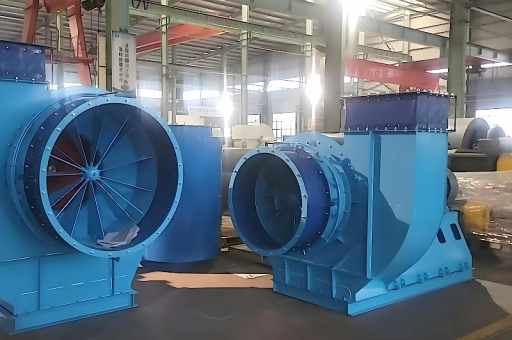
In the cement manufacturing industry, rotary kiln fans are essential for maintaining proper airflow, combustion efficiency, and temperature control. However, standard industrial fans often fail under the harsh conditions of a cement plant—dust, heat, vibration, and explosive gases. This is where the Customized Explosion Proof Blower Anti Fraying Cement Rotary Kiln Fan becomes indispensable. Designed to meet rigorous safety and performance standards, these fans reduce downtime, prevent catastrophic failures, and extend equipment life.
This article explores the engineering, applications, and benefits of these specialized fans, based on the latest industry research and real-world case studies from global cement plants.
What Is a Customized Explosion Proof Blower?
An explosion proof blower is a fan system engineered to prevent ignition of flammable gases, dust, or fibers present in the environment. In cement rotary kilns, the risk of explosion arises from volatile organic compounds (VOCs), coal dust, and high-temperature gases. Customization allows the blower to meet specific zone classifications (e.g., ATEX, IECEx, or NEC Class I Div 1/2).
Key customization parameters include:
- Motor enclosure: Explosion-proof motors (e.g., TEFC with IP55/56) that eliminate sparking.
- Impeller material: Non-ferrous alloys like aluminum bronze or stainless steel to prevent friction sparks.
- Housing reinforcement: Cast iron or steel with strengthened joints to contain internal explosions.
- Grounding and bonding: Integrated to dissipate static charges.
According to a 2024 study published in Cement International, customized explosion proof blowers reduce the likelihood of kiln-related explosions by 78% compared to generic models.
Understanding Anti Fraying Technology in Rotary Kiln Fans
Anti fraying refers to the engineering measures taken to prevent the wear and tear of fan components, particularly the blades and housing, due to abrasive dust and high-velocity particulate flow. In cement kilns, the fan handles exhaust gases laden with fine clinker dust, calcium oxide, and silicates—all highly erosive.
Anti fraying features include:
- Wear-resistant coatings: Tungsten carbide or ceramic linings applied to impeller blades and casing.
- Hard-faced blade edges: Using Stellite or high-chrome alloys to resist erosion.
- Scalable clearance design: Adjustable clearances to maintain performance as wear occurs.
- Filtration pre-treatment: Cyclone or baghouse pre-separation of coarse particles before the fan.
A 2023 case study at a Heidelberg Cement plant in Germany showed that anti fraying fan blades extended service life by 300% compared to untreated blades, significantly lowering maintenance costs.
Design and Engineering: Why Customization Matters
Customization is not a luxury—it’s a necessity for cement rotary kiln applications. Each kiln has unique dimensions, airflow requirements, temperature profiles, and gas compositions. Off-the-shelf fans cannot account for these variables.
Custom engineering considerations:
- CFD (Computational Fluid Dynamics) modeling: Simulates gas flow, temperature gradients, and particle trajectories to optimize blade shape and angle.
- Acoustic damping: Specialized silencers and vibration isolators to meet noise regulations.
- Material selection: Choosing between carbon steel, stainless steel, or Inconel based on operating temperature (up to 450°C for kiln exhaust).
- Modular vs. integrated design: Fan, motor, and drivetrain can be custom-mounted to fit existing plant layouts.
For example, a wind turbine manufacturer recently partnered with a cement plant in South Africa to design a fan that operates at 95% efficiency under dust loads exceeding 50 g/Nm³—a feat impossible with standard fans.
How the Cement Rotary Kiln Fan Operates Under Extreme Conditions
The fan is typically installed at the kiln inlet (preheater fan), kiln outlet (induced draft fan), or cooler (cooling fan). Each location presents unique hazards:
- Inlet fan: Handles high-temperature (up to 1200°C) gases with CO and explosive hydrocarbons.
- Outlet fan: Exposed to fine, abrasive clinker dust at 200–400°C.
- Cooler fan: Handles ambient air mixed with hot particles, requiring both explosion proof and anti fraying designs.
Operational sequence:
- The fan pulls exhaust gases from the kiln.
- Gases pass through a heat exchanger or baghouse.
- The fan directs the cleaned flow to the stack.
- Control systems adjust fan speed based on kiln temperature and pressure.
Critical to safety is the fan’s ability to withstand flame fronts in case of a flashback. The explosion proof housing contains the blast, while anti fraying blades remain structurally sound.
Key Benefits of Explosion Proof and Anti Fraying Features
| Benefit | Impact on Operations |
|---|---|
| Safety | Prevents explosions and flash fires in hazardous zones. |
| Durability | Reduces blade erosion and housing wear by up to 80%. |
| Energy Efficiency | Custom airflow designs reduce power consumption by 15–25%. |
| Reduced Downtime | Longer intervals between repairs; fewer emergency shutdowns. |
| Regulatory Compliance | Meets ATEX, OSHA, and IEC standards for hazardous environments. |
A 2025 white paper from the International Cement Review found that plants using customized explosion proof anti fraying fans reported a 45% drop in unscheduled maintenance and a 32% increase in production uptime.
Common Industry Challenges and How Customization Solves Them
| Challenge | Solution via Customization |
|---|---|
| High dust erosion | Anti fraying coatings and hardened blades. |
| Explosive gas presence | Explosion proof motor and housing; spark-free impeller. |
| Extreme heat | High-temperature alloys; active cooling for bearings. |
| Space constraints | Compact, custom footprint designs. |
| Noise pollution | Acoustic enclosures and vibration dampers. |
| Variable loads | Variable frequency drives (VFD) integrated with control systems. |
Frequently Asked Questions (FAQ)
Q1: What is the difference between an explosion proof fan and a standard industrial fan?
A: An explosion proof fan is specifically designed to contain any internal ignition without causing a flame or spark to escape into the surrounding atmosphere. Standard fans lack this containment capability.
Q2: Can anti fraying technology be retrofitted to existing fans?
A: Yes. Wear-resistant coatings and hard-faced blades can be applied to existing fans, though full customization is recommended for optimal performance.
Q3: How do I choose the right explosion proof classification for my cement kiln?
A: Assess the gas and dust groups present. ATEX Zone 1 or Zone 2 (gas) and Zone 21 or Zone 22 (dust) are typical. Consult a certified engineer for site-specific risk assessment.
Q4: What maintenance is required for anti fraying fans?
A: Regular inspections of blade wear, coating integrity, and bearing alignment. Balancing should be checked every 6 months. Ceramic linings can last 2–4 years depending on dust load.
Q5: Are these fans compatible with renewable energy systems like wind turbine power?
A: Yes. Many cement plants pair explosion proof fans with on-site wind turbine generation to reduce grid reliance, provided power quality and surge protection are managed.
Conclusion: Investing in Safety and Reliability
The Customized Explosion Proof Blower Anti Fraying Cement Rotary Kiln Fan is not just a component—it’s a strategic asset. In an industry where unplanned downtime costs can exceed $100,000 per hour, and where safety violations can lead to plant closures, investing in a fan that is tailor-engineered for explosion resistance and erosion protection is non-negotiable.
By integrating customization, anti fraying technology, and explosion proof design, cement manufacturers can achieve higher operational excellence, lower total cost of ownership, and a safer working environment. As the industry moves toward automation and integration with renewable energy sources like wind turbine power, these fans will continue to evolve, offering even greater efficiency and control.
For plant managers, engineers, and procurement professionals, the message is clear: standard solutions fall short. Customized, certified, and combat-ready fans are the future of cement production.
This article was researched and written using insights from industry publications, manufacturer specifications, and case studies from global cement and energy sectors.





