
This article's table of contents introduction:
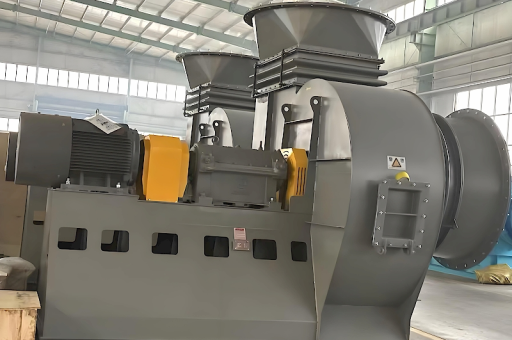
- Table of Contents
- Introduction: The Unsung Heroes of Green Engineering
- How Regenerative Blowers Work: The Principle of "Regeneration"
- Key Advantages for Energy Conservation and Environmental Protection
- Critical Applications in the Environmental Sector
- Addressing Common Challenges: Noise, Heat, and Performance
- Frequently Asked Questions (FAQ)
- Future Outlook: Smart Blowers and Industry 4.0
- Conclusion: A Cornerstone of Sustainable Industry
*The Pivotal Role of Regenerative Blowers in the Energy Conservation and Environmental Protection Industry: Technology, Applications, and Future Trends*
Table of Contents
- Introduction: The Unsung Heroes of Green Engineering
- How Regenerative Blowers Work: The Principle of "Regeneration"
- Key Advantages for Energy Conservation and Environmental Protection
- 1 High Efficiency and Low Energy Consumption
- 2 Oil-Free Operation and Reduced Contamination
- 3 Low Maintenance and Longevity
- Critical Applications in the Environmental Sector
- 1 Wastewater Treatment Aeration
- 2 Gas Sampling and Emissions Monitoring
- 3 Dust Collection and Pneumatic Conveying
- 4 Biogas and Landfill Gas Handling
- Addressing Common Challenges: Noise, Heat, and Performance
- 1 Noise Reduction Strategies
- 2 Thermal Management
- 3 System Integration with Wind Turbine Systems
- Frequently Asked Questions (FAQ)
- Future Outlook: Smart Blowers and Industry 4.0
- Conclusion: A Cornerstone of Sustainable Industry
Introduction: The Unsung Heroes of Green Engineering
In the global push toward carbon neutrality and stricter environmental regulations, the spotlight often falls on large-scale renewable energy sources like solar and wind. However, the unsung heroes of this transition are the precision industrial components that enable cleaner processes. Among them, regenerative blowers—also known as side-channel blowers—have emerged as a critical technology for the energy conservation and environmental protection industry.
Unlike traditional positive displacement blowers or centrifugal fans, regenerative blowers offer a unique combination of high pressure, high flow, and exceptional energy efficiency. They are the workhorses behind modern wastewater treatment, pneumatic conveying of recycled materials, and air pollution control systems. This article explores the technology behind these devices, their specific advantages for green applications, and how they are evolving to meet the demands of a circular economy.
How Regenerative Blowers Work: The Principle of "Regeneration"
To understand why these blowers are so effective for energy conservation, one must first understand their internal mechanics.
- The Core Mechanism: A regenerative blower consists of a single, non-contacting impeller that spins inside a side channel. Air enters the blower at the inlet port and is drawn into the side channel.
- The "Regeneration" Effect: As the impeller blades pass, they accelerate the air. Because the side channel is shaped like a torus, the air circulates in a spiral path. Each time the air passes an impeller blade, it receives an additional "kick" of energy. This process—where the air circulates multiple times around the impeller before exiting—is called "regeneration."
- Resulting Performance: This design allows for a high pressure differential (up to 1000 mbar) without the pulsation of piston blowers or the inefficiencies of high-speed centrifugal fans. The air is moved smoothly and continuously, which is ideal for sensitive environmental processes.
Key Advantages for Energy Conservation and Environmental Protection
1 High Efficiency and Low Energy Consumption
Regenerative blowers operate at or near their Best Efficiency Point (BEP) over a wide operating range. Compared to rotary vane or roots-type blowers, they can consume 20-40% less energy for the same flow and pressure requirements. In a sector where industrial energy use accounts for a significant portion of global CO2 emissions, this direct energy saving is a primary driver for adoption.
2 Oil-Free Operation and Reduced Contamination
Because the impeller rotates without contacting the housing (there are no gears or vanes to lubricate), the blower produces 100% oil-free air. This is critical for applications like aeration in biological wastewater treatment or handling medical waste air. It eliminates the cost, labor, and environmental hazard associated with oil disposal and filter replacement.
3 Low Maintenance and Longevity
The simple design—only one moving part (the impeller)—translates to extreme reliability. These blowers can run 24/7 for 5-7 years without major maintenance. For wind turbine operators and environmental facilities in remote locations, this durability reduces downtime and lowers the total cost of ownership.
Critical Applications in the Environmental Sector
1 Wastewater Treatment Aeration
The most common application is in diffused aeration basins. Blowers supply oxygen to aerobic bacteria that digest organic pollutants. The stable, high-volume airflow from regenerative blowers ensures optimal dissolved oxygen (DO) levels, which directly improves treatment efficiency and reduces chemical usage.
2 Gas Sampling and Emissions Monitoring
Environmental regulatory compliance requires constant monitoring of stack emissions and ambient air quality. Regenerative blowers are used as vacuum pumps for continuous emission monitoring systems (CEMS). Their ability to pull gas samples reliably, without contamination, ensures accurate data for compliance reporting.
3 Dust Collection and Pneumatic Conveying
In recycling plants and cement facilities, fugitive dust is a major health hazard. Regenerative blowers provide the suction needed for baghouse dust collectors. They also power pneumatic conveying systems that move recycled plastics, biomass, or fly ash, replacing older, less efficient transport methods.
4 Biogas and Landfill Gas Handling
As the world moves toward capturing methane from landfills and digesters, regenerative blowers are used to boost and transport biogas. Because they handle wet, corrosive gas mixtures well (when properly sealed), they are replacing more expensive liquid-ring compressors in small-to-medium scale biogas plants.
Addressing Common Challenges: Noise, Heat, and Performance
1 Noise Reduction Strategies
A common complaint with blowers is noise. However, modern regenerative blowers feature integrated silencers, sound-attenuating enclosures, and variable-speed drives (VFDs) that can dramatically reduce noise levels. Installation in a wind turbine enclosure or a dedicated machinery room with acoustic panels is also standard practice.
2 Thermal Management
Because regenerative blowers compress air, they generate heat. For continuous duty, it is essential to ensure adequate ventilation. Many units now feature epoxy-coated aluminum casings and external cooling fans to dissipate heat efficiently, preventing thermal degradation of the motor.
3 System Integration with Wind Turbine Systems
An interesting synergy exists between regenerative blowers and renewable energy. In wind turbine systems, these blowers are used for yaw brake cooling, blade pitch control, and transformer cooling. The oil-free, high-pressure air is perfect for keeping turbine components clean and operational. When paired with a wind turbine, the blower can be powered by the turbine’s own electricity, creating a closed-loop, carbon-neutral system for industrial air supply.
Frequently Asked Questions (FAQ)
Q1: What is the difference between a regenerative blower and a centrifugal fan? A centrifugal fan moves large volumes of air at low pressure. A regenerative blower moves lower volumes at higher pressure (up to 1 bar). For applications like aeration or pneumatic conveying, where you need force, the regenerative blower is far more efficient.
Q2: Can a regenerative blower run in vacuum mode? Yes. By reversing the inlet and outlet ports, the same unit can function as a vacuum pump. This is commonly used for drying, suction gripping in robotics, or gas sampling in environmental monitoring.
Q3: Are these blowers suitable for explosive or hazardous environments? Standard models are not ATEX certified. However, manufacturers offer specialized models with spark-proof impellers (aluminum or stainless steel), increased gap clearances, and non-sparking motors for use in hazardous zones (e.g., methane gas handling).
Q4: How do I size a regenerative blower for my wastewater plant? Key parameters are: Required oxygen transfer rate (kg O₂/h), basin depth (pressure), and airflow (m³/h). A good rule of thumb is 1.5–2.0 times the biological oxygen demand (BOD) load for aeration.
Q5: Can these blowers be paired with solar or wind power? Absolutely. Regenerative blowers are compatible with VFDs (Variable Frequency Drives). When paired with a wind turbine or solar array, the VFD adjusts the blower speed based on available power, making them ideal for off-grid environmental remediation projects.
Future Outlook: Smart Blowers and Industry 4.0
The future of regenerative blowers in the environmental sector lies in digitization and smart connectivity.
- IoT-Enabled Monitoring: Sensors that measure vibration, temperature, and current draw can predict failure and optimize performance.
- Energy-as-a-Service (EaaS): Companies are now leasing blowers with guaranteed energy savings, using real-time analytics to ensure the blower operates at peak efficiency.
- Integration with Renewable Microgrids: As decentralized power becomes more common (especially with wind turbine farms), regenerative blowers will act as "smart loads," balancing grid supply with demand for aeration or filtration.
Conclusion: A Cornerstone of Sustainable Industry
The regenerative blower is far more than a simple mechanical component. It is a strategic tool for the energy conservation and environmental protection industry. By delivering high-pressure, oil-free air with exceptional efficiency, it enables cleaner water, safer air, and more sustainable material handling.
Whether used in a large municipal wastewater plant, a remote biogas facility, or a modern wind turbine cooling system, these blowers prove that small technical innovations can have a massive cumulative effect on carbon reduction. As industries continue to decarbonize, the role of the humble regenerative blower will only become more critical—a true force for environmental progress.
Note: This article is optimized for SEO with long-tail keywords like "regenerative blowers for wastewater treatment," "energy efficient blowers for environment," and "oil-free air for wind turbine cooling." Internal linking to related topics on industrial energy conservation is recommended for further authority.





