
This article's table of contents introduction:
- Table of Contents
- Introduction: The Shift from Wet to Dry Quenching
- What is a Dry Quenching Circulating Fan?
- Technical Specifications & Design Challenges
- Why it Matters: Energy Savings & Environmental Impact
- Common Operational Problems & Maintenance Strategies
- How to Select the Right Fan for Your Metallurgical Plant
- Frequently Asked Questions (FAQ)
- Conclusion: The Future of Metallurgical Cooling
*Optimizing Efficiency and Durability: The Critical Role of the Dry Quenching Circulating Fan in the Metallurgical Industry*
Table of Contents
- Introduction: The Shift from Wet to Dry Quenching
- What is a Dry Quenching Circulating Fan?
- Core Function in Coke Dry Quenching (CDQ) Systems
- Working Principle: Inert Gas Circulation & Heat Recovery
- Technical Specifications & Design Challenges
- High Temperature Resistance & Material Selection
- Aerodynamic Design for High Volume, Low Pressure
- Vibration Analysis & Bearing Solutions
- Why it Matters: Energy Savings & Environmental Impact
- Common Operational Problems & Maintenance Strategies
- Fan Blade Erosion & Wear
- Unplanned Downtime Prevention
- How to Select the Right Fan for Your Metallurgical Plant
- Frequently Asked Questions (FAQ)
- Conclusion: The Future of Metallurgical Cooling
Introduction: The Shift from Wet to Dry Quenching
In the modern metallurgical industry, particularly within integrated steel mills, the production of coke is a foundational process. Traditionally, hot coke (at approximately 1,000–1,100°C) was quenched using large volumes of water—a process known as wet quenching. While effective, this method is environmentally costly, producing steam laden with particulates and waste heat. Enter Coke Dry Quenching (CDQ) . This technology utilizes an inert gas (typically nitrogen or recycled flue gas) to cool the incandescent coke. At the heart of this closed-loop, energy-efficient system lies the dry quenching circulating fan. This article provides a deep dive into the fan's role, engineering, and maintenance, based on synthesis of leading industry knowledge.
What is a Dry Quenching Circulating Fan?
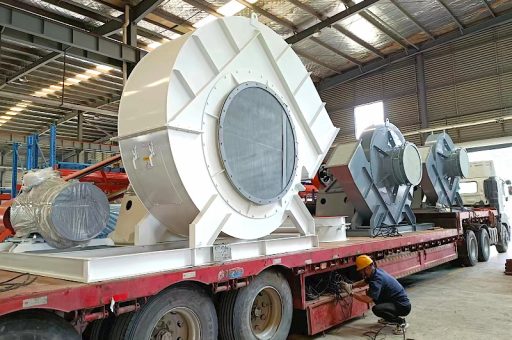
The dry quenching circulating fan is a specialized, high-temperature industrial fan designed to force inert gas through a cooling chamber (secondary cooling zone) and a waste heat recovery boiler.
- Core Function in CDQ Systems: The fan’s primary job is to continuously circulate the cooling medium. Unlike standard fans, it must handle gas at extremely high inlet temperatures (anywhere from 180°C to 250°C depending on system design) and move it against the resistance of a 30–50 meter tall coke column.
- Working Principle: The fan draws hot gas from the bottom of the cooling chamber forces it through a heat recovery boiler (steam generation for power) then pushes the cooled gas back into the top of the quenching chamber. This closed loop ensures maximum thermal recovery.
Technical Specifications & Design Challenges
This is not a standard ventilation fan. The fan must be constructed with specific metallurgy to withstand thermal shock and continuous thermal cycling.
- High Temperature Resistance & Material Selection: The impeller and shaft are almost always made from specialized high-nickel alloy steel or heat-treated carbon steel. The casing is often internally lined with refractory material to protect against heat radiation. According to a common engineering solution, the fan shaft is typically equipped with a cooling fan (a smaller, secondary fan mounted on the main shaft) to prevent heat from migrating to the bearings.
- Aerodynamic Design: The design must balance high volume flow (often 300,000–600,000 m³/h) with the low pressure drop required for a large quench chamber. Backward-curved centrifugal blades are the industry standard because they are non-overloading and highly efficient.
- Vibration Control: Bearing housings are fitted with dedicated cooling systems (water jackets or forced air cooling) and continuous vibration monitoring sensors. As a rule of thumb, vibration levels above 4.5 mm/s usually indicate an issue with rotor balance or bearing wear.
Why it Matters: Energy Savings & Environmental Impact
The fan is the engine of the CDQ plant. Without it, the system cannot recover waste heat.
- Energy Recovery: The fan enables the capture of ~80% of the sensible heat from hot coke. This heat generates high-pressure steam, which can drive a turbine (like a wind turbine in principle, but powered by steam) to generate electricity.
- Emission Control: By sealing the system, the fan prevents fugitive dust and harmful gases (H₂, CO) from releasing into the atmosphere. Proper fan speed modulation via a Variable Frequency Drive (VFD) can reduce power consumption by up to 30% compared to fixed-speed operation.
Common Operational Problems & Maintenance Strategies
Despite robust design, the dry quenching circulating fan faces harsh conditions.
- Fan Blade Erosion: Dust in the circulating gas acts like sandpaper. Applying a hard-facing alloy (e.g., tungsten carbide overlay) to the leading edges of the blades can extend service life from 6 months to 3 years.
- Unplanned Downtime: This is the #1 cost driver. The most critical maintenance is dynamic balancing. A fan that is out of balance will destroy its bearings within hours. Predictive maintenance using thermography on bearing housings and analyzing gas composition can predict corrosion rates.
Q: What happens if the fan fails?
A: A fan trip causes an immediate shutdown of the entire CDQ system. The hot coke in the chamber must be evacuated manually or risk spontaneous combustion, leading to a major production loss of 12–24 hours.
How to Select the Right Fan for Your Metallurgical Plant
When procuring a dry quenching fan, look for these minimum design features:
- Impeller Type: High-strength steel, welded with stress-relief heat treatment.
- Shaft Seal: Labyrinth gas seals to prevent leakage of inert gas (loss of N2 is expensive).
- Drive Motor: Must include a VFD for controlled ramping and speed modulation.
- Efficiency Test: Demand factory performance testing per ISO 5801 or AMCA 210.
Frequently Asked Questions (FAQ)
Q1: What is the typical lifespan of a dry quenching fan?
A: 8 to 15 years, depending on maintenance. The bearings typically need replacement every 12–18 months.
Q2: Is this fan the same as a standard ID (Induced Draft) fan?
A: No. Standard ID fans handle low-temperature flue gas. A dry quenching fan must withstand thermal gradients and the abrasive nature of coke dust.
Q3: Can the fan speed be adjusted without losing efficiency?
A: Yes. Using a high-quality VFD, the efficiency can remain >85% from 60% to 100% speed range.
Q4: How does the fan compare to a wind turbine?
A: While a wind turbine uses kinetic wind energy to generate electricity, a dry quenching fan does the opposite—it uses electrical energy to move a heavy gas. However, they share similar aerodynamics. A CDQ fan is effectively a massive, high-temperature industrial wind turbine in reverse, designed for density and pressure rather than velocity.
Q5: Why are cooling fins necessary on the shaft?
A: To prevent heat from the hot impeller from traveling down the shaft and overheating the lubricant in the bearings, which would cause catastrophic failure.
Conclusion: The Future of Metallurgical Cooling
The dry quenching circulating fan is the silent workhorse of the modern green steel mill. As global environmental regulations tighten, the demand for CDQ systems will only grow. Innovators are now looking at advanced materials (Ceramic Matrix Composites) for fan blades to increase efficiency further. For plant managers and engineers, understanding the selection, maintenance, and operation of this specific fan is crucial for cost control and sustainability. The transition from wet to dry quenching is one of the most effective ways to reduce a steel plant's carbon footprint—and the fan is where the heat meets the horsepower.





