
This article's table of contents introduction:
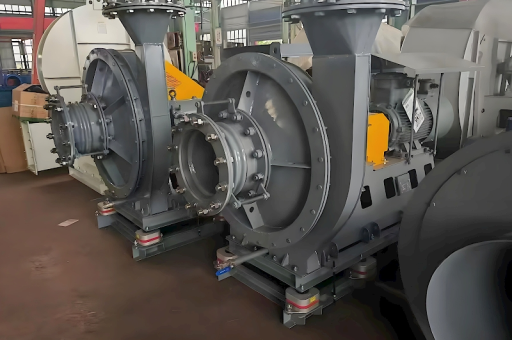
- Introduction: Why Exhaust Gas Management Matters in Fertilizer Production
- How Exhaust Gas Blowers Function in Fertilizer Dryer Systems
- Key Technical Specifications and Performance Metrics
- Common Operational Challenges and Troubleshooting
- Energy Efficiency and Environmental Compliance
- Frequently Asked Questions (FAQ)
- Conclusion: Future Trends in Blower Technology
** Optimizing Industrial Drying: The Critical Role of Exhaust Gas Blowers for Dryers in Fertilizer Plants
Table of Contents
- Introduction: Why Exhaust Gas Management Matters in Fertilizer Production
- How Exhaust Gas Blowers Function in Fertilizer Dryer Systems
- Key Technical Specifications and Performance Metrics
- Common Operational Challenges and Troubleshooting
- Energy Efficiency and Environmental Compliance
- Frequently Asked Questions (FAQ)
- Conclusion: Future Trends in Blower Technology
Introduction: Why Exhaust Gas Management Matters in Fertilizer Production
In a modern fertilizer plant, the drying process is one of the most energy-intensive and emission-critical stages. After granulation, fertilizers such as urea, ammonium nitrate, and NPK blends contain residual moisture (typically 2–6%) that must be removed to prevent caking and ensure product stability. This is achieved using rotary drum dryers, fluidized bed dryers, or belt dryers, all of which generate a massive volume of hot, moisture-laden, and chemically aggressive exhaust gas. This is where the exhaust gas blower for dryer in fertilizer plant becomes indispensable.
Without a properly sized and maintained blower, the dryer cannot maintain negative pressure, leading to dust leakage, reduced drying efficiency, and dangerous accumulation of combustible gases. Furthermore, exhaust gas blowers are the primary drivers for air pollution control systems, including cyclones, scrubbers, and bag filters. According to industry data from the International Fertilizer Association, a 10% drop in blower efficiency can increase energy consumption by up to 18% and reduce production throughput by 12%.
How Exhaust Gas Blowers Function in Fertilizer Dryer Systems
The fundamental role of an exhaust gas blower is to create a controlled vacuum within the dryer system. This vacuum ensures that heated air passes through the fertilizer bed uniformly, carrying away evaporated moisture. The blower operates at the outlet of the dryer, pulling the exhaust stream through a series of treatment stages.
Flow Path:
- Heated air enters the dryer inlet.
- Air interacts with tumbling fertilizer granules, absorbing moisture.
- Moisture-laden exhaust exits the dryer at 90–150°C.
- Exhaust gas blower draws this gas through a cyclone or scrubber.
- Cleaned gas is discharged to the atmosphere or recirculated for heat recovery.
Critical Design Considerations:
- Abrasion Resistance: Fertilizer particles and dust are highly abrasive. Blower impellers must be constructed from hardened steel or coated with wear-resistant materials such as tungsten carbide.
- Corrosion Protection: Ammonia and acidic gases (e.g., from phosphate fertilizers) attack standard carbon steel. Stainless steel (304L or 316L) or rubber-lined casings are standard.
- Variable Speed Control: Modern plants use VFD-driven blowers to adjust airflow in real-time, matching production load and reducing energy waste.
Key Technical Specifications and Performance Metrics
When selecting an exhaust gas blower for a fertilizer plant dryer, engineers must evaluate the following parameters:
| Parameter | Typical Range | Impact on Performance |
|---|---|---|
| Airflow (CFM) | 5,000 – 80,000 | Determines drying capacity |
| Static Pressure (in. w.g.) | 10 – 30 | Overcomes duct friction & scrubber resistance |
| Operating Temperature | 80°C – 200°C | Material selection guide |
| Impeller Speed (RPM) | 900 – 3,600 | Affects wear and noise |
| Motor Power (kW) | 15 – 250 | Drives operating cost |
Flow Measurement: It is best practice to install a Pitot tube array or ultrasonic flow meter at the blower inlet. This allows operators to monitor volumetric flow and detect fouling before it affects production.
Question: How often should performance testing be conducted on an exhaust gas blower in a fertilizer plant?
Answer: At a minimum, quarterly performance testing is recommended. However, for plants processing highly abrasive materials such as MAP (monoammonium phosphate) or DAP (diammonium phosphate), monthly vibration analysis and airflow measurements are strongly advised to catch impeller wear early.
Common Operational Challenges and Troubleshooting
Despite robust design, exhaust gas blowers in fertilizer plants face unique failure modes. Below are the most frequent issues reported in industry maintenance logs:
1 Impeller Imbalance Due to Fouling Wet fertilizer dust can adhere to the impeller blades, creating uneven mass distribution. This leads to excessive vibration, bearing failure, and potential shaft cracking. Fix: Install an online wash system with water or steam injection at the blower inlet.
2 Bearing Overheating High ambient temperature (often 40–50°C in plant environments) combined with radiative heat from the gas duct raises bearing housing temperatures. Fix: Use synthetic high-temperature grease and consider adding a dedicated cooling fan on the bearing housing.
3 Duct Corrosion Leakage Condensation in the ductwork creates acidic liquid that corrodes the blower casing. Fix: Insulate all duct sections and maintain the gas temperature above the acid dew point (typically 120–140°C for phosphate-based fertilizers).
Energy Efficiency and Environmental Compliance
Energy cost represents 30–40% of the total operating expense for a fertilizer dryer. Selecting the right blower can reduce this significantly.
Energy-Saving Strategies:
- Variable Frequency Drives (VFDs): Match blower speed to actual process demand. A 20% reduction in speed reduces power consumption by nearly 50% (affinity laws).
- High-Efficiency Impellers: Backward-curved airfoil impellers achieve 85% static efficiency, versus 65% for standard forward-curved designs.
- Heat Recovery Integration: By coupling the exhaust gas blower with a condensing heat exchanger, plants can preheat incoming combustion air, reducing burner fuel consumption by 8–15%.
Environmental Regulations: Most jurisdictions now enforce strict particulate matter (PM) limits. In the EU, the Industrial Emissions Directive (IED) requires PM concentrations below 10 mg/Nm³ for fertilizer dryers. The exhaust gas blower must maintain sufficient pressure to overcome the resistance of high-efficiency bag filters or wet electrostatic precipitators.
Question: What is the most common cause of non-compliance with dust emission limits in fertilizer plants?
Answer: Insufficient static pressure from the exhaust gas blower, often due to worn impeller blades or oversized bypass dampers left open. This reduces the capture velocity across the filter bags, allowing dust to bypass the cleaning system.
Frequently Asked Questions (FAQ)
Q1: Can a centrifugal blower be used instead of an axial blower for fertilizer dryer exhaust?
A: Centrifugal blowers are strongly preferred because they generate higher static pressure (essential for overcoming scrubber resistance) and are less sensitive to dust loading. Axial fans are only suitable for low-pressure, clean-gas applications.
Q2: What is the typical lifespan of an exhaust gas blower impeller in a fertilizer plant?
A: With proper material selection (e.g., 316L stainless steel or Fe‑5%Cr hardfacing) and regular cleaning, impellers last 3–5 years. However, in plants using phosphoric acid-based fertilizers, replacement may be required every 18–24 months.
Q3: Is it better to place the blower before or after the scrubber?
A: Most designs place the blower after the scrubber. This protects the blower from high dust loads and corrosive gases. However, this requires the blower to handle saturated gas at near-dew-point temperatures, so condensation-resistant materials are essential.
Conclusion: Future Trends in Blower Technology
The role of the exhaust gas blower for dryer in fertilizer plant is evolving beyond simple air movement. Modern trends include:
- Smart Monitoring: Integrated vibration sensors and AI-based predictive maintenance alerts.
- Hybrid Drive Systems: Combining electric motors with steam turbines for cogeneration plants.
- Zero-Emission Designs: Blowers sized to handle full recirculation loops as plants move toward closed-loop drying systems.
Plant managers who invest in condition-based maintenance and energy-efficient blower technologies will see a direct impact on their bottom line — lower downtime, reduced energy costs, and consistent compliance with tightening environmental regulations.
For long-term reliability, always specify impeller balancing to ISO 1940 G2.5 grade, and consult with blower OEMs who specialize in chemical processing applications. Remember, the exhaust gas blower is not just a fan — it is the lungs of your dryer system.





