
This article's table of contents introduction:
- Table of Contents
- Introduction
- What is a 280kW High Efficiency Low Pressure Centrifugal ID Fan?
- How It Works in a Boiler System
- Key Technical Specifications and Design Features
- Primary Benefits for Industrial Boiler Operations
- Installation and Maintenance Best Practices
- Frequently Asked Questions (FAQ)
- Conclusion
Article Title:
Maximizing Boiler Performance with a 280kW High Efficiency Low Pressure Centrifugal ID Fan: Design, Benefits, and Operational Insights
Table of Contents
- Introduction
- What is a 280kW High Efficiency Low Pressure Centrifugal ID Fan?
- How It Works in a Boiler System
- Key Technical Specifications and Design Features
- Primary Benefits for Industrial Boiler Operations
- Installation and Maintenance Best Practices
- Frequently Asked Questions (FAQ)
- Conclusion
Introduction
In modern industrial boiler systems, the need for reliable, energy-efficient air movement is critical. A key component in this setup is the 280kW high efficiency low pressure centrifugal induced draft (ID) fan. This fan is specifically engineered to handle the exhaust gases from a boiler while maintaining low static pressure and high volumetric flow. Compared to traditional fans, this model offers significant reductions in energy consumption, noise levels, and maintenance intervals. In this article, we explore the technology behind this fan, its role in boiler operations, and why it is becoming a top choice for power plants, chemical facilities, and heating plants.
What is a 280kW High Efficiency Low Pressure Centrifugal ID Fan?
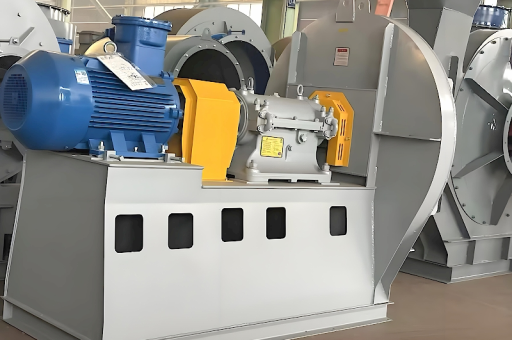
A 280kW high efficiency low pressure centrifugal ID fan is a specialized air-moving device used to draw flue gases out of a boiler, through ductwork, and into a chimney or emission control system. The "280kW" rating refers to the motor power, indicating a robust capability for medium- to large-scale industrial applications. The term "low pressure" does not imply weak performance—rather, it describes the fan’s design to move large volumes of gas at relatively low differential pressure, which is ideal for boiler draft systems. The "centrifugal" design uses a rotating impeller to accelerate gas outward, creating suction at the inlet.
How It Works in a Boiler System
In a typical boiler setup, the induced draft fan is located at the exit of the boiler. Its function is to create a negative pressure inside the furnace, ensuring that combustion gases are pulled through the heat exchange surfaces and out of the stack. The 280kW high efficiency low pressure centrifugal ID fan operates by drawing flue gases at high volume but low static pressure, which reduces mechanical stress on the fan and ductwork. The fan’s high efficiency design (often exceeding 85% aerodynamic efficiency) is achieved through advanced blade profiling and optimized housing geometry.
Key process flow:
- Combustion gases exit the boiler at high temperature.
- The ID fan draws these gases through economizers, scrubbers, or baghouses.
- Gases pass through the fan impeller, gaining velocity.
- The fan discharges gases into the stack with minimal pressure drop.
Key Technical Specifications and Design Features
When selecting a 280kW high efficiency low pressure centrifugal ID fan, the following specifications are typical:
- Motor Power: 280 kW (375 HP)
- Air Flow Capacity: 150,000 – 300,000 m³/h (depending on system resistance)
- Static Pressure: 1,500 – 3,500 Pa (low pressure range)
- Fan Speed: 600 – 1,000 RPM (adjustable via VFD)
- Blade Design: Backward-curved or airfoil blades for high efficiency
- Material: Carbon steel with wear-resistant coatings or stainless steel for corrosive gases
- Temperature Rating: Up to 400°C (with cooling or high-temp materials)
Design innovations include:
- Aerodynamic optimization: Computational fluid dynamics (CFD) used to reduce turbulence and noise.
- Vibration dampening: Precision balancing and robust bearing systems.
- Variable frequency drive compatibility: Allows precise control of gas flow and energy savings.
Primary Benefits for Industrial Boiler Operations
Energy Savings
The high efficiency design reduces power consumption by 15–25% compared to standard ID fans. For a 280kW fan, this translates to tens of thousands of dollars in annual electricity savings.
Enhanced Boiler Efficiency
By maintaining optimal negative pressure, the fan ensures complete combustion and minimizes heat loss through the stack.
Lower Maintenance Costs
Low pressure operation reduces wear on bearings, blades, and seals. Airfoil blades are less prone to erosion from particulate-laden flue gas.
Reduced Noise Levels
Advanced acoustic design and low rotational speed result in quieter operation—often below 85 dB(A) at 1 meter.
Environmental Compliance
The fan’s steady flow supports better performance of downstream emission control equipment like scrubbers and electrostatic precipitators.
Installation and Maintenance Best Practices
- Foundation and alignment: Ensure a rigid, vibration-dampening foundation. Use laser alignment for motor and fan shaft.
- Ductwork design: Minimize bends and use gradual transitions to avoid turbulence.
- Inlet and outlet dampers: Use louver or radial dampers for flow control without sacrificing efficiency.
- Lubrication: Use high-temperature grease for bearings. Schedule lubrication every 3 months.
- Blade inspection: Every 6 months, check for erosion, corrosion, or deposit buildup. Clean with compressed air or water jet.
- VFD settings: Program ramp-up/down times to avoid motor stress. Use PID control for precise draft regulation.
Common issue: If the fan operates at higher pressure than designed, it can cause motor overload or blade fatigue. Always operate within the manufacturer’s fan curve.
Frequently Asked Questions (FAQ)
Q1: What is the difference between an ID fan and a FD fan?
An induced draft (ID) fan pulls gases out of the boiler, creating negative pressure. A forced draft (FD) fan pushes air into the burner. The 280kW low pressure centrifugal ID fan is specifically for the exhaust side.
Q2: Can this fan handle high temperature flue gases?
Yes, but with limitations. Standard models handle up to 250°C. For higher temperatures (up to 400°C), use specialty materials like stainless steel or cooling shaft systems.
Q3: How much energy can I save by upgrading to a high efficiency model?
Typically 15–25% reduction in electricity consumption. For a 280kW fan running 8,000 hours/year at $0.08/kWh, you could save $26,880 to $44,800 annually.
Q4: What is the typical lifespan of this fan?
With proper maintenance and a clean gas stream, a high efficiency centrifugal ID fan can last 15–20 years. Regular blade and bearing inspection is essential.
Q5: Is the fan suitable for use with wind turbine auxiliary systems?
While the fan is optimized for boiler ID service, similar designs are sometimes used in wind turbine auxiliary cooling or ventilation systems, provided the pressure and flow requirements match.
Conclusion
The 280kW high efficiency low pressure centrifugal ID fan is a game-changer for industrial boiler systems. It delivers substantial energy savings, improves boiler efficiency, and reduces maintenance burden—all while maintaining quiet and reliable operation. By carefully selecting a high quality unit, adhering to proper installation guidelines, and following a proactive maintenance schedule, operators can expect a rapid return on investment and years of trouble-free service. Whether you are upgrading an existing boiler or designing a new system, this fan technology represents a smart, sustainable choice for demanding thermal processes.
For further technical consultation or custom sizing for your specific boiler and auxiliary system application, please contact your industrial fan manufacturer or a certified HVAC engineering consultant.





