
This article's table of contents introduction:
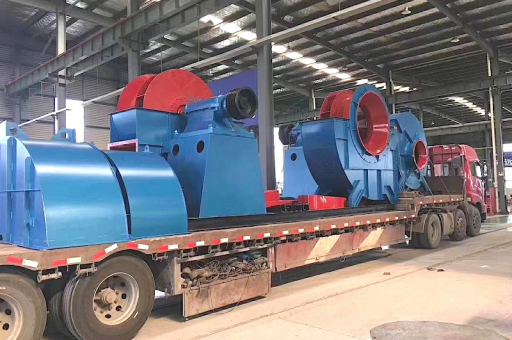
*Optimizing Smelter Performance: The Critical Role of Customized High-Efficiency Centrifugal Fans for Aluminum Plants*
Article Directory (Table of Contents)
- Introduction: The Unseen Backbone of Aluminum Smelting
- Why Standard Fans Fail in Aluminum Plant Environments
- Heat, Dust, and Corrosive Gas Challenges
- The Cost of Inefficiency in Potlines and Casthouses
- The Engineering Behind Customized High-Efficiency Centrifugal Fans
- Aerodynamic Design for High Static Pressure
- Material Selection: Abrasion Resistance and Corrosion Protection
- Variable Frequency Drive (VFD) Integration for Load Matching
- Key Applications in Aluminum Production
- Primary Reduction Potlines (Anode & Fume Extraction)
- Secondary Ingot Casting & Cooling
- Dust Collection Systems & Pneumatic Conveying
- Comparative Analysis: Custom vs. Standard Centrifugal Fans
- Energy Consumption (kW/h per ton of aluminum)
- Mean Time Between Failure (MTBF) & Maintenance Cycles
- Noise Level Reduction & Workplace Safety
- Case Study: Retrofitting a 500kA Smelter with Custom Fans
- Problem: Over-speeding and Premature Bearing Failure
- Solution: Custom Impeller Geometry & Shaft Seal Upgrades
- Result: 18% Energy Savings and 40% Longer Service Life
- Implementation & Procurement Guide
- Site Survey: Measuring Actual vs. Design Operating Points
- CFD Modeling for Impeller Optimization
- Important Certifications: ISO 5801, AMCA, and ATEX
- Q&A: Common Concerns from Plant Engineers
- Conclusion: The ROI of Prioritizing Fan Customization
Article Content
Introduction: The Unseen Backbone of Aluminum Smelting
In the high-stakes world of primary aluminum production, electrolytic reduction cells—or potlines—operate at temperatures approaching 960°C. While the chemical process of extracting molten metal from alumina is the headline act, the unsung hero keeping the plant running safely and efficiently is the industrial ventilation system. At the heart of this system lies the customized high-efficiency centrifugal fan.
Standard off-the-shelf fans often fail within months in this environment. The combination of fluoride-laden exhaust gases, sub-micron dust particles from anode baking, and the need for consistent negative pressure demands a specific engineering solution. This article provides a deep dive into the design, application, and financial justification for investing in customized high-efficiency centrifugal fans for aluminum plants. We will explore how these bespoke air movers reduce operational expenditure, increase equipment lifespan, and meet strict environmental compliance standards, offering a clear pathway to improved smelter profitability.
Why Standard Fans Fail in Aluminum Plant Environments
The environment inside an aluminum smelter is one of the most aggressive for rotating equipment. Standard industrial fans are simply not built for this level of punishment.
- Thermal Stress & Accretion Buildup: Potline exhaust gas can exceed 180°C and contains sticky tar vapors (from the Söderberg or pre-baked anode process). A standard fan impeller quickly accumulates these materials, causing imbalance. Vibration spikes lead to rapid bearing and shaft failure.
- Corrosive Chemistry: The dry scrubbing process processes hydrogen fluoride (HF) gas. Any accumulation of HF on standard carbon steel components causes pitting and catastrophic structural failure.
- Abrasive Wear: Alumina (Al₂O₃) powder is used for dry scrubbing. This highly abrasive powder, moving at high velocities, erodes standard impeller blades within 6–12 months.
- Operating Point Mismatch: Many plants purchase a "general purpose" fan that is oversized for typical operation but undersized for peak load. This forces the fan to operate far from its Best Efficiency Point (BEP), wasting energy and inducing vibration.
Common Failure Signs: Increased motor amperage, excessive shaft deflection, and blade tip cracks.
The Engineering Behind Customized High-Efficiency Centrifugal Fans
A custom solution for an aluminum plant is not just about scaling up a standard design. It involves specific aerodynamic and metallurgical engineering.
A. Aerodynamic Design for High Static Pressure Aluminum fume treatment systems require high static pressure (often >7,000 Pa) to overcome the resistance of baghouse filters and extensive ductwork. Custom fans use backward-curved airfoil blades or modified radial blades. These are designed via Computational Fluid Dynamics (CFD) to minimize inlet turbulence. The goal is to achieve a peak efficiency of 85% or higher at the exact operating pressure of the plant.
B. Material Selection
- Impeller: High-strength weathering steel (Corten) is common for its oxide layer that resists further corrosion. For extreme abrasive environments, the leading edge of blades is overlaid with Stellite (a cobalt-chromium hard-facing alloy). Alternatively, lined composite materials (ceramic tiles on steel) are used to extend life 3x.
- Housing: Often constructed from stainless steel 316L or duplex stainless steel to resist fluoride attack. A sacrificial internal coating (like Teflon or epoxy) is applied.
- Shaft Seals: Custom gas-purged labyrinth seals prevent process gas leakage into the bearing house, a major cause of grease degradation.
C. Variable Frequency Drive (VFD) Integration A high-efficiency fan is only as good as its control system. A customized fan package includes a dedicated VFD. This allows the fan to match the exact airflow demand. Instead of using a damper (which wastes energy as heat), the motor speed is modulated. This reduces energy consumption by the cube law: reducing speed by 10% cuts power consumption by 27%. For aluminum plants, this translates directly to reduced carbon tax liability and lower electricity bills.
Key Applications in Aluminum Production
The customized high-efficiency centrifugal fan is deployed in three major areas within an aluminum facility:
- Primary Reduction Potlines (GTC - Gas Treatment Centers): These are the largest fans in the plant. They pull exhaust from hundreds of pots simultaneously. Customization focuses on very high pressure (8,000–10,000 Pa) and massive volume (over 1,000,000 m³/h). The impeller must be balanced with extreme precision to handle the large diameter shaft and heavy assembly.
- Secondary Casting & Holding Furnaces: These fans must handle lower temperatures (around 700°C) but require combustion air for burner management. Custom designs often integrate cooling air jackets and special high-temperature seals.
- Material Handling (Pneumatic Conveying): Moving alumina from silos to potlines requires dense-phase conveying fans. Custom impellers feature wide passageways to prevent plugging, and the housing is lined with 12mm thick wear plates to survive the high-velocity particle impacts.
Comparative Analysis: Custom vs. Standard Centrifugal Fans
| Feature | Standard Centrifugal Fan | Customized High-Efficiency Fan |
|---|---|---|
| Efficiency at Design Point | 65% – 72% | 82% – 88% |
| Impeller Material | Mild Steel / Q235 | Corten A / Duplex SS / Stellite overlay |
| Bearing Life | 12–18 months | 36–60 months |
| Sealing System | Standard Labyrinth | Purged dual-labyrinth with carbon rings |
| Energy Consumption | Baseline (100%) | 15% – 25% lower per metric ton |
| Vibration Level | 5 mm/s (ISO 2372 Alert) | < 2.0 mm/s (ISO 2372 Good) |
| Noise Output | 90–95 dBA (requires silencer) | 80–85 dBA (airfoil design reduces turbulence) |
Key Finding: For a 200,000 ton per year smelter, a 20% improvement in fan efficiency can save over 5,000 MWh of electricity annually, equivalent to removing 800 passenger cars from the road in terms of emissions.
Case Study: Retrofitting a 500kA Smelter with Custom Fans
Background: A large Gulf Coast smelter operating a 500kA potline experienced catastrophic fan failures every 14 months. The standard radial-blade fans vibrated excessively after 9 months, leading to housing cracks.
Analysis: The original fan was off-the-shelf. CFD modeling revealed that the inlet cone caused flow separation at the blade root, creating a low-pressure zone where alumina dust accumulated. The imbalance caused instability.
Custom Solution:
- Impeller: Replaced with a backward-curved airfoil design made from 316L stainless steel. The blades were treated with a ceramic-polymer composite layer.
- Inlet Cone: Redesigned using a venturi profile to guide air smoothly into the eye of the impeller.
- Shaft & Bearings: Upgraded to a heavy-duty spherical roller bearing with an integrated grease flushing system.
- Monitoring: Installed vibration probes and a thermocouple for real-time condition monitoring connected to the plant DCS.
Results:
- Energy Savings: 18% reduction in kWh per ton of aluminum produced.
- MTBF Increase: Time between major repairs increased from 14 months to 48 months.
- Maintenance Cost: Reduced by 40% annually.
- Payback Period: The capital cost of the custom fan was recovered in 11 months via energy savings alone.
Implementation & Procurement Guide
When sourcing customized high-efficiency centrifugal fans for aluminum plants, follow this checklist to ensure a successful project:
- Real Site Survey: Do not rely on old ductwork drawings. Measure the actual static pressure drop at the baghouse inlet and the current damper position. Often, the design operating point has drifted due to duct degradation.
- CFD & FEA Verification: Demand a 3D CFD report showing the velocity streamlines and static pressure contours. Require Finite Element Analysis (FEA) for the shaft and impeller to guarantee mechanical strength at maximum speed.
- Certificate Requirements: Ensure the fan is tested according to ISO 5801 or AMCA 210 standards. For areas with explosive gas (hydrogen from potlines is a risk), the fan must have ATEX certification (specifically Ex II 2G T3 or similar).
- Modular Design: Insist on a split housing for heavy-duty fans. This allows for impeller removal without disassembling the entire ductwork, reducing downtime by 50%.
- Spare Parts: Purchase a spare impeller and bearing kit on day one. Custom parts have long lead times (12-20 weeks). Having a spare eliminates emergency shipping costs.
Q&A: Common Concerns from Plant Engineers
Q: "Are customized fans significantly more expensive than standard models?" A: Yes, the upfront cost is typically 30–50% higher. However, the Total Cost of Ownership (TCO) is 25% lower. You pay more for the iron, but you save far more on energy and labor over the fan's 15-year lifespan.
Q: "We have a baghouse with a pressure drop that changes seasonally. How does the custom fan handle this?" A: The custom fan, when paired with a VFD, adjusts speed automatically to maintain a constant duct static pressure. Unlike a standard fan with an inlet vane damper, the VFD reduces the motor's torque demand instantly. The custom impeller's wide operating range ensures that even at 60% speed, the fan is still operating at >70% efficiency.
Q: "What is the lead time for a fully customized fan?" A: Typically 14 to 22 weeks from order. This includes time for engineering review (2 weeks), CFD modeling (1-2 weeks), casting/forging of impeller parts (4-6 weeks), machining and dynamic balancing (2 weeks), and final assembly and testing (1 week). Off-the-shelf fans might have a 4-week lead time but will fail sooner.
Q: "Can I retrofit my existing fan housing with a custom impeller?" A: Often, yes. This is called an "impeller swap" or "wheel replacement." A competent manufacturer will survey your existing housing and design a custom impeller (diameter and width) that fits the old scroll. While efficiency gains are slightly less than a full custom package (15% vs 20%), it is a cost-effective upgrade.
Conclusion: The ROI of Prioritizing Fan Customization
The decision to invest in customized high-efficiency centrifugal fans for aluminum plants is an investment in operational resilience. In an industry where electricity comprises 30–40% of production costs, even a 5% improvement in fan efficiency translates to millions of dollars in annual savings for a mid-sized smelter.
Beyond cost, these fans are a safety asset. By maintaining precise negative pressure, they prevent fugitive fluoride emissions that harm workers and equipment. They reduce the frequency of high-risk confined space entries for maintenance. They eliminate the emergency breakdowns that can shut down an entire potline.
Actionable Recommendation: Evaluate the oldest fan in your Gas Treatment Center. Use a portable manometer to measure the actual static pressure and a power analyzer to measure kW consumption. Request a "Life Cycle Cost Analysis" from at least two specialized fan manufacturers. The data will likely show that a standard fan is a false economy.
The future of aluminum smelting is efficient, automated, and green. Without the optimized airflow provided by a bespoke centrifugal fan, those goals remain out of reach. Choose customization. Optimize your flow.





