
This article's table of contents introduction:
- Table of Contents
- Introduction: The Critical Nature of Airflow in Steelmaking
- Understanding Centrifugal Fans and Induced Draft Fans
- Why Wear Resistance is Non-Negotiable in Steel Plant Environments
- Key Engineering Features of High-Efficiency Wear-Resistant Fans
- Performance Metrics: Energy Savings and Operational Reliability
- Common Questions and Expert Answers (Q&A Section)
- Best Practices for Integration with Turbine Systems and Ductwork
- Conclusion: Future-Proofing Steel Production with Advanced Fan Technology
** Optimizing Industrial Airflow: The Role of High-Efficiency Wear-Resistant Centrifugal Fans and Induced Draft Fans in Modern Steel Plants
Table of Contents
- Introduction: The Critical Nature of Airflow in Steelmaking
- Understanding Centrifugal Fans and Induced Draft Fans
- Why Wear Resistance is Non-Negotiable in Steel Plant Environments
- Key Engineering Features of High-Efficiency Wear-Resistant Fans
- Performance Metrics: Energy Savings and Operational Reliability
- Common Questions and Expert Answers (Q&A Section)
- Best Practices for Integration with Turbine Systems and Ductwork
- Conclusion: Future-Proofing Steel Production with Advanced Fan Technology
Introduction: The Critical Nature of Airflow in Steelmaking
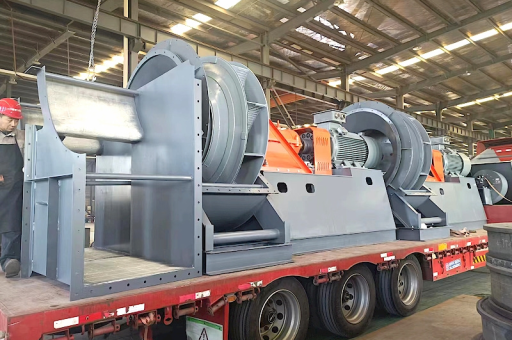
In a modern steel plant, the movement of air is not a background process—it is a core driver of production efficiency, safety, and emission control. From the blast furnace to the sintering plant, from the converter to the rolling mill, every stage requires precise management of gas flow, temperature, and particulate matter. This is where high-efficiency wear-resistant centrifugal fans and induced draft fans become indispensable.
A steel plant equipped with high-efficiency wear-resistant centrifugal fans and induced draft fans benefits from reduced downtime, lower energy consumption, and extended equipment lifespan. These fans are not merely components; they are integral to the plant’s thermodynamic and mechanical balance. Without them, dust-laden gas streams at high temperatures would quickly degrade standard equipment, leading to production halts and costly repairs.
This article provides a detailed technical overview of these fan systems, their design principles, and their impact on steel plant operations. It is written for plant engineers, maintenance managers, and procurement specialists who need to make informed decisions about air handling equipment.
Understanding Centrifugal Fans and Induced Draft Fans
Centrifugal fans operate by converting rotational kinetic energy into increased static pressure through a rotating impeller. In a steel plant, they are used for forced draft applications, such as supplying combustion air to furnaces, or for material conveying. When equipped with wear-resistant coatings or specialized blade geometries, these fans can handle abrasive fly ash and hot gases without rapid erosion.
Induced draft fans, on the other hand, are typically placed at the end of a gas cleaning system. They pull exhaust gases through scrubbers, electrostatic precipitators, or baghouses, maintaining negative pressure inside the flue gas pathway. In a steel plant, induced draft fans must endure high temperatures, corrosive acidic gases, and fine particulate matter. Their reliability directly affects the plant’s ability to meet emission standards.
When both fan types are designed with high-efficiency wear-resistant features, the entire air handling system becomes more robust. The plant can operate at higher throughputs while maintaining compliance with environmental regulations.
Why Wear Resistance is Non-Negotiable in Steel Plant Environments
The atmosphere inside a steel plant is one of the harshest in any industrial setting. Abrasive iron ore dust, coke fines, slag particles, and hot combustion gases create a relentless assault on rotating equipment. Standard carbon steel fans can lose blade thickness within weeks, leading to imbalance, vibration, and catastrophic failure.
High-efficiency wear-resistant centrifugal fans are engineered to withstand this environment. Common strategies include:
- Hardfacing and cladding: Applying tungsten carbide or chromium carbide overlays to blade leading edges.
- Ceramic linings: Using alumina or zirconia tiles on the fan casing and rotor.
- Specialized impeller designs: Using backward-curved blades that reduce particle impact velocity.
- Heat-resistant alloys: Using stainless steel or Inconel alloys for high-temperature zones.
These features ensure that the fan maintains its performance curve even after thousands of hours of operation. In practice, this can mean a three- to five-fold increase in service life compared to standard fans.
Key Engineering Features of High-Efficiency Wear-Resistant Fans
Modern high-efficiency wear-resistant centrifugal fans and induced draft fans incorporate several advanced design elements:
Aerodynamic optimization: Computational fluid dynamics (CFD) is used to minimize turbulence and pressure losses. This directly translates to lower motor power consumption—often 10-20% less than older designs.
Dynamic balancing: Precisely balanced rotors reduce vibration, extending bearing and seal life.
Variable frequency drives (VFDs): VFDs allow the fan speed to match process demand, eliminating wasteful throttling. In a steel plant equipped with high-efficiency wear-resistant centrifugal fans and induced draft fans, VFDs can reduce total fan energy consumption by up to 30%.
Modular construction: Wear components such as inlet cones, impellers, and wear plates are designed for quick replacement during planned outages.
Corrosion resistance: Stainless steel or epoxy-coated surfaces resist attack from acidic gases like sulfur dioxide and hydrogen chloride.
These features are not arbitrary additions—they are the result of decades of field experience in steel mills worldwide. They represent the intersection of mechanical engineering, materials science, and process control.
Performance Metrics: Energy Savings and Operational Reliability
The economic impact of upgrading to high-efficiency wear-resistant fans is significant. Consider a typical steel plant with multiple induction fans operating at 500 kW each. Even a 15% improvement in efficiency can save over 600 MWh per year per fan. With multiple units, the annual savings can exceed several hundred thousand dollars.
Moreover, reliability metrics improve dramatically. Mean time between failures (MTBF) can increase from 6 months to over 24 months. This reduces maintenance labor costs and spare parts inventory. Plant availability improves because unplanned shutdowns are minimized.
In addition, environmental compliance becomes more consistent. Induced draft fans that maintain their performance curve ensure that dust emissions remain below regulatory limits, avoiding fines and reputational damage.
Common Questions and Expert Answers (Q&A Section)
Q1: What makes a centrifugal fan “high-efficiency” in a steel plant context? A: High-efficiency refers to the fan’s ability to convert motor power into airflow with minimal losses. This is achieved through optimized blade geometry, reduced leakage, and advanced aerodynamic design. In a steel plant, efficiency must be maintained even as wear occurs, which is why wear resistance is paired with efficiency.
Q2: How do induced draft fans differ from forced draft fans in a steel mill? A: Induced draft fans pull gas through a system, creating negative pressure, while forced draft fans push air into a system. Induced draft fans typically handle hotter, dirtier gas streams and require more robust wear protection.
Q3: Can existing fans be retrofitted with wear-resistant features? A: Yes. Many fan manufacturers offer retrofit kits including wear plates, hardfacing, and ceramic coatings. However, for maximum efficiency and lifespan, a new purpose-designed fan is often better.
Q4: What is the relationship between fan performance and turbine systems? A: In integrated steel plants, turbine systems often produce electricity or drive compressors. The exhaust from these turbine systems must be managed by induced draft fans. Matching fan capacity to turbine output is critical for overall plant efficiency.
Q5: How often should wear-resistant fans be inspected? A: Inspections should occur every 3-6 months during scheduled maintenance. Critical parameters include blade thickness, bearing temperature, vibration levels, and motor current draw.
Best Practices for Integration with Turbine Systems and Ductwork
A steel plant equipped with high-efficiency wear-resistant centrifugal fans and induced draft fans must also consider the broader system architecture. Proper ductwork sizing, minimal bends, and smooth transitions reduce static pressure losses. When tied to a turbine system, the fan control system must be able to handle variations in exhaust gas flow without causing backpressure fluctuations.
Key recommendations include:
- Use expansion joints to accommodate thermal expansion.
- Install isolation dampers for maintenance safety.
- Implement real-time monitoring of fan vibration and temperature.
- Ensure proper grounding to prevent electrostatic buildup from dust.
These practices extend the life of both the fan and the turbine system, ensuring that the plant runs at designed capacity.
Conclusion: Future-Proofing Steel Production with Advanced Fan Technology
The steel industry is under constant pressure to increase productivity, reduce emissions, and lower costs. Upgrading to high-efficiency wear-resistant centrifugal fans and induced draft fans is one of the most effective ways to achieve these goals. These fans are not just components—they are strategic assets that improve plant reliability, energy efficiency, and environmental performance.
For any steel plant looking to modernize its air handling infrastructure, investing in high-efficiency wear-resistant technology is a decision that pays for itself many times over. Whether the plant is processing basic oxygen furnace gas, sintering exhaust, or blast furnace top gas, the right fan system makes the difference between a plant that struggles and one that excels.
By integrating these fans with intelligent control systems and turbine systems, steel producers can achieve a level of operational excellence that sets them apart in a competitive global market.





