
This article's table of contents introduction:
- The Core Machine: High Pressure Centrifugal Fan
- The Power Source: Alternating Current (AC)
- The Application: Drying & High Air Flow
- The Motor Size: 55 kW (kilowatt)
- Typical Specifications & Questions to Ask
- Common Applications (Where you find this specific fan)
- Summary for a Technician or Buyer
This appears to be a product specification or search query for an industrial-grade piece of equipment. Let's break down what each term means to help you understand the application or find the correct unit.
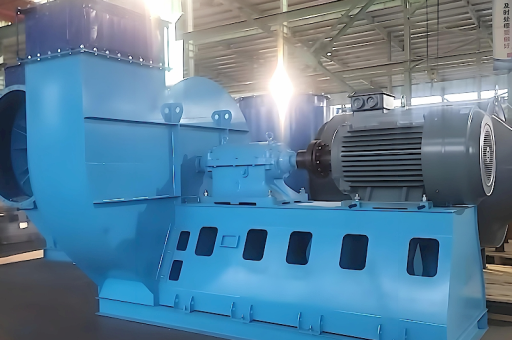
Here is the breakdown of the phrase "Alternating Current High Air Flow Drying 55kw High Pressure Centrifugal Fan" :
The Core Machine: High Pressure Centrifugal Fan
This is the main component. It is a fan designed to move air against significant resistance (high static pressure).
- Centrifugal: Air enters the center of a spinning rotor (impeller) and is thrown outward radially by centrifugal force. This creates higher pressure than axial fans (like a household fan).
- High Pressure: This fan is specifically designed for ducting systems with long runs, narrow pipes, or processes that require air to be forced through dense materials (like grain, powder, or a drying chamber).
The Power Source: Alternating Current (AC)
- Standard Industrial Power: Most large industrial motors run on AC power (e.g., 380V/415V 3-phase or 220V/240V single phase).
- Implication: This fan requires a wired electrical connection to the grid or a large AC generator. It is not battery-powered.
The Application: Drying & High Air Flow
- Drying: The "drying" keyword suggests the fan is used in a process that requires moving hot or ambient air across a wet product to evaporate moisture. Common uses:
- Grain dryers (moving hot air through a grain column).
- Industrial spray booths (removing solvent or water vapor).
- Vacuum or pressure drying systems (e.g., for wood, textiles, or food).
- High Air Flow: Despite being "high pressure," this fan also prioritizes volume ((m^3/h) or CFM). A 55kW fan moves a massive amount of air (typically 20,000 to 50,000+ CFM depending on pressure).
The Motor Size: 55 kW (kilowatt)
- Power: This is a large, heavy-duty industrial motor (approximately 7 horsepower).
- Energy Consumption: At full load, this fan will consume roughly 55 kWh per hour.
- Current (Example): For a 3-phase 380V motor, the full load current would be approximately 90–100 Amps.
- Physical Size: This fan and motor assembly will be large (likely 4-6 feet in diameter for the fan housing, weighing several hundred kg).
Typical Specifications & Questions to Ask
If you are purchasing or specifying this fan, you need more data than the title provides. You should check the Performance Curve:
| Parameter | Likely Range for a 55kW Centrifugal Fan | Your Required Value? |
|---|---|---|
| Air Flow (Volume) | 20,000 – 50,000 (m^3/h) | _ |
| Static Pressure (High) | 2000 – 6000 Pa (8 – 24 in.wg) | _ |
| Motor Voltage | 380V / 415V / 660V (3-phase) | _ |
| Speed (RPM) | 1450 – 2900 RPM (Direct or Belt driven) | _ |
| Sound Level | > 85 dB(A) (Requires hearing protection) | _ |
Common Applications (Where you find this specific fan)
- Pneumatic Conveying: Moving sawdust, grains, or plastic pellets through pipes.
- Industrial Boilers: Forced draft or induced draft (ID/FD fans) for combustion air.
- Mine Ventilation: Supplying fresh air or exhausting stale air from tunnels.
- Dust Collection: Large central baghouse or cartridge dust collectors.
- Large-scale Drying Systems: Wood kilns, grain bins, or sludge drying beds.
Summary for a Technician or Buyer
- What it is: A massive AC-powered blower that creates high pressure to force air through restrictive drying equipment.
- Critical check: Ensure your electrical supply can handle the 55kW motor (requires a dedicated breaker and heavy-gauge cable).
- Installation: Requires a solid concrete base, flexible connections to ductwork, and a starting method (Direct-On-Line, Star-Delta, or VFD).
Would you like a guideline on how to size the electrical cable for this motor, or how to calculate the exact air flow for your drying application?





