
This article's table of contents introduction:
- What is it?
- Why is High Wear Resistance Critical?
- Key Design Features for High Wear Resistance
- Common Applications (Where these fans are needed)
- Selection Considerations
- Summary Table: Comparison of Wear Resistance Methods
Here is a detailed breakdown of Centrifugal Ventilation Dust Extraction Fans with High Wear Resistance, covering what they are, why wear resistance is critical, the specific design features that achieve it, and common applications.
What is it?
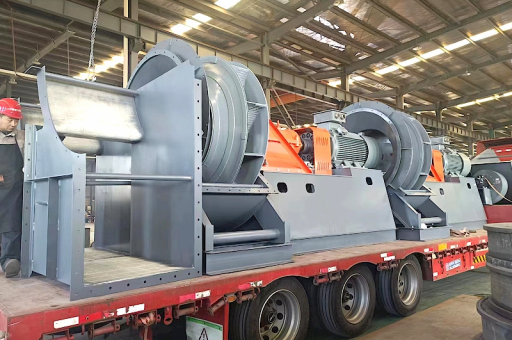
A Centrifugal Ventilation Dust Extraction Fan is a mechanical device designed to move air laden with particulate matter (dust, chips, fibers, granules). Unlike standard HVAC fans, these are built to handle "dirty" airstreams.
The "High Wear Resistance" variant is specifically engineered to withstand the abrasive erosion caused by high-velocity particles impacting the fan's internal components (impeller blades, housing, and cut-off plate).
Why is High Wear Resistance Critical?
Standard fans operating in dusty environments fail prematurely due to abrasive wear. This manifests as:
- Impeller Erosion: Particles strike the blades, thinning the metal, unbalancing the rotor, and eventually causing structural failure.
- Housing (Scroll) Erosion: The particle-laden airstream constantly scours the volute casing, eventually wearing holes through it.
- Shaft & Bearing Failure: Unbalance from impeller wear puts excessive stress on bearings and seals.
- Loss of Efficiency: Wear changes the aerodynamic profile of the fan, reducing airflow and static pressure performance over time.
High wear resistance significantly extends the fan's service life, reduces maintenance downtime, and lowers total cost of ownership (TCO).
Key Design Features for High Wear Resistance
Manufacturers achieve high wear resistance through a combination of material selection, design geometry, and protective treatments.
Material Selection (The Foundation)
- Heavy-Gauge Steel: Thicker steel plates (e.g., 6mm to 12mm or more) are used for the impeller and housing. The added material provides a sacrificial layer to wear away before structural failure occurs.
- Hardox / Abrasion-Resistant (AR) Steel: High-strength, wear-resistant alloy steels (like AR400, AR500, or Hardox) are commonly used. They are much harder than standard mild steel.
- Stainless Steel (e.g., 304, 316L): Used when the dust is also corrosive (e.g., chemical processing, food & beverage). Provides both wear and corrosion resistance.
- Cast Iron: Some fan components (especially smaller impellers) can be made from cast iron, which is abrasive-resistant but brittle.
Thickened & Replacement Liners (The Armor)
- Wear Plates (Liners): The most effective strategy. Removable, replaceable panels of abrasion-resistant material (steel, ceramic, or rubber) are bolted or welded inside the fan housing, specifically at high-wear zones:
- The Cut-Off Plate (Volute Tongue): The leading edge of the volute, where the highest velocity and particle concentration occurs.
- The Housing Wall Opposite the Blast Area: The area directly after the impeller discharge.
- The Backplate of the Housing.
- Impeller Wear Backing Strips: Strips of wear-resistant material welded onto the back side of impeller blades to protect the blade root and hub.
- Impeller Blade Wear Pads: Replaceable pads on the leading edge of the blades.
Impeller Design & Construction
- Flat & Backward-Curved Blades: These designs (e.g., Radial, Radial Tip, Backward Inclined) are inherently less prone to material buildup and have a simpler geometry that is easier to protect with liners than complex forward-curved sheet metal blades.
- Laminated Plating: A sandwich construction where a wear-resistant layer (e.g., Inconel or Stellite) is welded or bonded to a standard steel blade base.
- Full-Penetration Welds: Strong, continuous welds to prevent cracks from starting at weld points, which are often initiation sites for wear failure.
- Ribbed or Stiffened Blades: Added structural ribs prevent blade flexing, which can accelerate wear and cause fatigue failure.
Surface Coatings & Hardening
- Thermal Spray Coatings (e.g., Tungsten Carbide, Chrome Carbide): A high-velocity oxygen fuel (HVOF) sprayed coating applied to the impeller and housing. Extremely hard (up to 1200+ HV) and very thin.
- Hard Chrome Plating: A harder, smoother surface that reduces friction and erosion.
- Ceramic Coatings: Bonded ceramic tiles or a ceramic-filled epoxy lining. Excellent in extremely abrasive environments (e.g., sand, cement).
- Rubber or Polyurethane Linings: Used where impact is also a concern (e.g., conveying wood chips). The rubber absorbs impact and resists sliding abrasion.
Structural Robustness
- Oversized Bearings & Shafts: Heavy-duty spherical roller bearings and a larger diameter shaft ride in a rigid, vibration-dampening bearing frame.
- Heavy-Duty Baseplate & Supports: A robust steel baseplate prevents twisting and vibration under heavy, unbalanced conditions.
Common Applications (Where these fans are needed)
- Woodworking: Sawdust, wood chips, MDF dust, sanding dust.
- Metalworking: Grinding dust, metal shavings, shot blasting dust, welding fumes.
- Cement & Concrete: Fly ash, cement dust, clinker dust.
- Mining & Quarrying: Rock dust, ore concentrate, coal dust.
- Agriculture: Grain dust, feed dust, fertilizer dust.
- Foundries: Silica sand, casting dust, slag particles.
- Pharmaceutical & Chemical: Fine powder handling, tablet coating dust, abrasive chemical dusts.
- Textiles: Fibers, lint, cotton dust.
Selection Considerations
When choosing a high wear-resistant centrifugal fan, you need to specify:
- Material Handled: Type, size, shape, and concentration (grains/ft³ or grams/m³) of the particulate.
- Gas Temperature and Composition: Corrosive or non-corrosive.
- Required Airflow (CFM/m³/h) and Static Pressure (inWG/Pa).
- Motor Power (HP/kW) and Speed (RPM). Heavy-duty fans require more power to move the same air volume due to the thicker material and friction.
- Noise Level Requirements.
- Maintenance Access & Replacement Part Availability. The ease of replacing wear liners is critical.
Summary Table: Comparison of Wear Resistance Methods
| Method | How it Works | Best For | Cost | Durability |
|---|---|---|---|---|
| Thicker Steel Plate | Sacrificial thickness | Light to moderate dust | Low | Moderate |
| AR Steel Liners | Replaceable armor | Moderate to heavy dust | Medium | High |
| Ceramic Coatings | Hard, wear-resistant surface | Extreme, fine abrasion (e.g. sand) | High | Very High |
| Rubber Linings | Impact absorption + abrasion | Large, sharp particles (e.g. wood) | Medium | High |
| Blade Coatings (HVOF) | Thin, extremely hard layer | Moderate, fine dust with high velocity | Very High | Very High |
In short, a centrifugal ventilation dust extraction fan with high wear resistance is not just a fan; it is a specialized, heavy-duty piece of industrial equipment designed for survival in the harshest of dusty environments. The investment in these features pays for itself through dramatically reduced downtime and replacement costs.





