
This article's table of contents introduction:
- Table of Contents
- Introduction: The Core of Industrial Air Movement
- The Mechanical Link: Understanding V-Belt Drives
- The Air Mover: Characteristics of Industrial Centrifugal Fans
- Why V-Belt Drive Systems Excel for High-Efficiency Blowers
- Key Performance Metrics: Efficiency, Torque, and Speed
- Maintenance Best Practices for Longevity
- Frequently Asked Questions (FAQ)
- Conclusion: The Future of Driven Fan Technology
** Maximizing Airflow Performance: The Engineering Synergy of V-Belt Driven Industrial Centrifugal Fans in High-Efficiency Blower Systems
Table of Contents
- Introduction: The Core of Industrial Air Movement
- The Mechanical Link: Understanding V-Belt Drives
- The Air Mover: Characteristics of Industrial Centrifugal Fans
- Why V-Belt Drive Systems Excel for High-Efficiency Blowers
- Key Performance Metrics: Efficiency, Torque, and Speed
- Maintenance Best Practices for Longevity
- Frequently Asked Questions (FAQ)
- Conclusion: The Future of Driven Fan Technology
Introduction: The Core of Industrial Air Movement
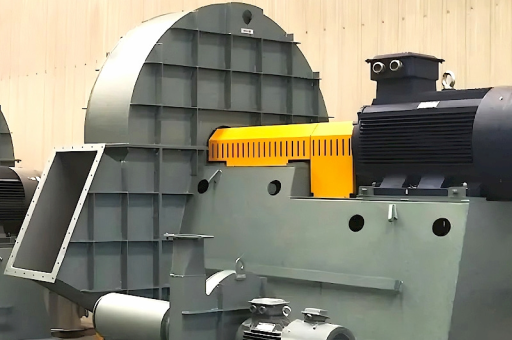
In the demanding world of industrial ventilation, material handling, and process cooling, the combination of a V belt driving industrial centrifugal fans represents a cornerstone of mechanical reliability. These systems, often categorized as a high efficiency blower assembly, are responsible for moving vast volumes of air against significant static pressure. Unlike direct-drive systems, the V-belt interface offers a unique blend of flexibility, cost-effectiveness, and performance tuning. This article explores why this mechanical marriage remains dominant in factories, wind turbine cooling systems, and dust collection networks, and how engineers optimize it for peak efficiency.
The Mechanical Link: Understanding V-Belt Drives
A V-belt drive is a friction-based power transmission system. Its name derives from the trapezoidal ("V") cross-section of the belt, which wedges into a matching groove on the pulley. This design offers several critical advantages:
- High Traction: The wedging action increases friction without requiring high belt tension, reducing bearing loads.
- Slip Resistance: Properly tensioned V-belts have minimal slip compared to flat belts, ensuring consistent rotational speed.
- Shock Absorption: The belt's elastomeric material dampens vibration and shock loads from motor starting or fan blade turbulence.
For an industrial centrifugal fan, the motor typically runs at a standard speed (e.g., 1800 or 3600 RPM), while the fan wheel requires a different speed for optimal volumetric flow and pressure. The V-belt drive solves this mismatch through different pulley diameters, acting as a variable mechanical reduction gear.
The Air Mover: Characteristics of Industrial Centrifugal Fans
An industrial centrifugal fan works by accelerating air radially outward. Key types include:
- Forward-Curved Blades: High volume, low pressure (ideal for clean air systems).
- Backward-Curved Blades: High efficiency, self-limiting power curve (preferred for high efficiency blower applications).
- Radial (Paddle) Blades: For heavy dust loading or sticky materials.
The fan's performance curve dictates that if you change its speed (RPM), you alter airflow (CFM) linearly, pressure (SP) by the square of the speed, and required power (HP) by the cube of the speed. This cubic relationship makes speed control—and thus the V-belt drive—absolutely critical for energy efficiency.
Why V-Belt Drive Systems Excel for High-Efficiency Blowers
Why do engineers choose a V belt driving industrial centrifugal fans over direct drive or gearbox solutions for a high efficiency blower? The reasons are compelling:
- Speed Adjustment Flexibility: Changing the fan's performance is as simple as swapping the sheave (pulley) on the motor or fan shaft. This allows a single fan housing to be used across multiple applications.
- Motor Protection: The belt acts as a sacrificial mechanical fuse. If the fan wheel seizes or a foreign object jams the impeller, the belt slips or breaks, often saving the motor from thermal overload.
- Cost-Effectiveness: V-belt drives have lower initial capital cost than variable frequency drives (VFDs) or planetary gearbox systems, especially for high-horsepower applications.
- Remote Motor Placement: The flexible nature of a belt allows the motor to be mounted in a cooler, cleaner location relative to the fan and process air.
- Damping Harmonics: Belt drives reduce torsional vibration, protecting both the motor shaft and the fan bearing system.
Key Performance Metrics: Efficiency, Torque, and Speed
To achieve a true high efficiency blower, the V-belt system must be tuned. Critical metrics include:
- Belt Efficiency: Modern wrapped or cogged V-belts achieve 93-97% efficiency. Cogged belts (notched) have better flex fatigue life and lower bending losses around small pulleys.
- Pitch Diameter: Using larger pulleys reduces belt bending stress and increases contact arc, improving torque transfer and lifespan.
- Center Distance: The distance between motor and fan shafts affects wrap angle. An adequate center distance (typically >1.5x the diameter of the larger pulley) ensures proper belt engagement.
- Tension: Under-tensioned belts slip, causing heat buildup and speed variation. Over-tensioned belts destroy bearings. A simple deflection test (using a tension gauge or the "thumb push" method) is essential during commissioning and maintenance.
Maintenance Best Practices for Longevity
A V belt driving industrial centrifugal fans in a high efficiency blower environment requires a disciplined maintenance schedule:
- Daily: Listen for chirping, squealing (slip), or rhythmic slapping (misalignment).
- Monthly: Check belt deflection and tension. Inspect for cracks, glazing, or fraying edges.
- Quarterly: Use a straightedge or laser alignment tool to ensure motor and fan pulleys are perfectly parallel and co-planar. Misalignment is the #1 cause of premature belt failure.
- Storage: Keep spare belts in a cool, dark, dry place. Never mix belts from different manufacturers or different age belts on the same drive.
- Replacement: Always replace all belts in a multi-belt set simultaneously to avoid uneven load sharing.
Frequently Asked Questions (FAQ)
Q1: Can a V-belt driven centrifugal fan be used in a wind turbine cooling system? A: Absolutely. In many wind turbine nacelles, independent high efficiency blower units are driven by V-belts to cool the generator and gearbox oil. The belt drive allows the fan to be mounted in a low-vibration location while the motor sits in the main nacelle chassis. Speed changes (via pulley swap) can adapt the cooling fan to varying ambient temperatures.
Q2: When should I replace a V-belt with a direct drive or VFD setup? A: If you require precise, continuous speed modulation (e.g., for pressure control), a VFD is superior. However, for fixed-speed applications demanding high starting torque and low initial cost—such as a standard industrial exhaust fan—the V-belt drive remains the most efficient mechanical solution.
Q3: What is the typical lifespan of an industrial V-belt in a blower application? A: Under proper alignment and tension, a premium cogged belt on a well-maintained fan can last 2 to 5 years (10,000 to 25,000 hours). Dusty or hot environments reduce this lifespan. Regularly inspecting the belt tracking is crucial for longevity.
Q4: How do I select the right V-belt section (A, B, C, etc.) for a 50 HP high-efficiency blower? A: The belt cross-section depends on the horsepower to be transmitted and the shaft speed. For a 50 HP fan running at 1800 RPM, one would typically use either a single C-section belt, a D-section belt, or a 5V / 8V narrow section belt. Manufacturers like Gates and Bando provide comprehensive selection tables based on design horsepower and pulley RPM. Narrow section (VX) belts are increasingly popular for their power density.
Q5: Does using a V-belt reduce the overall system efficiency compared to a direct-coupled motor? A: Yes, slightly. Direct drive has 100% efficiency (minus bearing losses), while a V-belt drive typically has 94-97% efficiency. However, the ability to match the fan speed exactly to the airflow requirement (avoiding dampers or throttling) often results in a significantly higher system efficiency. The mechanical loss is a small price for operational flexibility.
Conclusion: The Future of Driven Fan Technology
While variable frequency drives (VFDs) have gained popularity for precise speed control, the classical V belt driving industrial centrifugal fans system remains irreplaceable for rugged, high-torque, cost-sensitive applications. Whether powering a dust collector in a sawmill or cooling a wind turbine nacelle, this mechanical interface delivers proven reliability. For engineers seeking a high efficiency blower that balances performance, maintenance simplicity, and initial cost, the V-belt-driven centrifugal fan continues to be the gold standard in industrial air movement.
Final recommendation: For any industrial facility looking to upgrade air handling, audit your existing belt drives. Switch to cogged or raw-edge V-belts, implement a laser alignment program, and size pulleys for the lowest belt speed consistent with your fan curve. This simple upgrade often yields an immediate 3–5% efficiency gain, translating directly to reduced energy bills and extended equipment life.





