
This article's table of contents introduction:
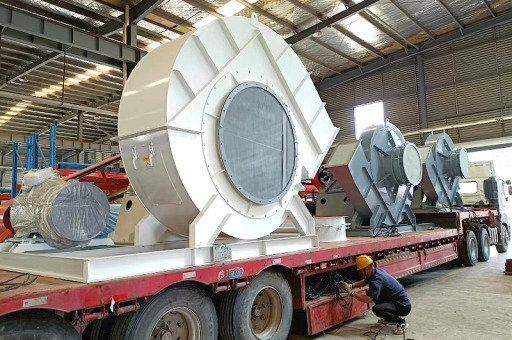
- Table of Contents /导读
- Introduction
- Why Backward Curved Centrifugal Fans Dominate High Airflow Drying
- The Critical Role of Anti-Corrosion Materials in Harsh Drying Environments
- Key Material Selections: From FRP to Stainless Steel Alloys
- Engineering Design Principles for Maximum Drying Performance
- Installation, Maintenance, and Energy Efficiency Considerations
- Frequently Asked Questions (FAQ)
- Conclusion: Future-Proofing Drying Operations with Advanced Fan Technology
*High Air Flow Backward Centrifugal Fan with Anti-Corrosion Materials: Optimizing Industrial Drying Processes*
Table of Contents /导读
- Introduction: The Convergence of High Airflow, Corrosion Resistance, and Drying Efficiency
- Why Backward Curved Centrifugal Fans Dominate High Airflow Drying
- The Critical Role of Anti-Corrosion Materials in Harsh Drying Environments
- Key Material Selections: From FRP to Stainless Steel Alloys
- Engineering Design Principles for Maximum Drying Performance
- Installation, Maintenance, and Energy Efficiency Considerations
- Frequently Asked Questions (FAQ)
- Conclusion: Future-Proofing Drying Operations with Advanced Fan Technology
Introduction
In modern industrial drying—whether for food processing, chemical production, pharmaceutical manufacturing, or wastewater treatment—the demand for high air flow backward centrifugal fan systems is accelerating. These fans are specifically engineered to move large volumes of air against moderate to high static pressures, making them indispensable for forced convection drying, spray drying, and tunnel drying applications.
However, the drying environment often involves corrosive gases, high humidity, and abrasive particulates. Without proper anti-corrosion materials, fan performance degrades rapidly, leading to costly downtime and product contamination. This article provides a comprehensive, SEO-optimized analysis of how combining backward blade geometry with corrosion-resistant alloys and composites can dramatically improve drying reliability and operational lifespan.
Why Backward Curved Centrifugal Fans Dominate High Airflow Drying
The backward centrifugal fan is defined by blades that curve away from the direction of rotation. This design offers three decisive advantages for high-airflow drying:
- Non-overloading power curve: Unlike forward-curved fans, the power draw plateaus even at high flow rates. This prevents motor burnout when duct resistance changes suddenly.
- High static pressure capability: Backward blades generate higher pressure than axial fans, enabling air to penetrate dense product beds or long drying ducts.
- Improved efficiency (often >85%): Lower internal recirculation losses translate to lower energy consumption—a key metric for drying operations running 24/7.
In a typical drying system, the fan must deliver 50,000–150,000 m³/h of heated air. Backward curved impellers, matched with anti-corrosion materials, maintain this flow without excessive vibration or wear.
The Critical Role of Anti-Corrosion Materials in Harsh Drying Environments
Drying processes frequently expose fans to:
- Moisture and steam (accelerating galvanic corrosion)
- Acidic or alkaline fumes (e.g., HCl, H₂SO₄, NaOH from chemical drying)
- Chloride salts (common in food drying and desalination)
- Abrasive particles (dust from dried solids)
Without corrosion protection, even heavy-gauge steel impellers can pit, crack, or fail within months. The solution lies in anti-corrosion materials that resist chemical attack while maintaining aerodynamic precision. Key options include:
- Fiberglass-reinforced plastic (FRP): Lightweight, immune to acids and alkalis, ideal for pharmaceutical drying
- Stainless steel 316L / 904L: Excellent chloride resistance for marine or food environments
- Duplex stainless steels (e.g., SAF 2205): High strength + corrosion resistance for high-temperature drying (>200°C)
- Specialized coatings (PTFE, epoxy, polyurethane): Applied over carbon steel for cost-sensitive applications
Key Material Selections: From FRP to Stainless Steel Alloys
Let’s examine three common material paths for high air flow backward centrifugal fan systems used in drying:
| Material Type | Best For | Key Attributes | Max Temp |
|---|---|---|---|
| FRP (Vinyl Ester) | Chemical drying, low-temp food drying | Total corrosion immunity, low weight | ~90°C |
| SS 316L | Pharmaceutical, dairy, beverage drying | Excellent pitting resistance, weldable | ~200°C |
| Hastelloy C-276 | Extreme acid drying (HCl, H₂SO₄) | Superior localized corrosion resistance | ~300°C |
Selection rule: Always match material to the specific drying medium’s pH, chloride concentration, and temperature. For example, in a wind turbine nacelle cooling or drying system (where humidity and salt spray are constant), 316L stainless is standard; for pharmaceutical fluid bed dryers, FRP eliminates metal contamination risk.
Engineering Design Principles for Maximum Drying Performance
To achieve true high air flow with a backward centrifugal fan, engineers must optimize:
- Inlet cone geometry: Reduces turbulence before air enters the impeller eye
- Blade discharge angle (typically 30–45°): Balances flow rate and static pressure
- Scroll width: Impacts velocity distribution at the outlet
- Shaft sealing: In drying applications, labyrinth seals or mechanical seals prevent moisture ingress into bearings
Anti-corrosion integration: All contact surfaces—including housing, inlet bell, impeller, and shaft sleeve—must be fabricated from or coated with compatible corrosion-resistant materials. Welds should be post-processed to remove heat-affected zones susceptible to attack.
Installation, Maintenance, and Energy Efficiency Considerations
Installation tips:
- Always install inlet and outlet ducts with straight sections (≥5 diameters) before/after the fan for uniform flow.
- Use expansion joints to isolate fan vibration from ductwork.
- For outdoor installations (e.g., solar drying farms or wind turbine thermal management), specify IP55 motors and stainless steel fasteners.
Maintenance schedule:
- Monthly: Check bearing temperature and vibration levels.
- Quarterly: Clean impeller blades with non-abrasive methods.
- Annually: Inspect coating integrity; reapply epoxy or PTFE if peeling.
Energy efficiency: Because backward centrifugal fans have a non-overloading characteristic, pairing them with variable frequency drives (VFDs) can reduce energy consumption by 30–50% during partial-load drying cycles—critical for sustainability goals.
Frequently Asked Questions (FAQ)
Q1: What is the typical lifespan of a backward centrifugal fan used in continuous drying?
A: With proper material selection (e.g., 316L or FRP) and routine maintenance, a lifespan of 10–20 years is achievable. Fans in corrosive environments (e.g., chemical drying) often require bearing replacement every 3–5 years.
Q2: Can high air flow backward centrifugal fans be used for high-temperature drying (e.g. 300°C)?
A: Yes, but only if the fan is constructed from high-temperature alloys (e.g., Hastelloy or Inconel) and the shaft cooling system is designed appropriately. Standard stainless steel begins to lose strength above 400°C.
Q3: How do I know if anti-corrosion material is necessary for my drying fan?
A: Conduct a test: expose a sample of the intended housing material to the actual drying atmosphere for 72 hours. If you observe pitting, discoloration, or weight loss >0.1 mg/cm², upgrade the material.
Q4: Are backward curved fans quiet enough for use in food drying facilities?
A: Yes. Backward fans generate less aerodynamic noise than forward-curved types. Additionally, sound-attenuating inlet silencers can reduce noise levels by 10–15 dB(A).
Q5: Can I use a standard backward centrifugal fan from a wind turbine cooling application in a drying system?
A: Only if the fan materials are compatible with the drying environment. A wind turbine fan typically uses aluminum or carbon steel—these would corrode quickly in a high-humidity, acidic drying process. You need a purpose-built fan with anti-corrosion materials.
Conclusion: Future-Proofing Drying Operations with Advanced Fan Technology
The high air flow backward centrifugal fan is irreplaceable for industrial drying, offering the perfect balance of volume, pressure, and efficiency. However, its longevity and performance hinge entirely on the correct application of anti-corrosion materials. Whether you choose FRP for chemical resistance, 316L for food safety, or Hastelloy for extreme acid exposure, the investment in material quality pays dividends in reduced downtime, consistent drying quality, and lower total cost of ownership.
As drying technology evolves—particularly with heat recovery integration and smart VFD controls—the backward centrifugal fan will remain a cornerstone. By prioritizing corrosion protection from the design phase, you ensure that your drying system runs at peak performance, year after year.
For further reading on fan selection for specific drying applications, consult the ASHRAE Handbook – HVAC Systems and Equipment, or the AMCA 300 standard for fan performance testing.





