
This article's table of contents introduction:
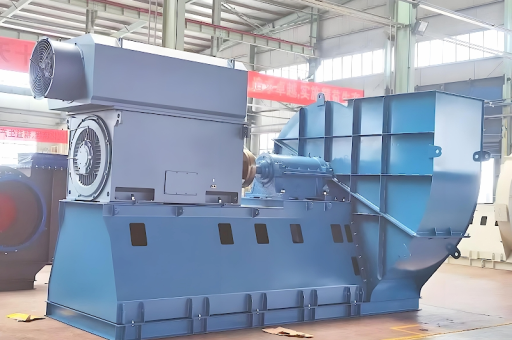
- Table of Contents
- Introduction
- Fundamental Design and Operating Principles
- Key Technical Specifications of a 90kW Induced Draft Fan
- Materials and Construction for Harsh Environments
- Energy Efficiency and Power Consumption Analysis
- Application Scenarios: From Cement Plants to wind turbine Manufacturing
- Installation, Maintenance, and Troubleshooting
- Frequently Asked Questions (FAQ)
- Conclusion
*The Comprehensive Guide to 90kW Dust Removal Centrifugal Induced Draft Fans: Engineering, Applications, and Optimization*
Table of Contents
- Introduction: The Role of the 90kW Centrifugal Fan in Industrial Dust Management
- Fundamental Design and Operating Principles
- Key Technical Specifications of a 90kW Induced Draft Fan
- Materials and Construction for Harsh Environments
- Energy Efficiency and Power Consumption Analysis
- Application Scenarios: From Cement Plants to wind turbine Manufacturing
- Installation, Maintenance, and Troubleshooting
- Frequently Asked Questions (FAQ)
- Conclusion: Future Trends in High-Power Dust Extraction Systems
Introduction
In modern industrial environments, airborne particulate matter poses significant risks to both human health and equipment integrity. The 90kW Dust Removal Centrifugal Induced Draft Fan stands as a critical component in high-volume air pollution control systems. Unlike standard ventilation fans, this induced draft (ID) fan operates under negative pressure, pulling dust-laden air through filtration systems before exhausting clean air to the atmosphere.
These fans are indispensable in industries such as cement production, steel smelting, woodworking, chemical processing, and even in the manufacturing facilities of clean energy components like wind turbine blades and nacelles. The specific power rating of 90 kW places it in the medium-to-heavy-duty category, capable of handling air volumes exceeding 80,000 m³/h at moderate static pressures.
Fundamental Design and Operating Principles
A centrifugal induced draft fan utilizes the principle of centrifugal force. The impeller, rotating at high speed, draws air axially into the center of the wheel and then expels it radially. The key characteristics of these fans include:
- High Static Pressure Capability: Unlike axial fans, centrifugal fans generate higher pressure, making them suitable for systems with ductwork, cyclone separators, and baghouse filters.
- Induced Draft Configuration: The fan is positioned at the end of the dust collection system, pulling air through the system. This reduces the risk of dust leakage from positive-pressure enclosures.
- Backward-Curved Blade Design: For high-efficiency applications, backward-curved (BC) or airfoil blades are preferred because they minimize material buildup and resist wear.
Question:
Q: Why is a 90kW centrifugal induced draft fan preferred over an axial fan for dust removal? A: Centrifugal fans handle higher static pressures (e.g., 2,500–4,000 Pa) required to overcome resistance from filters and ductwork. Axial fans typically cannot generate adequate pressure for baghouse or cartridge filter systems without severe flow reduction.
Key Technical Specifications of a 90kW Induced Draft Fan
When selecting a 90kW fan, engineers must evaluate several parameters:
- Power Rating: 90 kW (approximately 120 HP). This is the shaft power required to move air against the system curve.
- Airflow Range: Typically 50,000–90,000 m³/h, depending on the impeller diameter (often 1,400–1,800 mm).
- Static Pressure: Usually 3,000–4,500 Pa for standard dust collection.
- Speed: 1,480–1,780 RPM for direct-coupled configurations; belt-driven models allow variable speed control.
- Noise Level: 85–95 dB(A) at 1 meter, requiring acoustic enclosures or silencers for indoor installations.
- Efficiency: Premium backward-curved designs achieve 75–85% static efficiency.
Question:
Q: Can a 90kW fan be retrofitted into an existing 75kW system without replacing the motor? A: No. The motor, VFD, starter, and shaft coupling must match the 90kW power demand. Simply increasing impeller speed to increase flow can overload the existing 75kW motor, leading to thermal failure.
Materials and Construction for Harsh Environments
Dust removal fans face aggressive conditions: high-particulate loads, corrosive gases, and sometimes elevated temperatures. For a 90kW industrial fan, material selection is crucial:
- Impeller Materials:
- Carbon Steel (SS400/Q235): Economical for benign dust like wood chips or cereal grains.
- Stainless Steel (SS304/316L): Required for acidic or moist exhaust (e.g., from wind turbine resin curing ovens or chemical scrubbers).
- Hastelloy or Duplex Steel: For extremely corrosive environments involving chlorine or sulfur compounds.
- Housing Construction:
- 6–10 mm steel plate with stiffening ribs to withstand pressure pulsations.
- Reinforced wear plates at the scroll tongue and impeller inlet.
- Shaft and Bearings:
- 45# steel or 40Cr alloy steel shafts.
- Rolling bearings with grease lubrication or oil bath housings for continuous operation.
- Base Frame:
Heavy-duty I-beam or H-beam steel with vibration isolators.
Question:
Q: What happens if I use a standard carbon steel fan in a cement plant with high humidity? A: Rapid corrosion occurs. Dust absorbs moisture, forming a slurry that accelerates rusting. Impeller imbalance develops, leading to vibrations and bearing failure within weeks. SS304 or at least epoxy-coated carbon steel is mandatory.
Energy Efficiency and Power Consumption Analysis
A 90kW fan operating continuously (8,000 hours/year) consumes approximately 720,000 kWh annually. At $0.10/kWh, the electricity cost exceeds $72,000 per year. Therefore, efficiency is paramount.
Efficiency Improvement Strategies:
- Variable Frequency Drives (VFDs): Reducing fan speed by just 20% reduces power consumption by almost 50% (affinity laws).
- High-Efficiency Impellers: Airfoil blades can achieve 5–10% higher static efficiency compared to simple radial blades.
- System Optimization: Reducing duct bends and leaks lowers system resistance, allowing the fan to operate at a lower speed or power consumption.
Example Calculation: | Condition | Speed (RPM) | Power Consumption (kW) | Annual Energy Cost | |-----------|-------------|------------------------|-------------------| | Full speed (no VFD) | 1,780 | 90 | $72,000 | | VFD at 80% speed | 1,424 | 46 | $36,800 |
As shown, investing in a VFD for a 90kW fan often pays back within 12–18 months.
Question:
Q: Is it always better to run the fan at reduced speed? A: Not if the dust collection requires consistent air-to-cloth ratio for filter cleaning. Too low a velocity can cause dust settling in ducts. Always balance energy savings with process requirements.
Application Scenarios: From Cement Plants to wind turbine Manufacturing
The 90kW Dust Removal Centrifugal Induced Draft Fan serves diverse sectors:
- Cement Industry: Extracting clinker cooler dust, raw mill exhaust, and baghouse ventilation.
- Woodworking & MDF Production: Sucking sawdust, chips, and sanding dust. Often paired with cyclones and pleated filters.
- Foundries & Steel Mills: Removing fumes from electric arc furnaces and shot blasting machines.
- Chemical & Pharmaceutical: Handling explosive dusts (e.g., aluminum, magnesium) requiring ATEX-certified fans with spark-resistant impellers.
- wind turbine Manufacturing: In factories producing composite blades, the fan extracts volatiles from epoxy resins and grinding dust from finishing processes. Here, explosion-proof construction is often mandated due to solvent vapors.
Question:
Q: How is a 90kW fan adapted for a wind turbine blade factory? A: The fan must be explosion-proof (ATEX IIC T4 or T5). This includes: aluminum or non-sparking bronze impeller, PTFE-coated shaft seal, earthing brushes to prevent static buildup, and a dedicated VFD with SIL-rated shutdown capabilities.
Installation, Maintenance, and Troubleshooting
Installation Tips:
- Place the fan on a concrete foundation at least 300 mm thick to dampen vibration.
- Install an isolation damper and expansion joint between the fan inlet and the ductwork.
- Ensure the motor is aligned with the fan shaft using laser alignment tools (misalignment tolerance: < 0.05 mm).
Routine Maintenance:
- Daily: Check bearing temperature (max 85°C) and vibration levels (ISO 10816-3 acceptable: < 4.5 mm/s RMS).
- Monthly: Inspect impeller for abrasion or imbalance. Clean buildup on blades.
- Quarterly: Check belt tension (for belt-driven models) and lubrication of bearing housing.
Common Troubleshooting: | Problem | Likely Cause | Solution | |---------|--------------|----------| | Low airflow | Blocked filter or duct | Clean filters; check for collapsed duct | | Excessive vibration | Impeller imbalance, bearing wear | Re-balance impeller; replace bearings if noise is present | | Motor overheating | Overload, voltage imbalance, or VFD harmonics | Verify fan is on system curve; test VFD harmonic filter | | Noise increase | Blade tip rub, erosion, or loose housing | Inspect clearance; weld reinforcement pads |
Question:
Q: My 90kW fan vibrates heavily after 6 months. What is the first thing to check? A: Impeller dust buildup or erosion. Even a 10-gram mass loss from erosion can cause dynamic imbalance. Never run a severely vibrating fan; it can destroy bearings and crack the housing.
Frequently Asked Questions (FAQ)
Q1: What is the difference between forced draft (FD) and induced draft (ID) fans? A1: FD fans push air into a system (positive pressure) while ID fans pull air out (negative pressure). For dust removal, ID fans are preferred because they contain dust within the system, reducing leakage.
Q2: Can I use a 90kW fan for a building HVAC system? A2: Unlikely. Building HVAC requires lower pressure (200–800 Pa) and higher volume; this fan would be oversized and inefficient.
Q3: What is the lifespan of a 90kW centrifugal dust fan? A3: With proper maintenance—15–20 years. Without maintenance—impeller erosion can cause failure in 2–3 years in abrasive environments.
Q4: How do I calculate the actual required power for my system? A4: Use the formula: Power (kW) = (Airflow in m³/s × Static Pressure in Pa) / (1000 × Fan Efficiency). A 10% safety margin is typical.
Q5: Are 90kW fans suitable for outdoor installations? A5: Yes, with a weatherproof motor enclosure (IP55 or higher) and proper drainage in the fan scroll for rain ingress.
Conclusion
The 90kW Dust Removal Centrifugal Induced Draft Fan represents a robust, high-capacity solution for industrial air cleansing. Its design balances high static pressure generation with moderate airflow, making it ideal for baghouse and cartridge filter systems across industries from cement to wind turbine component manufacturing. Proper material selection, energy-conscious operation via VFDs, and disciplined maintenance are key to maximizing ROI.
As global industries tighten particulate emission regulations, the demand for efficient, durable, and intelligent 90kW ID fans will continue to grow. Investing in quality engineering today ensures cleaner environments, lower operational costs, and extended equipment life for decades to come.
End of Article





