This article's table of contents introduction:
- What is it?
- Key Specifications & Design Features
- Critical Engineering Challenges
- Typical Applications
- Advantages of a 15kW Unit
- Important Considerations for Procurement
- Example Manufacturer & Model
This is a specialized piece of industrial equipment. Here is a detailed breakdown of what a 15kW High-Temperature Flue Gas Cooling Fan is, its key specifications, design challenges, and typical applications.
What is it?
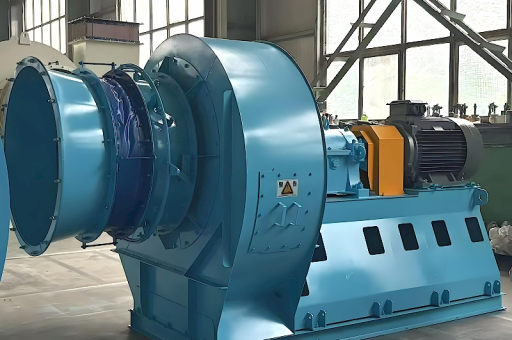
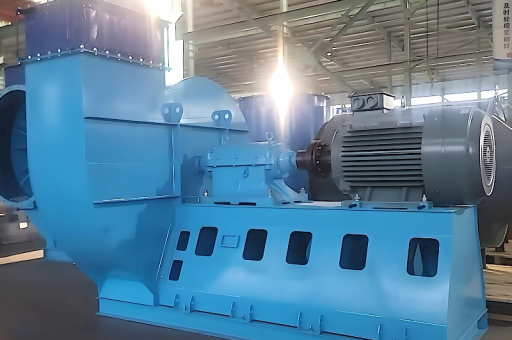
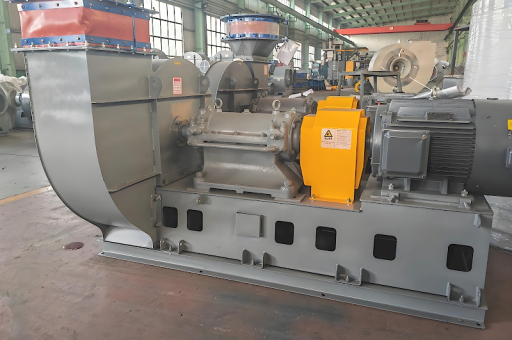
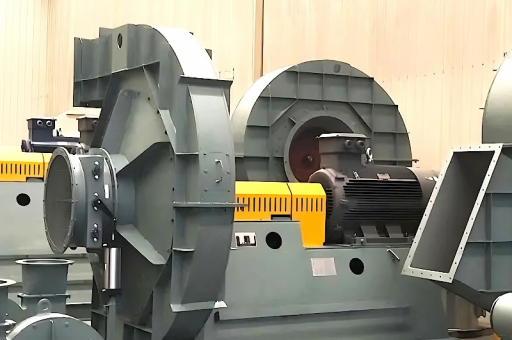
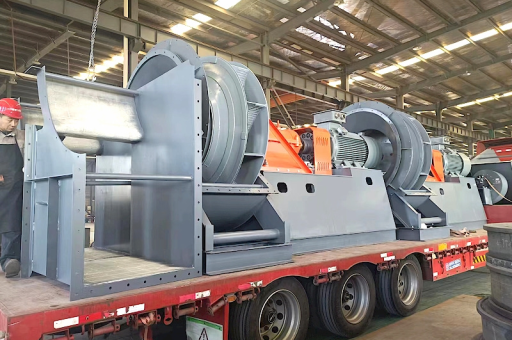
A 15kW High-Temperature Flue Gas Cooling Fan is a centrifugal or axial fan specifically designed to move hot, often corrosive, exhaust gases (flue gas) from a combustion process (like a boiler, furnace, or incinerator) to a heat recovery or cooling system (like a heat exchanger, quench tower, or economizer). The "15kW" refers to the motor power.
Unlike standard fans, this unit is engineered to survive thermal expansion and material degradation.
Key Specifications & Design Features
These fans are not off-the-shelf; they are engineered to order. Typical specs include:
- Power: 15 kW (approx. 20 HP). This provides sufficient pressure to overcome the resistance of ductwork, heat exchangers, and scrubbers.
- Temperature Range:
- Standard High-Temp: 250°C to 450°C (continuous).
- Ultra-High Temp: Up to 650°C or 850°C (with special alloys and shaft cooling).
- Flow Rate (CFM/m³/hr): Highly variable based on system pressure. A 15kW fan might move between 10,000 m³/hr (5,880 CFM) at high pressure to 30,000 m³/hr (17,600 CFM) at low pressure.
- Static Pressure: Typically 1,000 to 3,000 Pa (4 to 12 inches w.g.) for a 15kW rating.
- Impeller Type:
- Radial (Paddle Wheel): Most common for dirty, high-temp gas. Self-cleaning and robust.
- Backward Curved: More efficient, but less tolerant of sticky particulates.
- Material: Carbon Steel (standard), Corten Steel (corrosion resistance), or Stainless Steel 310S (for extreme heat).
Critical Engineering Challenges
-
Thermal Expansion:
- The shaft and housing expand at different rates. The fan must have a floating bearing arrangement (one fixed, one free) on the drive side to prevent bearing seizure.
- The impeller must have a loose fit on the shaft or a bellows seal to avoid warping.
-
Shaft Cooling:
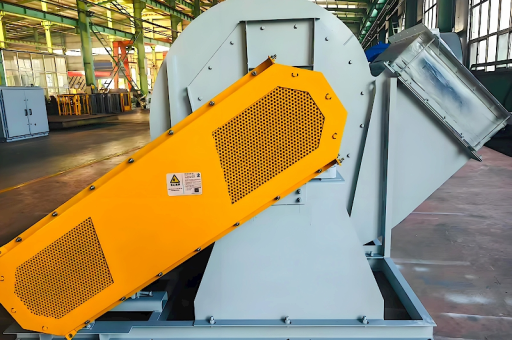
- Heat travels down the shaft to the bearings. The fan requires a shaft cooling fan (a separate small fan on the motor shaft) or a cooling disc (radiating plate) between the housing and bearing. Some units require circulating water jackets for the bearing housing.
-
Material Degradation:
- Creep: Metal softens and deforms over time at high temps.
- Oxidation: Scaling on the impeller surface.
- Acid Dew Point Corrosion: If the flue gas contains sulfur, cooling below the dew point creates sulfuric acid that eats the fan housing.
Typical Applications
- Biomass & Coal Boilers: Induced Draft (ID) fans pulling gas from the furnace to the stack or scrubber.
- Cement & Lime Kilns: Moving preheater exhaust gases.
- Waste-to-Energy Plants: Handling corrosive flue gas from incinerators before the scrubber.
- Industrial Furnaces: Cooling gas from forging or heat-treating ovens.
- Drying Systems: Conveying high-temperature moist air in wood or food processing.
Advantages of a 15kW Unit
- Size: A 15kW fan is a medium-sized machine (impeller diameter roughly 500-800mm). It is easy to maintain and replace compared to larger 100kW+ units.
- Efficiency: Modern aerodynamics can achieve 75-85% static efficiency even at high temperatures.
- Cost-Effective: It provides significant cooling capacity without the capital cost of larger industrial air handling units.
Important Considerations for Procurement
If you are specifying this fan, you must provide:
- Gas Composition: Is it clean, or does it contain dust, SOx, NOx, moisture?
- Inlet Temperature: Maximum continuous and peak surge temperature.
- Altitude & Ambient Temp: Affects air density and motor cooling.
- Drive Type: Direct drive (most efficient) or V-Belt (allows speed changes for pressure adjustment).
- Abrasives: If the gas has high particulate load (e.g., fly ash), you need a wear plate or hard-facing on the impeller.
Example Manufacturer & Model
- New York Blower (USA): "High Pressure Radial" or "General Industrial Fan" with a heat fan package.
- TLT-Turbo (Germany): Variable pitch axial fans for power plants.
- Cincinnati Fan (USA): "HP Series" with high-temp options.
- Soler & Palau (Spain): Industrial range with thermal barriers.
In summary: The 15kW High-Temperature Flue Gas Cooling Fan is a rugged, purpose-built machine designed to move hot, dirty gas reliably. Its success depends on proper cooling of the shaft/bearings and material selection to match the gas temperature and chemistry. If you are selecting one, prioritize bearing cooling and corrosion allowance over initial cost.