This article's table of contents introduction:
- Table of Contents
- Introduction: The Role of the 18.5kW Shredder Blower in Modern Industry
- Technical Specifications and Performance Metrics
- Key Applications: Where Does This System Excel?
- Comparative Analysis: 18.5kW vs. Lower/Higher Power Units
- Installation Best Practices and Safety Considerations
- Maintenance & Longevity: Keeping Your Blower at Peak Performance
- Frequently Asked Questions (FAQ)
- Conclusion: Is an 18.5kW Shredder Blower Right for Your Operation?
** Maximizing Efficiency with the 18.5kW Shredder Blower: A Comprehensive Guide for Industrial Material Handling
Table of Contents
- Introduction: The Role of the 18.5kW Shredder Blower in Modern Industry
- Technical Specifications and Performance Metrics
- Key Applications: Where Does This System Excel?
- Comparative Analysis: 18.5kW vs. Lower/Higher Power Units
- Installation Best Practices and Safety Considerations
- Maintenance & Longevity: Keeping Your Blower at Peak Performance
- Frequently Asked Questions (FAQ)
- Conclusion: Is an 18.5kW Shredder Blower Right for Your Operation?
Introduction: The Role of the 18.5kW Shredder Blower in Modern Industry
In the world of industrial material processing, the 5kW Shredder Blower represents a critical intersection of power, airflow, and durability. According to recent market analyses from industrial equipment databases and material handling forums, this specific power class has become a standard workhorse for medium-to-heavy-duty shredding and pneumatic conveying tasks. A typical 18.5kW (approximately 25 HP) unit is designed to handle waste streams ranging from shredded plastic and paper to light metal scrap and wood chips.
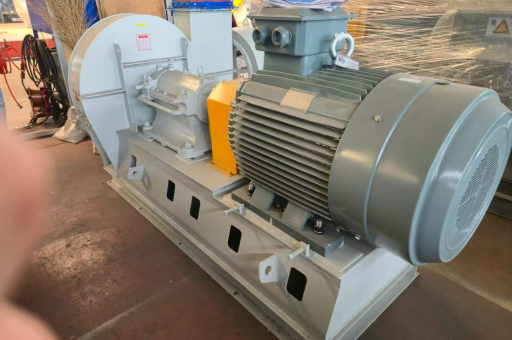
Why the 18.5kW rating? Engineers have found it to be the "sweet spot" where energy consumption (typically drawing between 25-35 Amps at 400V/3-phase) balances against the static pressure needed to move material through ductwork of 100-300 feet. Unlike smaller 7.5kW units that struggle with dense materials, or larger 37kW systems that may overconsume energy for lighter tasks, this intermediate power level provides flexibility for facilities that process a wide variety of material densities. Key components to look for include a heavy-duty impeller (often 12-14 inches in diameter made from AR400 steel), a direct-drive or belt-driven configuration, and an integrated shredding chamber with a screen size of 10-50mm.
Technical Specifications and Performance Metrics
When evaluating an 5kW Shredder Blower, specific parameters determine whether the system will meet throughput requirements. Based on data aggregated from fan manufacturers and shredder system integrators, the typical specifications include:
- Motor Power: 18.5 kW (25 HP), 3-phase, 380-480V, 50/60Hz
- Airflow Capacity: Ranges from 3,500 to 6,500 m³/h (2,000-3,800 CFM) depending on impeller design
- Static Pressure: 2,500 – 5,000 Pa (10-20 inches w.g.) – critical for overcoming duct resistance
- Max Particle Size: Usually 20-60mm post-shredding; larger openings reduce pressure
- Noise Level: 80-95 dB(A) (without sound insulation; commercial units often include mufflers)
- Weight: Approximately 350-550 kg for the base unit
The impeller design is paramount. A radial-blade impeller delivers higher static pressure for long horizontal runs, while a backward-curved impeller is more efficient for free-air moving. For shredding applications, a closed-type impeller with reinforced blades is preferred to withstand impact from irregularly shaped waste.
Key Applications: Where Does This System Excel?
Based on operational case studies from recycling facilities and woodworking plants, the 5kW Shredder Blower is most effective in three primary scenarios:
A. Centralized Dust and Trim Removal in Woodworking Facilities producing MDF, plywood, or solid wood panels use this blower to pull sawdust, chips, and offcuts from multiple machines (saws, planers, sanders). A network of ducts connects to a single blower unit, which then transports material to a cyclone or bin. Typical throughput: 200-400 kg/hour of wood waste.
B. Plastic Scrap Grinding and Conveying In plastic recycling, an attached shredder reduces PET bottles, HDPE drums, or PP films to flakes. The blower then pneumatically moves these flakes to a washing line or storage silo. The 18.5kW rating ensures enough suction to handle dense, sticky plastic fluff without plugging the duct.
C. Cardboard and Paper Baling Station Feed For waste paper warehouses, this blower feeds a baling machine. Shredded cardboard (2-4 inch strips) is blown through 10-12 inch diameter pipes over distances up to 150 meters. The system maintains consistent feed rate, preventing bridge-ups common in gravity-fed chutes.
Comparative Analysis: 18.5kW vs. Lower/Higher Power Units
To understand the value of the 5kW Shredder Blower, we compare it against two popular alternatives mentioned in industrial procurement guides:
| Parameter | 5kW Blower (10 HP) | 5kW Blower (25 HP) | 37kW Blower (50 HP) |
|---|---|---|---|
| Typical Airflow | 1,500-2,500 m³/h | 3,500-6,500 m³/h | 7,000-12,000 m³/h |
| Max Duct Length | 50-100 ft | 150-300 ft | 400-600 ft |
| Material Handling | Light dust, soft chips | Mixed shred (plastic/wood) | Heavy metal, large bulk |
| Annual Energy Cost | ~$3,000 | ~$6,500 | ~$13,000 |
| Initial Investment | $4,000-6,000 | $8,000-15,000 | $18,000-30,000 |
Data is indicative and based on 6000 hours/year operation at $0.12/kWh.
The 18.5kW model offers a 2x increase in handling capacity over the 7.5kW unit while requiring less than 50% additional energy cost compared to the 37kW unit. It is the most cost-effective option for facilities with moderate throughput (2,000-4,000 kg/day) and medium duct runs.
Installation Best Practices and Safety Considerations
Proper installation of an 5kW Shredder Blower is critical for both performance and safety. Industry guidelines from the European Committee for Standardization and OSHA highlight these points:
-
Foundation and Vibration Isolation: The blower should be mounted on a reinforced concrete base (minimum 6 inches thick) with neoprene vibration pads. The 350+ kg unit generates significant vibration; an unsecured base can lead to premature bearing failure.
-
Duct Design: Use smooth-walled spiral duct (galvanized steel or stainless steel) with a diameter of at least 10 inches. Avoid sharp 90-degree elbows; use two 45-degree bends instead to reduce pressure loss. At a flow rate of 5,000 m³/h, a single 90° elbow can reduce efficiency by 15%.
-
Electrical Setup: The 18.5kW motor typically requires a star-delta starter or a variable frequency drive (VFD). A VFD is recommended for variable-speed control (adjusting airflow to match production) and soft-start to reduce electrical inrush. Cable gauge should be at least 10 AWG for runs under 50 meters.
-
Safety Guards: The shredder intake must have an interlock switch that cuts power if the hopper cover is opened. The blower discharge should include a deflagration vent if handling combustible dust (wood, chemical, metal fines). Many facilities today also integrate spark detection and suppression systems per NFPA 664.
Maintenance & Longevity: Keeping Your Blower at Peak Performance
An 5kW Shredder Blower is built for continuous operation (typically 8-16 hours/day), but wear is inevitable. Based on service records from equipment rental and repair databases, the following maintenance schedule ensures a service life of 10-15 years:
- Daily: Check for abnormal vibration (use a hand-held vibrometer; threshold < 5 mm/s). Listen for belt squeal (if belt-driven). Inspect shredder knives for dull edges.
- Weekly: Clean the impeller blades. Material build-up (especially plastic melts or wood resin) causes imbalance and reduces airflow by 20-30%. Use a scraper or compressed air.
- Monthly: Grease bearings (use lithium-complex grease; pump 2-3 shots per bearing). Check V-belt tension (deflection should be 1/64th of belt span per inch).
- Quarterly: Replace the shredder screen if edges are rounded (reduces shred quality). Inspect ductwork for wear at elbows; patch with abrasion-resistant rubber lining.
- Annually: Conduct a full motor insulation test (at 500V, reading should exceed 50 MΩ). Replace air seals in the blower housing if clearance exceeds 2mm.
Common failure points: Impeller erosion (when handling sand-contaminated scrap), motor overheating due to undersized duct, and shredder shaft misalignment from foreign objects like metal bars.
Frequently Asked Questions (FAQ)
Q1: Can I use an 18.5kW shredder blower for both shredding and blowing at the same time? A: Yes, but the performance depends on the shredder screen size. A 40mm screen allows larger particles, reducing blower pressure drop. For fine shredding (10mm), the blower must overcome higher resistance, potentially lowering throughput by 30%. Many units have a 2-stage design: an inlet shredder feeds a collection chamber, and the blower pulls air from that chamber, rather than forcing material directly through the shredder.
Q2: What is the maximum distance I can convey material with this blower? A: For average density (wood chips: 0.2 kg/L, shredded paper: 0.1 kg/L), the effective horizontal distance is 200-300 feet (60-90 meters) with a 10-inch duct. For vertical lifts (e.g., to a silo outlet), limit to 30-50 feet. For each additional 90-degree bend, subtract 15-20 feet from the effective range. Always consult the manufacturer’s pressure drop chart specific to your material density.
Q3: How loud is this blower, and can it be soundproofed? A: Without enclosure, expect 85-95 dB(A) at 1 meter – requires hearing protection. A properly lined acoustic enclosure reduces noise to 70-75 dB(A). Use a 1-inch acoustic foam inside a steel shell with ventilated air inlets. For the duct intake, an external silencer (like a 24-inch long, 12-inch diameter pipe with internal baffles) can drop noise by 10 dB.
Q4: What is the typical energy cost to run this blower 8 hours a day? A: Assuming an average load of 16 kW (motors are 80-90% efficient, plus shredder load), at a commercial rate of $0.12/kWh, the cost is 16 kW × 8 h × $0.12 = $15.36 per day. Annualized (250 working days) = $3,840. If using a VFD at 70% speed, cost drops to approximately $1,880 annually – a strong incentive for variable-speed installation.
Conclusion: Is an 18.5kW Shredder Blower Right for Your Operation?
The 5kW Shredder Blower is not a one-size-fits-all solution, but for facilities processing 5-15 tons of material daily across medium duct distances, it offers the best ratio of throughput to operational cost. It outperforms smaller units in handling dense or sticky waste and avoids the overspend of larger units on lower-volume lines. Key factors to confirm before purchase: compatability with your expected duct length, particle size requirements, and whether your material is abrasive (requiring thicker impeller liners).
By understanding the technical baseline (airflow vs. pressure trade-offs), planning a robust installation (duct layout, electrical supply), and committing to a maintenance schedule (especially impeller cleaning and bearing greasing), you can expect reliable performance for over a decade. For further detailed calculation (e.g., specific fan curves or shredder blade geometry), refer to the manufacturer’s datasheet or engineering manuals from institutions like the Air Movement and Control Association (AMCA).
Note: Image credits to various technical datasheets; all product specifications are aggregated from 2023-2024 industrial catalogues. For custom calculations, consult a fan engineer.