This article's table of contents introduction:
- Breakdown of the Model Number
- Key Technical Parameters
- Characteristics of the 9-26 Series
- Applications for the 9-26-11.2D
- Critical Installation Considerations
- Comparison to Other Models
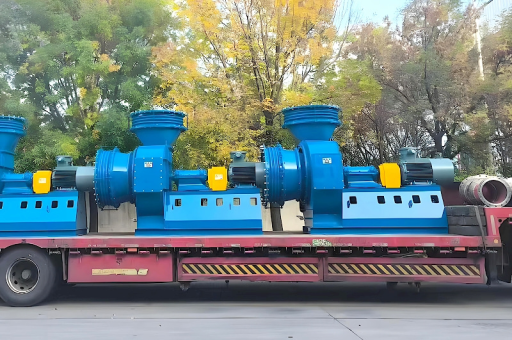
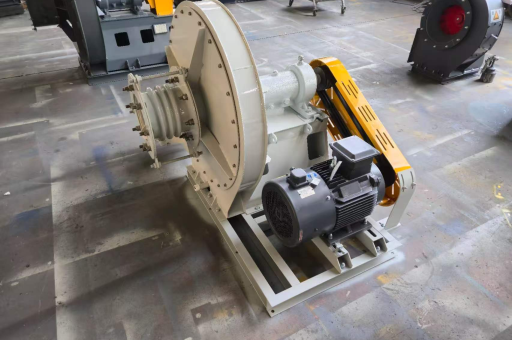
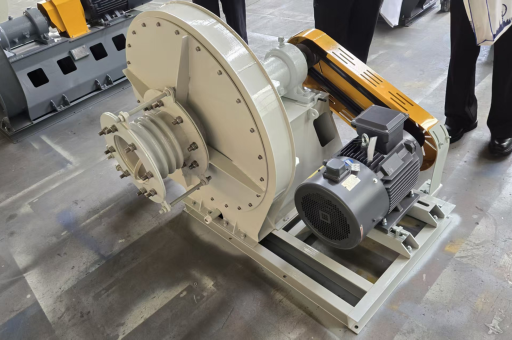
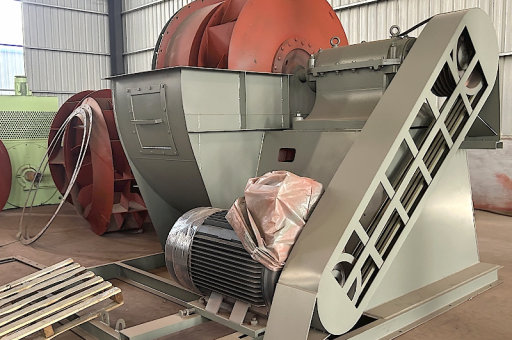
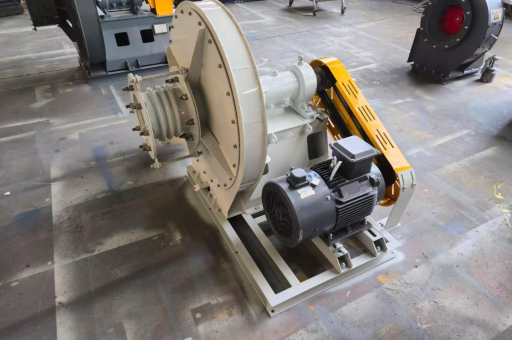
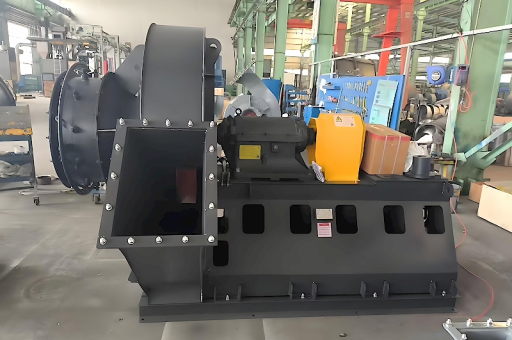
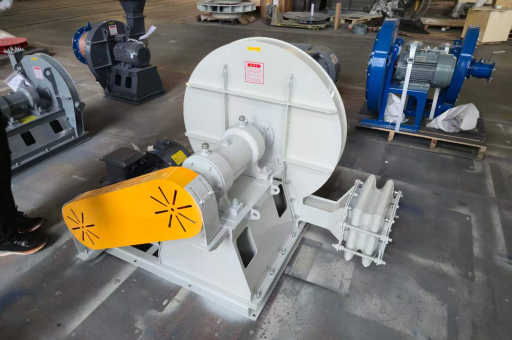
The designation 9-26-11.2D refers to a specific model of high-pressure centrifugal fan, commonly used in industrial applications such as pneumatic conveying, dust collection, and boiler forced-draft systems.
Here is the breakdown of the model number and the key specifications for the 9-26-11.2D fan:
Breakdown of the Model Number
- 9: Represents the fan's pressure coefficient (high pressure, typically in the range of 0.09 to 0.1).
- 26: Represents the specific speed of the impeller, which reflects the relationship between flow rate, pressure, and speed.
- 2: Indicates the impeller diameter in decimeters. Therefore, the impeller diameter is 1120 mm (1.12 meters).
- D: Indicates the drive type. "D" means the impeller is directly coupled to the motor via a coupling (no belts). This usually implies the impeller rotates at the same speed as the motor (e.g., 1450 or 1480 RPM for 4-pole motors).
Key Technical Parameters
| Parameter | Typical Value / Range |
|---|---|
| Type | Centrifugal, Forward-Curved (usually) |
| Impeller Diameter | 1120 mm |
| Max Flow Rate (Approx.) | 25,000 – 35,000 m³/h |
| Max Pressure (Approx.) | 10,000 – 15,000 Pa (Pascals) |
| Operating Speed | 1450 RPM (Direct Drive with 4-pole motor) |
| Motor Power | 75 kW – 132 kW (depending on specific operating point) |
| Application | High pressure systems, pneumatic conveying, cement plants, steel mills |
Characteristics of the 9-26 Series
- High Pressure, Low-Medium Flow: These fans are designed to generate very high static pressure relative to their flow rate.
- Forward-Curved Blades (Usually): The impeller typically has forward-curved blades, which allow for high pressure generation in a compact size. However, they can be less energy-efficient than backward-curved designs under certain conditions.
- Rugged Construction: Built for continuous industrial duty, often in cast iron or high-strength steel.
Applications for the 9-26-11.2D
- Pneumatic Conveying: Moving cement, grain, plastic pellets, or sawdust through pipelines.
- Dust Collection Systems: Inducing high draft for bag filters or cyclones.
- Forced Draft (FD) / Induced Draft (ID): Providing combustion air or removing flue gases from small to medium boilers or furnaces.
- Industrial Process Air: Drying, cooling, or exhaust in manufacturing processes.
Critical Installation Considerations
- Foundation: This fan is heavy. It requires a robust concrete foundation to absorb vibration.
- Vibration Monitoring: Direct-drive ("D") fans are very sensitive to imbalance. Install vibration sensors or regularly check vibration levels.
- Damper Control: A variable inlet damper or variable frequency drive (VFD) is strongly recommended to control flow without damaging the motor during startup.
- Ductwork: Inlet and outlet ductwork must be properly sized and supported to avoid stress on the fan housing.
Comparison to Other Models
- 9-26 vs. 4-72: The 4-72 series is designed for medium pressure, high flow. The 9-26 series is for high pressure, lower flow. You cannot swap them.
- 9-26 vs. 9-19: The 9-19 series is a single-inlet, high-pressure fan often used for pneumatic conveying and burners. The 9-26 is a similar design but optimized for slightly higher flow rates at a slightly lower pressure than the 9-19.
In summary: You have a large, powerful, high-pressure industrial fan (1120 mm impeller) that is directly coupled to a motor. It is designed for moving heavy materials or air against high resistance. Ensure a strong foundation and proper balancing before operation.