This article's table of contents introduction:
- Introduction: The Critical Role of High-Pressure Induced Draft Fans
- Technical Breakdown: 1600Pa Static Pressure and 10000m³/h Airflow
- Design Architecture: Centrifugal Impeller and Housing
- Application Scenarios: Where This Fan Excels
- Performance Optimization: Efficiency, Noise, and Vibration Control
- Comparison with Axial Fans and Other Centrifugal Models
- Common Questions (FAQ)
- Future Trends in Induced Draft Technology
** The Ultimate Guide to 1600Pa 10000m³/h Centrifugal Induced Draft Fans: Performance, Applications, and Engineering Insights
Table of Contents
- Introduction: The Critical Role of High-Pressure Induced Draft Fans
- Technical Breakdown: 1600Pa Static Pressure and 10000m³/h Airflow
- Design Architecture: Centrifugal Impeller and Housing
- Application Scenarios: Where This Fan Excels
- Performance Optimization: Efficiency, Noise, and Vibration Control
- Comparison with Axial Fans and Other Centrifugal Models
- Common Questions (FAQ)
- Future Trends in Induced Draft Technology
Introduction: The Critical Role of High-Pressure Induced Draft Fans
In industrial ventilation and process air movement, the 1600Pa 10000m³/h centrifugal induced draft fan stands as a workhorse for demanding environments. Unlike standard exhaust fans, this configuration delivers precisely controlled negative pressure (induced draft) to pull air or gases through ducts, filtration systems, or combustion chambers. The combination of 1600 Pa static pressure and 10,000 cubic meters per hour flow rate places it in a unique performance bracket—powerful enough for dust collection, boiler flue gas extraction, and chemical fume removal, yet efficient enough for continuous duty cycles.
Engineers and facility managers frequently encounter challenges when selecting a fan that balances high resistance (from long duct runs or filters) with adequate volumetric flow. This article dissects the engineering behind the 1600Pa 10000m³/h centrifugal induced draft fan, its real-world performance, and answers the most common technical questions.
Technical Breakdown: 1600Pa Static Pressure and 10000m³/h Airflow
To understand why this fan is specified, we must examine the two key parameters:
- 1600 Pa (Pascal) Static Pressure: This is the pressure differential the fan generates to overcome system resistance. 1600 Pa is considered medium-to-high static pressure. For reference, a typical residential attic fan might produce 50–100 Pa, while a heavy industrial induced draft fan may reach 2500–4000 Pa. At 1600 Pa, the fan can push or pull air through:
- High-efficiency particulate air (HEPA) filters
- Long ducts (50–100 meters with bends)
- Heat exchangers or boiler flue stacks
- 10000 m³/h Airflow: This flow rate equals approximately 5,885 cubic feet per minute (CFM). It is suitable for:
- Large industrial workshops (500–1,000 m²)
- Extraction hoods in foundries or chemical plants
- Ventilation of server rooms or underground facilities
Performance Curve Insight: A centrifugal induced draft fan at this rating typically has a backward-curved or airfoil impeller, which provides stable operation across a broad flow range. At 1600 Pa, the fan operates near its peak efficiency point, meaning the motor power consumption (usually 5.5–7.5 kW) is optimized for the duty point.
Design Architecture: Centrifugal Impeller and Housing
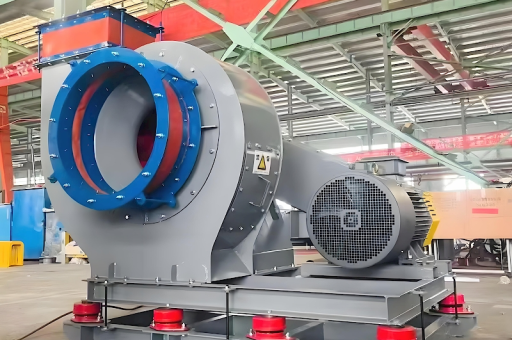
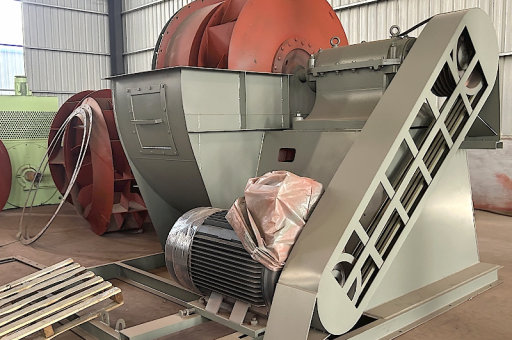
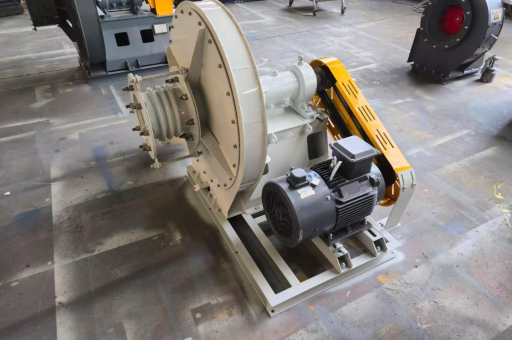
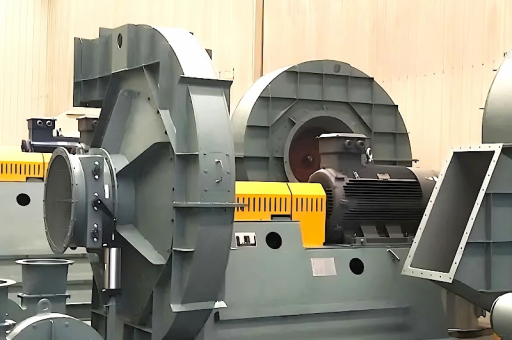
The "centrifugal induced draft" designation means the fan draws air axially into the impeller eye and discharges it radially. Key components include:
- Impeller Type: For 1600 Pa/10000 m³/h, the preferred design is a backward-curved blade (BC) or airfoil blade. These blades reduce turbulence and energy losses, achieving efficiencies above 80%. The impeller is typically cast aluminum or steel with a corrosion-resistant coating.
- Housing: Scroll-shaped volute housing collects air from the impeller and converts velocity pressure into static pressure. The inlet cone (nozzle) is precisely matched to the impeller eye to minimize inlet losses.
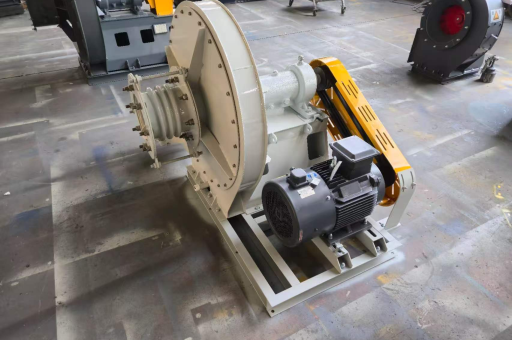
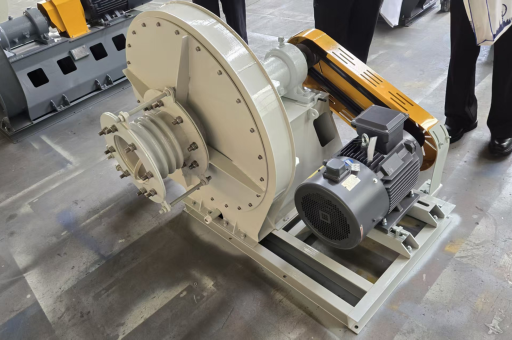
- Drive System: Belt-driven configurations are common for adjustable speed (pulley change), while direct-drive is used when variable frequency drives (VFDs) are employed. For induced draft applications, a VFD is recommended to modulate airflow in response to pressure changes.
- Bearings: Heavy-duty spherical roller bearings are used to handle radial and axial loads at high speeds typical for this pressure class (typically 1450–1800 RPM at 50/60 Hz).
Material Considerations: When handling corrosive fumes (e.g., acid vapors), the fan housing may be lined with stainless steel 316L or coated with anti-corrosive epoxy. For high-temperature flue gases (up to 200°C), the shaft cooling fins and heat-resistant labyrinth seals are essential.
Application Scenarios: Where This Fan Excels
The 1600Pa 10000m³/h centrifugal induced draft fan is deployed in three primary verticals:
A. Industrial Dust Collection and Fume Extraction
- Scenario: A woodworking factory generates fine sawdust. The fan pulls air through ducts from multiple woodworking machines, passing through a bag filter or cyclone.
- Why this fan works: The high static pressure overcomes filter resistance (which increases as dust accumulates), while the 10000 m³/h flow maintains minimum transport velocity in ducts (20 m/s for wood dust).
B. Boiler and Furnace Induced Draft
- Scenario: A coal or biomass boiler needs to draw combustion gases through the furnace, economizer, and scrubber.
- Why this fan works: Induced draft fans extract flue gas at negative pressure, preventing leakage of toxic gases into the boiler room. The 1600 Pa rating ensures adequate pull even after heat exchangers and scrubbers increase backpressure.
C. Chemical Processing and Paint Booth Ventilation
- Scenario: A paint spray booth requires continuous air exchange to maintain solvent vapor concentrations below LEL.
- Why this fan works: The fan can move large volumes of air while maintaining a slight negative pressure in the booth, preventing hazardous vapor migration to adjacent areas.
Performance Optimization: Efficiency, Noise, and Vibration Control
To maximize the lifespan and energy efficiency of the 1600Pa 10000m³/h induced draft fan, consider these engineering best practices:
- Inlet Damper Control: Instead of throttling a dampener on the discharge (which increases turbulence), use inlet vanes to control flow. This reduces power draw by up to 30% at partial loads.
- Sound Attenuation: At this pressure and flow, sound power levels can reach 85–95 dB(A). Install a cylindrical silencer on the inlet or outlet, or use a sound enclosure with acoustic foam.
- Vibration Monitoring: Mount vibration sensors on bearing housings. Acceptable levels per ISO 10816-3 are 4.5 mm/s RMS for rigid supports. Imbalance or misalignment can cause rapid bearing wear.
- Motor Selection: A 7.5 kW, 4-pole motor (1450 RPM) is typical for direct-drive units. For belt-driven versions, ensure the motor pulley ratio does not cause the impeller speed to exceed its maximum rating (usually 2200 RPM for a 1600 Pa duty).
Comparison with Axial Fans and Other Centrifugal Models
| Parameter | 1600Pa/10000m³/h Centrifugal Induced Draft Fan | Axial Fan (Typical Size) | Forward-Curved Centrifugal Fan |
|---|---|---|---|
| Static pressure capability | High (1600 Pa) | Low (200–500 Pa) | Medium (800 Pa) |
| Efficiency at design point | >80% | 60–75% | 65–75% |
| Noise level | 85–95 dB(A) | 75–85 dB(A) | 80–90 dB(A) |
| Suitable for duct resistance | Excellent | Poor | Fair |
| Maintenance frequency | Low (long-life bearings) | Medium | Low |
Key Takeaway: If your system has long ducts, dense filters, or multiple bends, the 1600Pa centrifugal induced draft fan is the only viable choice. Axial fans would stall or fail to deliver required airflow.
Common Questions (FAQ)
Q: Can the 1600Pa 10000m³/h fan run continuously?
A: Yes, provided it is correctly sized for the duty environment. All components—bearings, motor, impeller—should be rated for continuous operation (S1 duty). Use a thermal protection relay on the motor.
Q: What is the maximum temperature for flue gas extraction?
A: Standard models handle 80°C continuously. With high-temperature options (e.g., shaft cooling fins, Grease-purge bearings), operation up to 250°C is possible. Always check the fan's specification sheet.
Q: How do I reduce noise without sacrificing flow?
A: First, ensure the fan is not operating in the surge zone (check the performance curve). Then, install a duct silencer (reactive or dissipative type) on the inlet side. Using a variable frequency drive to run the fan at 1450 RPM instead of 1750 RPM can also reduce tip speed noise.
Q: Does this fan require a foundation?
A: Depending on size, a 1600Pa/10000m³/h fan typically requires a concrete base or heavy steel skid. Vibration isolators (spring or rubber) are recommended to prevent structural vibration transmission.
Q: What if my duct system resistance is only 800 Pa?
A: You may overspin the fan (increase speed) to see higher flow, but this could overload the motor. Instead, add a modulating inlet damper to reduce pressure until you reach the desired 800 Pa operating point. Alternatively, use a smaller impeller or slower motor.
Future Trends in Induced Draft Technology
The industry is moving toward smart induced draft fans that integrate IoT sensors for real-time monitoring of pressure, vibration, and motor current. Predictive maintenance algorithms can forecast bearing failure weeks in advance. Additionally, EC (electronically commutated) motors are gaining traction for their high part-load efficiency, though at higher upfront cost.
For the 1600Pa 10000m³/h class, manufacturers are also exploring composite impellers (carbon-fiber reinforced polymer) to reduce inertia and allow faster acceleration, though metal remains dominant for high-temperature applications.
Final Note: When sourcing a fan, always cross-check the rated performance curve provided by the manufacturer. Airflow and static pressure are interdependent—the fan will only deliver 10000 m³/h at the exact 1600 Pa system resistance. For best results, request a certified performance test report (AMCA 210 or ISO 5801).