This article's table of contents introduction:
- Article Directory
- Introduction: Why Extreme Heat Requires Specialized Ventilation
- Understanding the 1100°C High-Temperature Centrifugal Exhaust Fan
- Industrial Applications Where These Fans Are Indispensable
- Technical Performance Characteristics
- Engineering Challenges and Solutions
- Selection Criteria for Buyers and Engineers
- Maintenance and Safety Best Practices
- Frequently Asked Questions (FAQ)
- Conclusion: Future Trends in High-Temperature Fan Technology
** The Critical Role of 1100℃ High-Temperature Centrifugal Exhaust Fans in Industrial Ventilation: Design, Applications, and Performance Insights
Article Directory
- Introduction: Why Extreme Heat Requires Specialized Ventilation
- Understanding the 1100℃ High-Temperature Centrifugal Exhaust Fan
- Definition and Core Design Principles
- Key Components: Impeller, Motor, and Casing Materials
- Industrial Applications Where These Fans Are Indispensable
- Steel and Metallurgy Plants
- Glass and Ceramics Manufacturing
- Chemical Processing and Incineration
- Power Generation and Heat Treatment
- Technical Performance Characteristics
- Airflow, Pressure, and Temperature Tolerance
- Efficiency at Extreme Conditions
- Noise and Vibration Control
- Engineering Challenges and Solutions
- Thermal Expansion Management
- Motor Cooling Strategies
- Bearing and Seal Durability
- Selection Criteria for Buyers and Engineers
- Flow Rate vs. Temperature Curve
- Material Compatibility (e.g., Inconel vs. Ceramic Coatings)
- Drive Mechanism: Direct vs. Belt-Driven
- Maintenance and Safety Best Practices
- Inspection Frequency and Key Checkpoints
- Overheat Protection Systems
- Emergency Shutdown Protocols
- Frequently Asked Questions (FAQ)
- Conclusion: Future Trends in High-Temperature Fan Technology
Introduction: Why Extreme Heat Requires Specialized Ventilation
In many heavy industrial environments, exhaust fans are not merely conveniences—they are safety-critical systems. When process temperatures climb to 1100°C (2012°F), standard industrial fans fail catastrophically. Materials lose structural integrity, lubricants evaporate, and even high-alloy steels soften. This is where the 1100℃ high-temperature centrifugal exhaust fan becomes a non-negotiable asset. These fans are engineered to continuously handle gas streams at red-heat temperatures, ensuring worker safety, equipment longevity, and compliance with emissions regulations.
Unlike general-purpose fans, these units must withstand extreme thermal loads while maintaining a stable airflow. They bridge the gap between industrial process needs and environmental control, making them a cornerstone of modern manufacturing in sectors like steelmaking, glass production, and waste-to-energy plants. This article will explore their design, performance, selection, and maintenance in depth, drawing from current industry data and technical standards.
Understanding the 1100°C High-Temperature Centrifugal Exhaust Fan
Definition and Core Design Principles
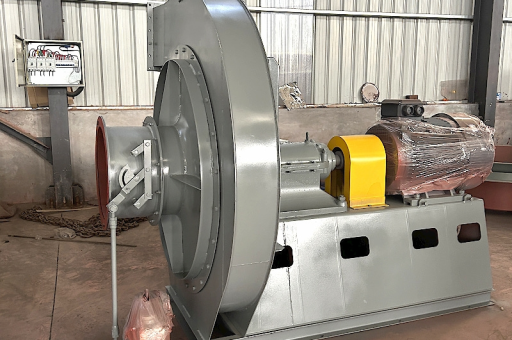
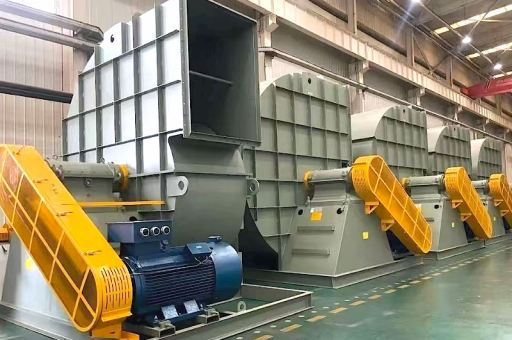
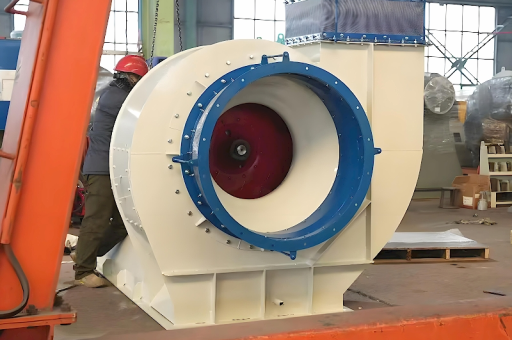
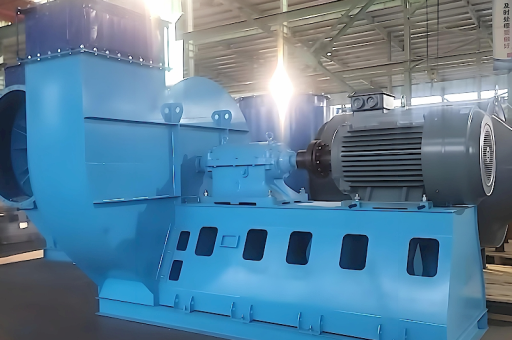
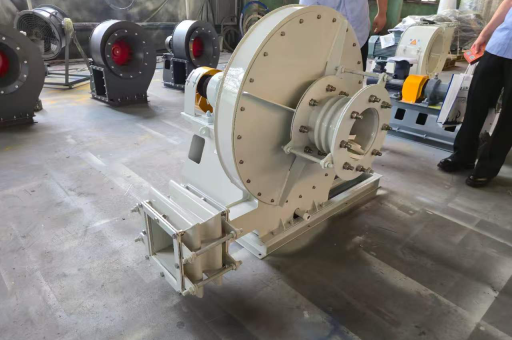
A 1100℃ high-temperature centrifugal exhaust fan is a fan specifically designed to extract gases, fumes, or air from industrial processes where the medium temperature reaches or exceeds 1100°C. The centrifugal action generates pressure by accelerating gas radially outward, which is then directed to a discharge outlet. The design principles focus on thermal isolation, creep resistance, and structural rigidity at temperatures that would normally cause plastic deformation or oxidation.
Key Components: Impeller, Motor, and Casing Materials
- Impeller: Typically made from Inconel 601, 617, or Haynes 230 superalloys, or cast stainless steel grades like 310S (25Cr-20Ni). These materials retain significant tensile strength above 900°C and resist thermal fatigue. Blades are often thicker and reinforced to prevent resonance at high rpm.
- Casing: Fabricated from heavy-gauge stainless steel (304 or 316L) with a refractory lining on the interior (e.g., ceramic fiber board or castable alumina). Some models use a water-cooled jacket to keep the external shell below 80°C for operator safety.
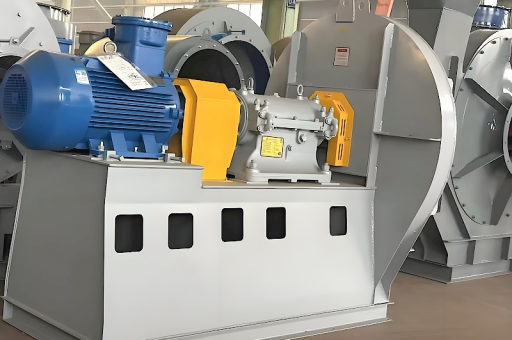
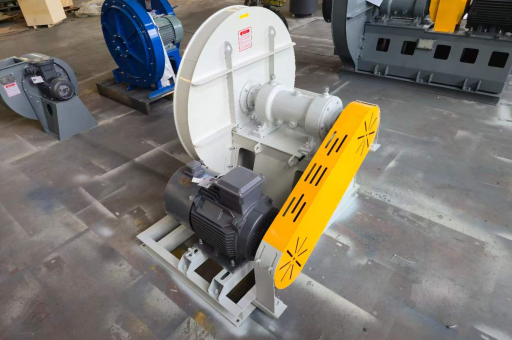
- Motor and Drive System: The motor is mounted outside the hot gas path. A shaft extension with a heat break separates the motor from the impeller chamber. Many designs use a belt-driven system to further isolate the motor from conducted heat. Alternatively, a direct drive with a water-cooled motor can be employed for higher reliability.
Industrial Applications Where These Fans Are Indispensable
Steel and Metallurgy Plants
Electric arc furnaces (EAFs) and basic oxygen furnaces (BOFs) generate massive volumes of off-gas at 1100°C–1300°C. Fans are required for fume extraction, combustion air supply, and cooling. Without them, explosive gas accumulation or toxic metal fume inhalation would halt production.
Glass and Ceramics Manufacturing
Float glass furnaces and ceramic kilns operate around 1100°C. Exhaust fans remove combustion byproducts (CO2, SOx, NOx) while maintaining precise draft pressure. Failure of a high-temp fan here can destroy a million-dollar glass line.
Chemical Processing and Incineration
Waste incinerators for hazardous materials and petrochemical crackers often require fans capable of handling corrosive, hot gases with particulate. The 1100℃ rating is essential for secondary combustion chambers where gases burn off at these temperatures.
Power Generation and Heat Treatment
In combined-cycle plants, gas turbine exhausts can reach similar temperatures. Additionally, heat treatment furnaces (e.g., annealing, brazing) rely on these fans for uniform atmosphere recirculation.
Technical Performance Characteristics
Airflow, Pressure, and Temperature Tolerance
A typical 1100℃ fan offers volumetric flow rates from 5,000 to 200,000 m³/h (2,900 to 117,000 CFM) and static pressure up to 6000 Pa (24 in WG) . A critical performance metric is temperature derating: as gas temperature rises, the air density falls, reducing the pressure the fan can generate. Engineers must specify the fan by actual air density at operating temperature, not standard conditions.
Efficiency at Extreme Conditions
High-temperature fans generally have lower aerodynamic efficiency (60%–75%) compared to ambient fans (80%–85%) due to thicker blades, larger clearances, and thermal losses. However, leading manufacturers use CFD-optimized impellers to minimize turbulence even at 1100°C.
Noise and Vibration Control
Thermal expansion can cause clearance changes that generate broadband noise (85–105 dBA at 1 meter). Vibration sensors and balanced impellers per ISO 1940 G-2.5 grade are standard. Silencers or acoustic enclosures are often recommended for indoor installations.
Engineering Challenges and Solutions
Thermal Expansion Management
At 1100°C, a stainless steel impeller expands by roughly 1.5% in diameter. This must be accommodated by larger housing clearances and sliding bearing mounts. Finite element analysis (FEA) is used to predict hot running clearances.
Motor Cooling Strategies
The motor is kept safe by:
- Cooling fan on the motor shaft (TEFC design)
- Water-cooled bearing brackets
- Fiber-reinforced heat break
Bearing and Seal Durability
Bearings are a weak point. Solutions include:
- High-temperature grease (e.g., polyurea-based, rated to 250°C)
- Isolated bearing pedestals with cooling fins
- Non-contact labyrinth seals to prevent hot gas ingress
Selection Criteria for Buyers and Engineers
Flow Rate vs. Temperature Curve
Always demand the fan curve corrected to actual density. A fan that delivers 100,000 m³/h at 20°C will only deliver about 30,000 m³/h at 1100°C for the same motor power.
Material Compatibility (e.g., Inconel vs. Ceramic Coatings)
- Inconel 601 is standard for dry, low-corrosion gases.
- Ceramic-coated impellers (e.g., alumina or zirconia) reduce oxidation and can extend lifespan by 3x in abrasive environments like fly ash.
- For corrosive gases (HCl, Cl2), Hastelloy C-276 or coated stainless is essential.
Drive Mechanism: Direct vs. Belt-Driven
Belt-driven fans allow motor isolation and speed changes but require more maintenance (belt tension, alignment). Direct-drive fans offer better efficiency and lower noise but need the motor to withstand higher ambient heat, often requiring a water-cooled motor.
Maintenance and Safety Best Practices
Inspection Frequency and Key Checkpoints
- Every 500 hours: Check belt tension, bearing temperature (max 90°C), and vibration.
- Every 2000 hours or annually: Inspect impeller for cracks or erosion, replace seals, and measure housing internal clearance.
- Every 5 years (or as needed): Replace impeller if creep deformation is detected.
Overheat Protection Systems
- Thermocouple embedded in the exhaust stream interlocked to shut down the fan if temperature exceeds 1150°C.
- Bearing temperature sensors with alarm triggers at 95°C.
- Motor overload protection via thermal relays.
Emergency Shutdown Protocols
If the fan fails while process gas is still hot, a backup fan or emergency bypass damper must open automatically to prevent overpressure or explosion. Always follow the manufacturer's emergency stop sequence.
Frequently Asked Questions (FAQ)
Q1: Can a standard centrifugal fan be used at 1100°C?
No. Standard fans use mild steel, aluminum, or standard stainless steels that lose strength drastically above 400°C. At 1100°C, the impeller would warp, melt, or undergo rapid oxidation. Only fans with superalloy construction and thermal management can survive.
Q2: What is the typical lifespan of an 1100°C fan?
With proper material selection (e.g., Inconel 601 impeller), a fan can last 3–5 years in continuous 1100°C service. Harsh environments with chemical attack or thermal cycling may reduce life to 18–24 months.
Q3: How is the motor protected from the heat?
Motors are mounted on a separate base, connected via a heat-break shaft extension (which is longer and has radiation fins). A dedicated cooling fan or water jacket on the motor end keeps internal temperatures below 80°C.
Q4: Can these fans handle corrosive gases?
Yes, but only with appropriate material upgrades. For example, a fan exposed to HCl at 1100°C requires a Hastelloy C-276 impeller and ceramic-lined casing. Always consult the manufacturer's chemical compatibility chart.
Q5: What is the typical price range for a 1100°C high-temperature centrifugal exhaust fan?
Depending on size, material, and airflow capacity, prices range from $15,000 to over $120,000 for large custom units with Inconel impellers and water-cooled systems.
Q6: How do I calculate the correct motor power for a 1100°C application?
Use the fan's air horsepower requirement at actual operating density. Multiply by a safety factor of 1.2–1.5. For example, a fan needing 50 HP at 20°C will need roughly 150 HP at 1100°C due to the drastic density loss. Always provide the manufacturer with the gas density, temperature, and required pressure.
Conclusion: Future Trends in High-Temperature Fan Technology
The demand for 1100°C high-temperature centrifugal exhaust fans is growing rapidly, driven by tighter emissions regulations, increased adoption of waste-to-energy plants, and the expansion of advanced manufacturing (e.g., carbon fiber, silicon carbide). Future innovations will likely focus on:
- Additive manufacturing of superalloy impellers for higher performance.
- Active clearance control using shape-memory alloys to reduce leakage.
- IoT-based predictive maintenance that integrates thermal imaging and vibration analytics.
- Bio-inspired blade designs to boost efficiency even at extreme temps.
Investing in a high-quality, correctly specified 1100°C fan is essential for plant reliability, worker safety, and regulatory compliance. When selecting one, always partner with a manufacturer proven in extreme thermal applications, and never compromise on material quality—at red-heat temperatures, shortcuts lead to catastrophic failure.
For more detailed technical specifications or to discuss a custom solution for your facility, contact an authorized high-temperature fan supplier for a performance guarantee tailored to your process conditions.