This article's table of contents introduction:
- Table of Contents
- Introduction: The Role of a 1.1kW Powder Conveying Fan in Material Handling
- Technical Overview: Power, Airflow, and Pressure Specifications
- Key Applications: Where the 1.1kW Fan Excels
- Design Features: Durability and Dust-Handling Capabilities
- Comparison: 1.1kW vs. Higher-Power Fans in Conveying Systems
- Installation and Maintenance Best Practices
- Energy Efficiency and Cost Optimization
- Frequently Asked Questions (FAQ)
- Conclusion: Making the Right Choice for Your Conveying Line
** Maximizing Efficiency with the 1.1kW Powder Conveying Fan: A Comprehensive Guide for Industrial Applications
Table of Contents
- Introduction: The Role of a 1.1kW Powder Conveying Fan in Material Handling
- Technical Overview: Power, Airflow, and Pressure Specifications
- Key Applications: Where the 1.1kW Fan Excels
- Design Features: Durability and Dust-Handling Capabilities
- Comparison: 1.1kW vs. Higher-Power Fans in Conveying Systems
- Installation and Maintenance Best Practices
- Energy Efficiency and Cost Optimization
- Frequently Asked Questions (FAQ)
- Conclusion: Making the Right Choice for Your Conveying Line
Introduction: The Role of a 1.1kW Powder Conveying Fan in Material Handling
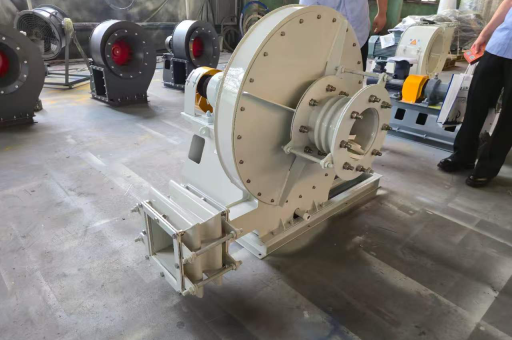
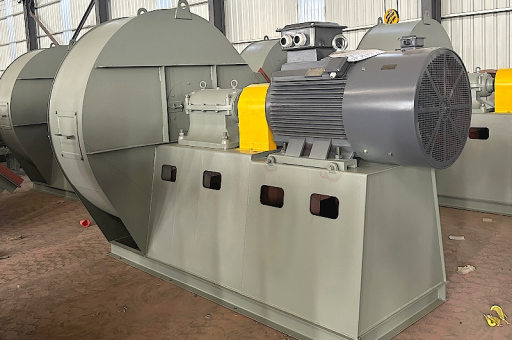
In the world of pneumatic conveying, the fan is the heart of the system. A 1kW powder conveying fan is a compact yet powerful workhorse designed to move dry, bulk powders—from flour and cement to plastic granules and chemical dust—through pipelines. Unlike standard ventilation fans, a powder conveying fan must generate sufficient static pressure to overcome friction in the ductwork and maintain a consistent air velocity that keeps particles suspended.
Why 1.1kW? This power rating sits at a sweet spot: it is robust enough for short- to medium-distance conveying (up to 50–100 meters depending on pipe diameter and material density) while remaining energy-efficient for continuous operation. For small to mid-scale manufacturing facilities, this fan often provides the optimal balance between capital cost and operational performance.
Technical Overview: Power, Airflow, and Pressure Specifications
A typical high-quality 1kW powder conveying fan operates at around 2800–3450 RPM (depending on the motor pole configuration) and delivers an airflow range of approximately 12 to 25 cubic meters per minute (m³/min) at moderate static pressures of 1500–2500 Pa. The specific performance curve depends on impeller design—backward-curved or radial-blade wheels are common for powder handling, as they are less prone to clogging.
Key technical parameters to evaluate:
- Motor Type: IE3 or IE4 premium efficiency induction motor (three-phase preferred for industrial use).
- Impeller Material: Cast iron or stainless steel (for abrasive or corrosive powders).
- Sealing: Shaft seals or labyrinth seals to prevent powder leakage into bearings.
- Inlet/Outlet Sizes: Typically 100–150 mm diameter flanges for standard conveying lines.
Example benchmark: A fan delivering 18 m³/min at 2000 Pa static pressure consumes approximately 1.05–1.15 kW under full load, which matches the 1.1kW rating closely—indicating good design margin.
Key Applications: Where the 1.1kW Fan Excels
The 1.1kW powder conveying fan is not a one-size-fits-all unit, but it has several high-value niches:
- Food Processing: Conveying flour, sugar, spices, or milk powder. The fan must be food-grade compatible (e.g., stainless steel construction, washdown-capable).
- Pharmaceuticals: Transferring active ingredients or excipients. Here, cleanliness and minimal particle degradation are critical—a low-shear impeller design is preferred.
- Plastics Industry: Moving plastic pellets (regrind or virgin) through a closed-loop system. The fan must resist abrasive wear.
- Chemical Powder Handling: Cement, lime, or pigment powders often require explosion-proof motors if dust is combustible.
Real-world scenario: A bakery using a 1.1kW fan to convey flour from bulk storage to a mixing station can achieve 200–400 kg/h throughput with a dilute-phase system—sufficient for medium-scale production.
Design Features: Durability and Dust-Handling Capabilities
A standard ventilation fan fails quickly when exposed to fine dust. The 1.1kW powder conveying fan addresses this with:
- Radial Impeller: Generates high pressure and resists clogging compared to axial fans.
- Wear Liners: Replaceable wear plates inside the housing extend service life when handling abrasive powders like sand or ash.
- Dust-Tight Construction: Gasketed flanges and sealed cable entries prevent powder migration.
- Bearing Protection: Grease-chamber seals or labyrinth rings keep dust out of bearings—a common failure point.
Important note: For fine powders (< 100 microns), a dedicated conveying fan with a tungsten-carbide coating on impeller tips can last 3–5 times longer than an uncoated model.
Comparison: 1.1kW vs. Higher-Power Fans in Conveying Systems
| Aspect | 1kW Fan | 2–3.0kW Fan |
|---|---|---|
| Max conveying distance | 50–80 m | 100–200 m |
| Throughput (dilute phase) | 200–500 kg/h | 500–1500 kg/h |
| Energy consumption (annual at 16h/day) | ~6,400 kWh | ~12,800–19,200 kWh |
| Initial investment | Low–moderate | Moderate–high |
| Noise level | 68–75 dB(A) | 75–82 dB(A) |
For many small factories, a 1.1kW fan is actually more cost-effective overall—as oversized fans waste energy and require larger motors, ductwork, and filters.
Installation and Maintenance Best Practices
Installation tips:
- Place the fan as close as possible to the material pickup point to reduce pipe length and pressure loss.
- Install a pressure relief valve or bypass to prevent overloading the motor if a blockage occurs.
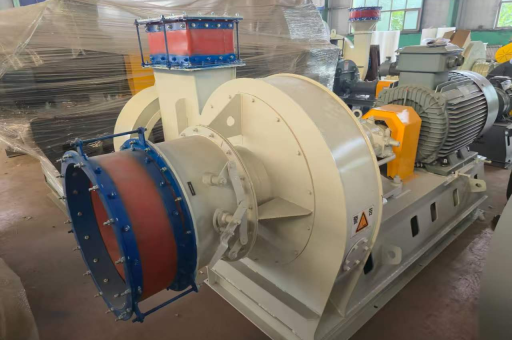
- Use flexible connectors at inlet/outlet to absorb vibration and prevent pipe stress.
Routine maintenance checklist:
- Weekly: Check for unusual noise or vibration—indicates bearing or impeller imbalance.
- Monthly: Inspect shaft seals for powder leakage; replace if worn.
- Quarterly: Measure motor current—should be within ±10% of rated full load amps.
- Annually: Remove impeller, clean thoroughly, and check for erosion or corrosion.
Critical warning: Never operate the fan without a properly sized inlet filter or safety screen—foreign objects can destroy the impeller in seconds.
Energy Efficiency and Cost Optimization
Even a 1.1kW fan can become costly if run continuously at full load. Here are three proven strategies to reduce operating costs:
- Variable Frequency Drive (VFD): Reducing speed by 20% cuts power consumption by nearly 50% (per the fan affinity laws). In practice, many conveying cycles do not need full speed—e.g., during low-demand hours.
- Sound duct design: Use smooth-walled pipes (e.g., stainless steel), minimize bends, and keep pipe diameter consistent. Each unnecessary 90° elbow can add 30–50 Pa of pressure drop.
- Automated controls: Turn off the fan when the conveying cycle is idle—a simple timer or level sensor can save hundreds of kWh per year.
Cost savings example: A facility operating a 1.1kW fan for 16 hours/day at full speed uses ~6,400 kWh/year. By adding a VFD and reducing average speed by 15%, consumption drops to ~4,400 kWh—saving about $240/year (at $0.12/kWh).
Frequently Asked Questions (FAQ)
Q1: Can a 1.1kW powder conveying fan handle sticky or moist materials?
A: Not recommended without modifications. Moist powders (e.g., wet sugar) will cake on the impeller and cause imbalance. For sticky materials, use a positive-displacement blower or a fan with a self-cleaning impeller design.
Q2: What is the typical lifespan of a 1.1kW conveying fan?
A: With proper maintenance and handling of non-abrasive powders (like flour), expect 5–8 years. With abrasive powders (e.g., silica dust), 2–4 years unless wear-protection coatings are used.
Q3: Can I use a standard centrifugal fan for powder conveying?
A: Generally no—standard fans lack the static pressure (usually <1000 Pa) needed to keep particles suspended. A conveying fan must generate at least 1500 Pa at operating point.
Q4: Is a 1.1kW fan suitable for dense-phase conveying?
A: No. Dense-phase systems require 3–5 kW minimum and often use compressors or boosters. The 1.1kW fan is strictly for dilute-phase (low material-to-air ratio) conveying.
Q5: How do I calculate the correct fan for my powder?
A: You need three parameters: conveying distance, pipe diameter, and material bulk density. Use the formula: Required pressure (Pa) = Frictional loss + acceleration loss + elevation gain. For a first estimate, a 1.1kW fan works for distances up to 60 m with a 100 mm pipe and density < 800 kg/m³.
Conclusion: Making the Right Choice for Your Conveying Line
The 1kW powder conveying fan is a proven, cost-effective solution for many industrial powder transport tasks. It excels in applications requiring moderate distances (under 80 meters) and throughputs up to 500 kg/h, while offering lower energy consumption and noise compared to larger units.
However, success depends on correct specification: matching fan performance to your powder’s density, abrasiveness, and moisture level. Always prioritize fans with dust-tight construction, quality bearings, and an IP55 or higher motor enclosure.
If your system requires longer runs or higher capacity, consider stepping up to a 2.2kW unit—but for the vast majority of small to medium conveyor lines, the 1.1kW fan delivers an excellent return on investment.
Remember: The best fan is not the cheapest one—it’s the one that precisely matches your conveying profile.