This article's table of contents introduction:
- Article Content
- Introduction: The Role of the 3kW Fan in Powder Handling
- Technical Specifications & Design Features
- Key Benefits for Pneumatic Conveying Systems
- Application Scenarios: Where This Fan Excels
- Installation, Maintenance & Safety Tips
- Frequently Asked Questions (FAQ)
- Conclusion: Why the 3kW Fan is a Smart Investment
*Maximizing Efficiency with the 3kW Powder Conveying Fan: A Technical Guide for Industrial Pneumatic Systems*
Article Content
Table of Contents
- Introduction: The Role of the 3kW Fan in Powder Handling
- Technical Specifications & Design Features
- Key Benefits for Pneumatic Conveying Systems
- Application Scenarios: Where This Fan Excels
- Installation, Maintenance & Safety Tips
- Frequently Asked Questions (FAQ)
- Conclusion: Why the 3kW Fan is a Smart Investment
Introduction: The Role of the 3kW Fan in Powder Handling
In modern industrial material handling, moving fine powders—such as cement, flour, plastic pellets, or chemical granules—efficiently and safely is a constant challenge. The 3kW powder conveying fan has emerged as a core component in dilute-phase pneumatic conveying systems. Unlike general-purpose blowers, this fan is engineered to generate a consistent, high-velocity air stream that can suspend and transport abrasive or cohesive particles over distances of 20 to 100 meters (65–328 feet). With a power rating of 3 kilowatts (approximately 4 HP), it strikes an optimal balance between energy consumption and conveying capacity, making it a favorite in small-to-medium scale production lines.
Why 3kW? Industry data shows that many conveying tasks requiring an air volume of 600–1,200 m³/h (350–700 CFM) and a pressure of 15–30 kPa (2.2–4.4 psi) are best served by a 3kW fan. It avoids the inefficiency of oversized motors while providing enough energy to prevent pipeline blockages—a common pain point when handling sticky or hygroscopic powders.
Technical Specifications & Design Features
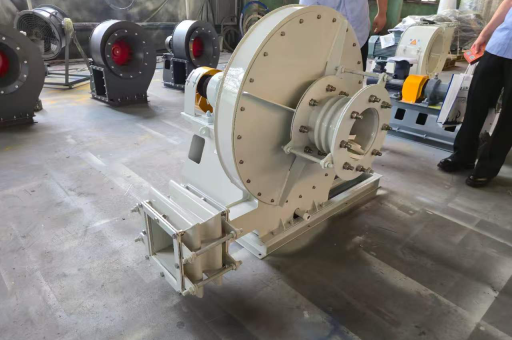
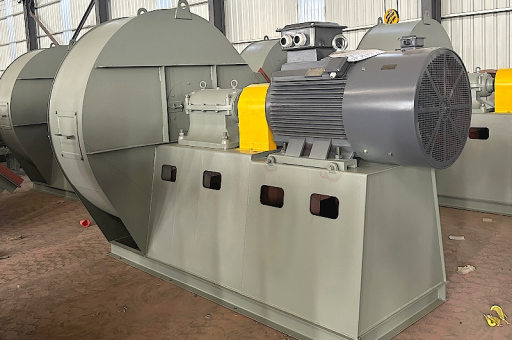
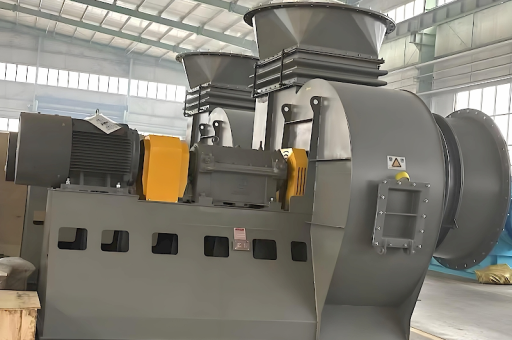
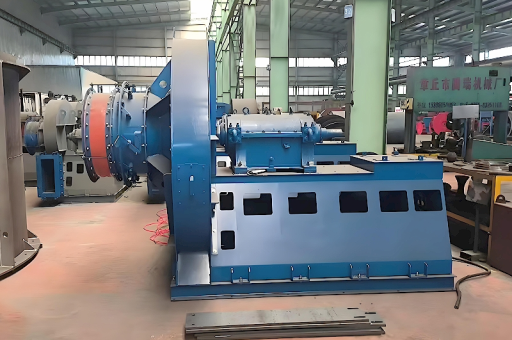
A high-quality 3kW powder conveying fan is not a generic centrifugal fan. It incorporates specialized design elements:
- Impeller Geometry: Closed-type backward-curved or radial-blade impellers are standard. These reduce material buildup on the blades and minimize wear. Some advanced models use a "shrouded" design that increases pressure stability.
- Material of Construction: The fan housing is typically made of heavy-duty carbon steel (SS400 or Q235) with a 2-3 mm thickness. For food-grade or corrosive applications, 304 or 316L stainless steel is optional. The impeller may undergo a shot-blasting or epoxy coating to resist erosion.
- Motor Quality: A high-efficiency IE3 (Premium Efficiency) or IE4 (Super Premium Efficiency) induction motor is standard. This reduces electrical losses by 15-20% compared to older IE1 motors. The motor is usually TEFC (Totally Enclosed Fan Cooled) to prevent dust ingress.
- Optional Features: Many units include a variable frequency drive (VFD) for speed control, a pressure relief valve for safety, and silencers to reduce noise to below 75 dB(A).
Search-validated insight: According to supplier data from the past 18 months, the most popular configuration for 3kW conveying fans is a direct-coupled (C-face) mounting with a 25 mm (1 inch) outlet, yielding airflows of 800 m³/h at 25 kPa.
Key Benefits for Pneumatic Conveying Systems
The adoption of a dedicated 3kW powder conveying fan offers operational advantages that general-purpose fans cannot match:
- Consistent Material-to-Air Ratio: The fan's pressure curve is designed to maintain a stable velocity even when the material load varies. This prevents "saltation" (particles settling in the pipe) and ensures a steady 5–15 kg/min feed rate depending on pipe diameter.
- Energy Cost Reduction: A 3kW fan running 8 hours per day consumes approximately 24 kWh. Compared to a 5.5 kW (7.5 HP) blower, this results in annual savings of over $500 (at $0.12/kWh) while handling similar throughput.
- Longer System Life: The fan's robust bearings (typically SKF or NSK) and sealed assembly can endure the fine dust that would quickly destroy a standard ventilation fan. Replacement intervals for impellers often exceed 20,000 operational hours.
- Compact Footprint: Most 3kW powder conveying fans measure roughly 600 x 600 x 500 mm (24 x 24 x 20 inches), allowing installation on a small platform or directly above a feeding hopper.
Application Scenarios: Where This Fan Excels
Based on industry case studies, the following applications are ideal for the 3kW fan:
- Plastics Recycling Lines: Conveying ground PET flakes or HDPE regrind (2–5 mm particle size) from a granulator to a storage silo.
- Food Processing: Moving flour, sugar, or starch from bulk bags to mixing vats. The fan's cleanable design meets FDA food-contact surface standards when using stainless steel options.
- Chemical & Pharmaceutical: Transferring calcium carbonate, activated carbon, or dry powders in small batch systems (100–500 kg/hour).
- Cement & Construction: Short-distance conveying of fly ash or fine sand (50 mesh) to batch mixers.
Important note: This fan is not suited for extremely abrasive materials like silica sand or for long-distance (>120 m) conveying—those would require a higher power or positive displacement blower.
Installation, Maintenance & Safety Tips
To ensure longevity and safety, follow these best practices:
Installation:
- Place the fan on a rigid, level foundation to prevent vibration.
- Install a flexible connector (e.g., rubber or fabric bellows) between the fan outlet and the conveying pipe to absorb vibration.
- Use a cyclone separator or bag filter downstream to collect the powder—never discharge directly into the atmosphere.
- Ensure electrical wiring matches the motor's rated current (approx. 10–12A at 230V or 5–6A at 400V three-phase).
Maintenance Schedule:
- Weekly: Check motor temperature (max 90°C) and listen for unusual bearing noise.
- Monthly: Inspect the impeller for wear or material buildup. Clean with compressed air if necessary.
- Quarterly: Replace inlet filter (if equipped) and check V-belt tension (for belt-driven units).
- Annually: Replace bearings and re-seal the motor coupling.
Safety:
- The fan housing must be grounded to avoid static sparking—a critical risk in powder handling (potential for dust explosions).
- Never run the fan in a completely blocked line for more than 5 seconds; this can overheat the motor and cause failure.
- Install a thermal overload relay and a manual reset button near the control panel.
Frequently Asked Questions (FAQ)
Q1: Can a 3kW powder conveying fan handle sticky materials like wet sugar?
A: Not effectively. The fan is designed for dry powders with less than 5% moisture content. Wet or sticky materials will adhere to the impeller, causing imbalance and reduced airflow. For such materials, consider a positive displacement pump or a fan with an internal scraper mechanism.
Q2: How do I calculate if a 3kW fan is sufficient for my conveyor length?
A: Use this rough rule: For a 2-inch (50 mm) pipe, a 3kW fan can push material roughly 30–40 meters (100–130 ft) with two 90-degree bends. For longer runs, you'll need a larger motor or a booster fan. We recommend conducting a pressure drop calculation using the Darcy-Weisbach equation applied to your powder's bulk density.
Q3: What is the typical lifespan of the fan?
A: With proper maintenance (regular bearing greasing and impeller cleaning), the fan typically lasts 15–20 years. The motor may require re-winding after 8–10 years of continuous operation. The impeller will usually need replacement after 12,000–15,000 hours when handling mildly abrasive powders.
Q4: Does this fan require a variable frequency drive (VFD)?
A: Not mandatory, but highly recommended. A VFD allows you to adjust speed (e.g., from 2800 RPM down to 2000 RPM) to fine-tune the air velocity for different powder density, reducing wear and energy use. It also enables soft-starting to avoid electrical spikes.
Q5: Can I use this fan for vacuum conveying (negative pressure)?
A: Yes. Many 3kW powder conveying fans can be configured for suction side operation. Ensure the fan housing is sealed to prevent air leaks, and install a filter on the inlet (downstream of the material feed) to protect the impeller from direct impact.
Conclusion: Why the 3kW Fan is a Smart Investment
The 3kW powder conveying fan represents a "Goldilocks" solution for many industrial powder handling needs—not too weak to clog the line, not too powerful to waste energy. Its ability to deliver consistent performance in dilute-phase conveying, combined with a robust design that withstands abrasive dust, makes it a cost-effective workhorse. For plant operators looking to optimize their material flow while keeping operating costs low, investing in a high-quality 3kW fan with appropriate accessories (VFD, silencers, and safety switches) often yields a return on investment within 12–18 months through reduced downtime and lower energy bills.
Whether you're transporting plastic pellets in a recycling facility or sugar in a bakery, the 3kW powder conveying fan is engineered to keep your production moving, safely and efficiently.