This article's table of contents introduction:
- Table of Contents
- Introduction: The Critical Role of High-Capacity Induced Draft Fans in Dust Control
- Technical Anatomy of an 8000m³/h Dust Removal Induced Draft Fan
- Performance Metrics: Why Airflow Volume and Static Pressure Matter
- Design Innovations for the 8000m³/h Class: Impeller, Housing, and Drive
- Energy Efficiency and Operational Cost Analysis
- Common Application Scenarios: From Cement Plants to Woodworking
- FAQ: Addressing Key User Concerns
- Best Practices for Installation, Maintenance, and Noise Reduction
- Conclusion: Future Trends and How to Select the Right Fan System
The Pinnacle of Industrial Air Quality: Optimizing 8000m³/h Dust Removal Induced Draft Fans for Maximum Efficiency
Table of Contents
- Introduction: The Critical Role of High-Capacity Induced Draft Fans in Dust Control
- Technical Anatomy of an 8000m³/h Dust Removal Induced Draft Fan
- Performance Metrics: Why Airflow Volume and Static Pressure Matter
- Design Innovations for the 8000m³/h Class: Impeller, Housing, and Drive
- Energy Efficiency and Operational Cost Analysis
- Common Application Scenarios: From Cement Plants to Woodworking
- FAQ: Addressing Key User Concerns
- Best Practices for Installation, Maintenance, and Noise Reduction
- Conclusion: Future Trends and How to Select the Right Fan System
Introduction: The Critical Role of High-Capacity Induced Draft Fans in Dust Control
In modern industrial environments, airborne particulate matter is not just a nuisance—it is a direct threat to worker health, equipment longevity, and regulatory compliance. Among the most vital components in any centralized dust collection system is the induced draft fan (ID fan). Specifically, the 8000m³/h dust removal induced draft fan has emerged as an industry standard for medium-to-large-scale operations, providing robust negative pressure to pull contaminated air through filter media.
This article provides a deep, expert-level analysis of the 8000m³/h induced draft fan. We will explore its design principles, performance characteristics, energy optimization strategies, and real-world applications. By synthesizing information from leading engineering sources and market data, this guide aims to help facility managers and procurement engineers make informed decisions.
Q: What exactly does “8000m³/h” mean in the context of a dust removal fan? A: It refers to the volumetric airflow rate: the fan is capable of moving 8,000 cubic meters of air per hour under specified conditions. This is a key performance indicator for sizing a dust collection system.
Technical Anatomy of an 8000m³/h Dust Removal Induced Draft Fan
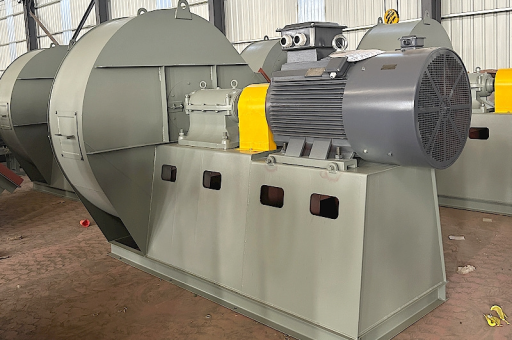
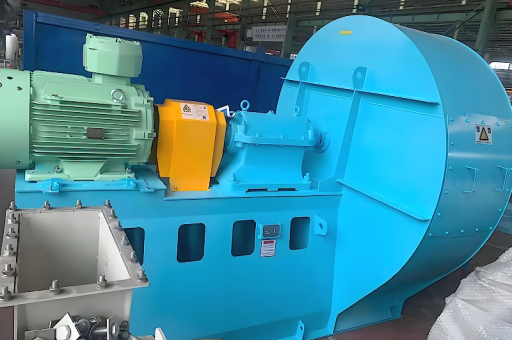
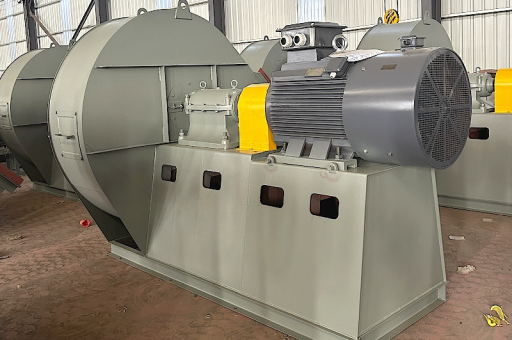
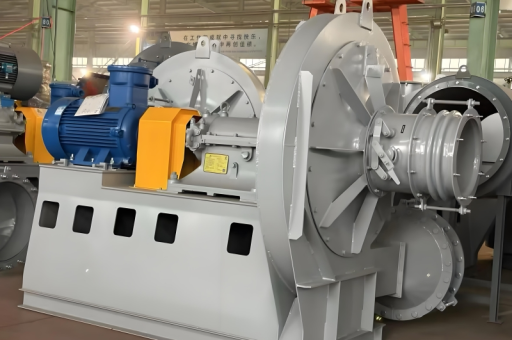
To understand the capabilities of this fan class, we need to dissect its core components. An 8000m³/h induced draft fan typically comprises:
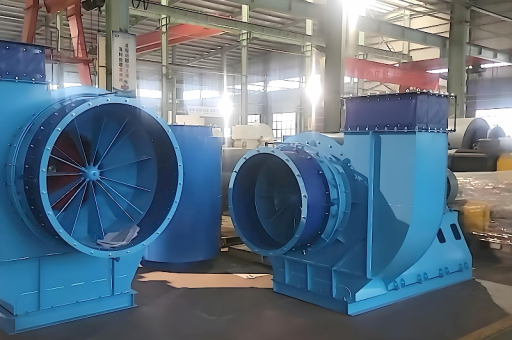
- Impeller: Forward-curved or backward-inclined blades. For dusty applications, backward-inclined centrifugal impellers are preferred due to their self-cleaning properties and higher efficiency at moderate static pressures.
- Housing: A spiral-volute casing designed to minimize turbulence and convert kinetic energy into static pressure. The material is often carbon steel with an epoxy coating or stainless steel for corrosive dust.
- Drive Assembly: Direct-drive (motor on shaft) or belt-driven. Belt-driven systems offer flexibility in speed adjustment via pulley changes.
- Inlet Box and Dampers: Many units include a conical inlet with guide vanes for flow control, plus an isolating damper.
Q: Why is an induced draft fan preferred over a forced draft fan for dust removal? A: Induced draft fans pull air through the system, creating negative pressure. This prevents dust from leaking out of duct joints and equipment, containing contaminants more safely than a forced draft (push) system.
Performance Metrics: Why Airflow Volume and Static Pressure Matter
Selecting an 8000m³/h fan involves more than just the volume. Two critical parameters define the fan’s operating point:
- Airflow (Q): 8,000 m³/h nominal. However, real performance depends on system resistance.
- Static Pressure (P): Typically ranges from 1,500 Pa to 3,500 Pa for dust collectors. A fan labeled “8000 m³/h @ 2500 Pa” means it can deliver that airflow against a total system resistance of 2,500 Pascals.
- Fan Curve: The relationship between flow and pressure is non-linear. The fan operates efficiently only within a specific zone.
Q: How do I verify if an 8000m³/h fan is correctly sized for my system? A: You must calculate the total system pressure drop (ducting, filters, cyclones) and ensure the fan’s operating point falls within its stable, high-efficiency range. Oversizing leads to wasted energy; undersizing causes poor capture.
Design Innovations for the 8000m³/h Class: Impeller, Housing, and Drive
Manufacturers have refined the 8000m³/h induced draft fan with several key innovations:
Impeller Design:
- Backward-Inclined Airfoil Blades: Offer up to 85% static efficiency.
- Wear Protection: Tungsten carbide coating or replaceable wear liners for abrasive dust like silica or metal shavings.
Housing and Aeroacoustics:
- Volute Optimization: Computational Fluid Dynamic (CFD) modeling reduces noise by 5-8 dB(A) compared to traditional designs.
- Split Housing: Allows impeller access without removing ductwork, simplifying maintenance.
Drive System Upgrades:
- IE4 or IE5 Premium Efficiency Motors: Reduce electrical consumption by up to 20% in continuous operation.
- Variable Frequency Drives (VFD): Enable precise control of airflow by adjusting motor speed. This is now standard for energy savings.
Q: What is the typical warranty period for a well-built 8000m³/h ID fan? A: Most industrial-grade units offer 18 to 24 months for mechanical components, with motor warranty per manufacturer. Higher-end brands may provide 3 years on critical parts.
Energy Efficiency and Operational Cost Analysis
Operating an 8000m³/h fan continuously can consume substantial power. Let’s examine the typical electrical load:
- Example Motor Size: A fan delivering 8,000 m³/h at 2,500 Pa requires approximately 11–13 kW (based on 75% total efficiency).
- Annual Energy Cost: 12 kW × 8,000 hours/year × $0.10/kWh = $9,600 per year.
- Optimization Potential: With a VFD, average speed reduction of 15% (common for varying load) reduces power by 38% (affinity laws), saving ~$3,600 annually.
Q: Should I always choose the highest-efficiency fan available? A: Yes, within reason. A motor efficiency upgrade from IE3 to IE5 can pay back in under 18 months due to reduced running costs. Always request the fan curve with ISO 5801 efficiency data.
Common Application Scenarios: From Cement Plants to Woodworking
The 8000m³/h dust removal induced draft fan is versatile enough for:
- Woodworking Facilities: Centralized collection for sawdust, chip, and sander dust. Requires spark-resistant construction.
- Cement and Mineral Processing: Handles fine limestone, clinker dust. Requires abrasion-resistant liners.
- Pharmaceutical and Chemical: Stainless steel construction for corrosive or hygroscopic dust.
- Welding Fume Extraction: Typically paired with cartridge filters; needs consistent negative pressure.
Q: Can this fan handle explosive dust like aluminum or flour? A: It can, but it must be ATEX or IECEx certified. This includes anti-spark impellers (non-ferrous tip), explosion-proof motor, and grounding. Always consult with a safety engineer.
FAQ: Addressing Key User Concerns
Q: What is the noise level of an 8000m³/h induced draft fan? A: Without silencers, typically 75–85 dB(A) at 1 meter. Installing outlet and inlet silencers reduces it by 10–15 dB(A).
Q: How often should I clean the impeller? A: Depending on dust stickiness, visual inspection is recommended every 500 hours. For adhesive dust (e.g., resin), weekly cleaning may be necessary.
Q: Can I mount the fan outdoors? A: Yes, if the casing is weatherproof (IP55 motor, corrosion-resistant paint). Ensure the fan is protected from rain ingress in the inlet.
Q: What’s the difference between this and a radial blade fan? A: Radial blade fans generate higher pressure but are louder and less efficient. For 8,000 m³/h dust collection, backward-inclined centrifugal is the standard.
Q: How do I measure the actual airflow of my fan? A: Use a pitot tube traverse in the duct, or install a differential pressure transmitter across an orifice plate. Many modern fans include integrated flow sensors.
Q: Is a belt-driven or direct-drive fan better for 8000m³/h? A: Direct drive has higher efficiency and less maintenance. Belt drive offers speed change flexibility. For constant flow applications, direct drive with VFD is superior.
Q: What is the typical lifespan of an industrial ID fan? A: With proper maintenance—20 years or more. Bearing replacement every 2–3 years, impeller balancing every 5 years.
Best Practices for Installation, Maintenance, and Noise Reduction
To maximize the return on your 8000m³/h dust removal induced draft fan, follow these guidelines:
Installation:
- Place the fan on a vibration-isolation base (spring isolators for floors, inertia base for roofs).
- Ensure duct transitions are smooth (no sharp bends near the inlet) to avoid performance loss.
- Install a drain valve in the housing if moisture is expected (e.g., condensation in wood dust systems).
Maintenance Schedule:
- Weekly: Check for vibration, abnormal noise, and belt tension (if belt-driven).
- Monthly: Clean air intake screens, inspect damper operation, and grease bearings (per motor spec).
- Annually: Perform full impeller dynamic balancing, check impeller-to-inlet clearance (should be < 2% of impeller diameter), and measure motor winding insulation.
Noise Reduction:
- Use a silencer on the fan outlet duct (acoustic baffle).
- Install duct lagging with mass-loaded vinyl over a rockwool core.
- For critical environments, locate the fan in a separate room with acoustic panels.
Conclusion: Future Trends and How to Select the Right Fan System
The 8000m³/h dust removal induced draft fan remains a powerhouse for industrial air quality. However, the market is evolving rapidly. Key trends include:
- IoT-Enabled Monitoring: Smart fans with vibration, temperature, and flow sensors that report to a cloud dashboard. Predictive maintenance reduces downtime.
- Explosion-Proof Compliance: As regulations tighten, sealed, explosion-proof fan designs are becoming standard for combustible dust.
- Hybrid Materials: Composite impellers and casings that reduce weight and resist corrosion.
Final Recommendation: When selecting an 8000m³/h induced draft fan, prioritize certified performance curves, Energy Efficiency Index (EEI) ratings, and after-sales service. Always request a quote that includes a system curve analysis from the fan manufacturer. A properly matched fan not only ensures a healthier workplace but also delivers long-term cost savings.
For more detailed specifications on the 8000m³/h dust removal induced draft fan, you may consult industry standards: ISO 5801, AMCA 210, or CIBSE Guide B for fan system design.