
This article's table of contents introduction:
- Breaking Down the Specification
- Key Design Features for Waste & Hazardous Waste
- Why "Backward" is Preferred for Hazardous Waste?
- Specific Applications in the Industry
- Critical Questions for Procurement
- Summary
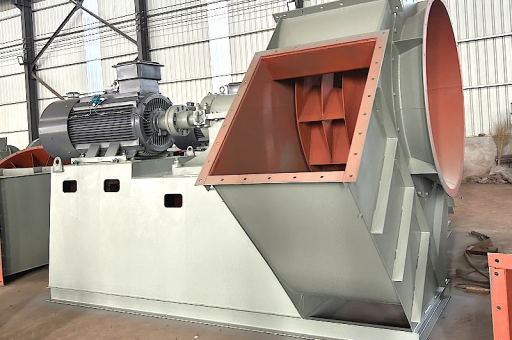
It appears you are looking for information on a Single Suction Backward blower specifically designed for the Solid Waste and Hazardous Waste Treatment Industry.
This is a highly specialized industrial fan used in applications like waste-to-energy plants, incineration, biogas extraction, and fume extraction from hazardous waste.
Here is a detailed breakdown of what this specification means and why it is used in that industry.
Breaking Down the Specification
- Single Suction: Air enters the impeller from only one side (as opposed to double suction which pulls from both sides). This is standard for most high-pressure industrial blowers.
- Backward: This refers to the Backward-Curved (or Backward-Inclined) Blades on the impeller.
- Why it matters: Backward blades are more efficient than forward-curved blades. They have a non-overloading power curve, meaning if the system pressure drops, the motor won't burn out due to excess amperage. This is critical for waste treatment where filter loading changes constantly.
- Waste Treatment Industry: This dictates the materials of construction and safety features.
Key Design Features for Waste & Hazardous Waste
Standard blowers will fail in these applications. The correct blower must have:
- Spark-Resistant Construction (AMCA Type A or B): Hazardous waste can contain combustible dust, fumes, or flammable gases. The blower must be built with non-ferrous materials (aluminum or bronze impellers) or a sprayed coating to prevent sparks from friction.
- Corrosion Protection:
- Material: Carbon Steel with heavy epoxy coating, or Stainless Steel (304L or 316L) for acidic fumes (e.g., from chemical waste incineration).
- Wear Plates: Replaceable liners in the housing to protect against erosive particles like fly ash or glass dust.
- Shaft Seal: For hazardous gases, a simple labyrinth seal is insufficient. Mechanical seals or gas-tight packing glands with a purge system (air or nitrogen) are required to prevent toxic leaks to the atmosphere.
- High Temperature Capability: Waste incinerators produce high heat. The fan may need to handle air up to 400°F (200°C) or higher, requiring heat-resistant bearings, shaft cooling discs, and thermal expansion compensation in the shaft.
Why "Backward" is Preferred for Hazardous Waste?
- Non-Overloading Power Curve: If the ducts clog or filters get dirty (which happens constantly in waste treatment), a backward blower will draw less power. A forward-curved fan would trip the breaker or burn the motor.
- Higher Static Pressure: Hazardous waste systems often have long duct runs and high-pressure drop scrubbers. Backward blowers can generate 20" to 50"+ W.G. (water gauge) efficiently.
- Ruggedness: These impellers are structurally stronger and resist corrosion/erosion better than lightweight, forward-curved blades.
Specific Applications in the Industry
You would find a Single Suction Backward Blower used in:
- Incinerator Combustion Air: Pushing air into the rotary kiln.
- Induced Draft (ID Fans): Pulling hot flue gas through the scrubber and stack (must resist corrosion from acid smut).
- Biogas / Landfill Gas Boosters: Moving methane from hazardous waste landfills into boilers or generators (must be explosion-proof).
- Negative Air Filtration: Maintaining a negative pressure in storage rooms for toxic dust (e.g., incinerator fly ash).
Critical Questions for Procurement
To correctly order or specify this blower, you must know:
- Air Properties:
- Is the gas explosive? (ATEX / IECEx Zone 1 or 2?)
- Is it corrosive? (Acid dew point?)
- Temperature? (Max continuous vs. Peak surge?)
- Is it dusty? (Loading in grains/cubic foot?)
- Arrangement (Drive Type):
- Arrangement 4 (Direct Drive): Bearings supported by the housing. Common for high speeds.
- Arrangement 8 (Belt Drive with outboard bearings): Allows for speed changes (CFM changes) and protects bearings from hot/dirty air.
- Wheel Access: Does the housing have a hinged door for cleaning out caked-on dust and solids?
Summary
A Single Suction Backward Solid Waste and Hazardous Waste Treatment Industry Blower is not a standard HVAC fan. It is a heavy-duty, high-static pressure, spark-resistant, and often gas-tight fan designed to handle erosive, corrosive, or explosive gas streams while maintaining high efficiency.
If you are replacing a specific unit, the best next step is to check the nameplate for the manufacturer's model number. Common brands for this niche include New York Blower (NYB), Greenheck (Industrial), Chicago Blower, and Robinson Fans.
Disclaimer: This information is for technical reference. Always consult the fan manufacturer for specific approval and compliance with local safety codes regarding hazardous materials.





