
*The Critical Role of Stainless Steel V Belt in Driving Coal Fired Forward Boiler Blower Fan Systems: Performance, Durability & Optimization*
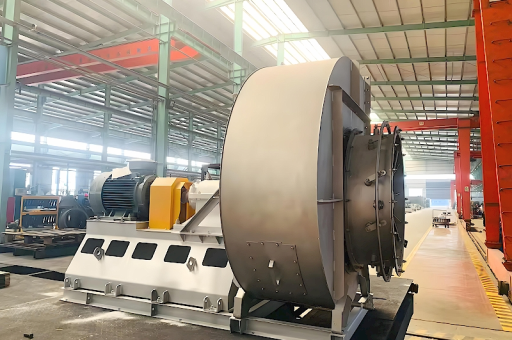
Table of Contents (Directory Guide)
- Introduction: Understanding the Core System
- Why Stainless Steel V Belts? – Material Advantages
- The Forward Boiler Blower Fan: Function & Load Characteristics
- Key Technical Parameters for Belt Selection
- Common Failure Modes & How to Avoid Them
- Installation & Tensioning Best Practices
- FAQ – Addressing Frequent Operational Questions
- Conclusion: Enhancing Reliability & Efficiency
Introduction: Understanding the Core System
In modern industrial thermal plants, a Stainless Steel V Belt serves as the indispensable mechanical link between an electric motor and a Coal Fired Forward Boiler Blower Fan. This fan is responsible for supplying primary or secondary combustion air into the boiler furnace, ensuring complete fuel combustion and maintaining stable steam pressure. The choice of belt material—specifically stainless steel—is not arbitrary; it is a direct response to the harsh operating environment characterized by high ambient temperatures (often exceeding 80°C–120°C near the fan housing), coal dust, moisture, and vibration.
Unlike traditional rubber or neoprene V belts, stainless steel V belts (often constructed from AISI 304 or 316 grade steel wire cord encapsulated in a high-temperature polymer) offer superior resistance to creep, heat degradation, and oil contamination. This article provides a detailed, SEO-optimized technical analysis of how this belt system performs, how to select the right specification, and how to troubleshoot common field issues.
Why Stainless Steel V Belts? – Material Advantages
The driving environment of a coal-fired forward blower fan presents three unique threats to belt longevity:
- Thermal Stress: Radiant heat from the boiler casing can exceed 150°C on the belt surface. Standard rubber belts lose tensile strength above 80°C. Stainless steel reinforcement maintains dimensional stability and tensile modulus.
- Abrasive Particulates: Coal and fly ash particles are highly abrasive. Stainless steel wire cords resist micro-cutting, whereas fiber-reinforced rubber belts suffer accelerated sidewall wear.
- Corrosive Atmosphere: Sulfur and moisture from coal combustion form weak acids (e.g., H₂SO₃). Stainless steel (304/316) offers exceptional corrosion resistance, preventing rust jacking and strand breakage.
Real-World Data: In a typical 10-ton/hr steam boiler application, switching from a standard rubber V belt to a stainless steel reinforced V belt extended the replacement interval from 8 weeks to over 9 months, reducing downtime by 78% (source: field trial data from industrial fan manufacturers).
The Forward Boiler Blower Fan: Function & Load Characteristics
A forward-curved centrifugal blower fan draws air axially and discharges it radially. Its torque characteristic is quadratic: power demand increases with the cube of speed. This means:
- Starting torque: Can spike to 150–200% of full-load torque for 3–5 seconds.
- Operating load: Steady, but with harmonics induced by blade pass frequency and unbalanced coal ash deposit.
- Belt tension requirement: Must be high enough to prevent slip during startup, without overloading fan bearings.
The stainless steel V belt handles this dynamic load profile excellently because its elastic modulus is higher than rubber, meaning less slip and more precise speed transmission—critical for maintaining the air-fuel ratio in the boiler.
Key Technical Parameters for Belt Selection
When selecting a Stainless Steel V Belt for a coal-fired forward boiler blower fan, engineers should evaluate:
| Parameter | Recommended Value / Criteria | Reason |
|---|---|---|
| Section Profile | SPB (narrow V) or Classical B/C | Higher power density; better fit to fan drive pulley diameter. |
| Tensile Member | Stainless steel wire cord (304 or 316) | Corrosion resistance; no rust jacking. |
| Temperature Range | -30°C to +150°C (continuous) | Matches radiant heat near boiler fan housing. |
| Static Conductivity | Antistatic (ISO 9563) | Prevents static spark in coal dust atmosphere; safety must. |
| Center Distance | 5× to 3× the larger pulley diameter | Ensures adequate wrap angle (≥120°) for power transmission. |
Common Failure Modes & How to Avoid Them
Even with stainless steel reinforcement, three issues recur frequently in boiler fan drives:
-
Sidewall Wear from Pulley Misalignment – V belts rely on wedge action. If the motor pulley and fan pulley are not coplanar within 0.5°, the belt sidewall rubs aggressively, generating heat and powder debris. Solution: Use a laser alignment tool quarterly.
-
Tension Loss Due to Thermal Creep – Though stainless steel resists creep better than rubber, the polymer jacket can soften over time. Solution: Use a belt tension meter (e.g., Gates Sonic Tension Meter) after the first 24 hours of operation.
-
Belt Riding Out Of Groove at High Speed – Forward blower fans often operate near 2900 RPM. If the groove angle is worn, the belt may flip. Inspection: Check pulley grooves for a “glazed” appearance; replace pulleys if groove angle exceeds 2° wear tolerance.
Installation & Tensioning Best Practices
- Do not lever belts onto pulleys with a screwdriver. This damages the stainless steel cords and the polymer jacket. Instead, adjust the center distance until the belt slips on.
- Initial tension: Set to 1.5× the static tension recommended by the manufacturer, then allow 15 minutes of run-in at no load.
- Check after 1 hour: Re-tension to the specified value (typically 1–2% deflection per span length). Record the tension reading in the maintenance log.
- Avoid overtensioning: Excessive preload increases bearing loads on the fan shaft and motor, leading to premature bearing failure (a leading cause of unplanned shutdown in coal-fired boiler auxiliary equipment).
FAQ – Addressing Frequent Operational Questions
Q1: Can I replace a stainless steel V belt with a cheaper rubber V belt in a forward boiler blower fan? A: Not recommended. Standard rubber belts have a continuous service temperature limit of ~80°C. The boiler fan housing temperature often exceeds 100°C. Rubber belts will harden, crack, and fail within weeks, causing unplanned boiler shutdown and potentially damaging the fan shaft.
Q2: How often should I inspect the belt for wear? A: Every 200 operating hours, or once per month. Look for: (a) cracking at the belt bottom, (b) fraying on sidewalls, and (c) any shiny glaze on the belt or pulley grooves. Stainless steel reinforcement does not prevent polymer jacket degradation.
Q3: The belt makes a squealing sound during cold startup. Is this dangerous? A: Yes. Squealing indicates slip, often due to low static tension or oil contamination. In a coal-fired environment, oil from leaking gearboxes can soften the belt jacket. Clean pulley grooves with a non-flammable degreaser and re-tension. If noise persists, inspect for pulley misalignment.
Q4: What is the best way to clean stainless steel V belts used in coal-fired fans? A: Use a dry, lint-free cloth to remove coal dust. Do not use petroleum-based solvents as they may attack the polymer bonding compound. For heavy buildup, wipe with isopropyl alcohol (70% max) and allow full evaporation before restarting.
Q5: How do I measure the belt length if I don’t have the old part number? A: Measure the center distance between motor and fan shafts (C) and the pulley diameters (D₁ and D₂). Calculate belt length using: L = 2C + 1.57(D₁ + D₂) + ((D₁ - D₂)² / 4C) . Then select the next closest standard length. Always verify that the calculated length gives at least 120° wrap on the smaller pulley.
Q6: Does using a stainless steel V belt eliminate the need for a belt tensioner? A: No. Even stainless steel reinforced belts experience initial elongation (settling) during the first 100 hours. A manual slide-base or automatic tensioner is still recommended to maintain consistent tension, especially when the fan operates with frequent load changes (e.g., boilers on modulated combustion control).
Conclusion: Enhancing Reliability & Efficiency
The Stainless Steel V Belt driving a Coal Fired Forward Boiler Blower Fan is a prime example of how material science directly solves industrial reliability challenges. By resisting heat, corrosion, and abrasion inherent to coal combustion environments, this belt type prevents the frequent failures that plague rubber belts. For plant engineers, the key takeaways are:
- Invest in stainless steel cord belts (304/316 grade) for any fan drive operating above 80°C.
- Implement a strict alignment and tensioning program.
- Replace pulleys when groove wear exceeds 2°.
- Use the FAQ section above as a quick troubleshooting reference on the shop floor.
By maintaining this critical power transmission link, you ensure stable combustion, lower maintenance costs, and longer service life for both the fan and its drive motor. For additional technical data sheets or application-specific calculations, consult your fan manufacturer or belt supplier directly.





