
This article's table of contents introduction:
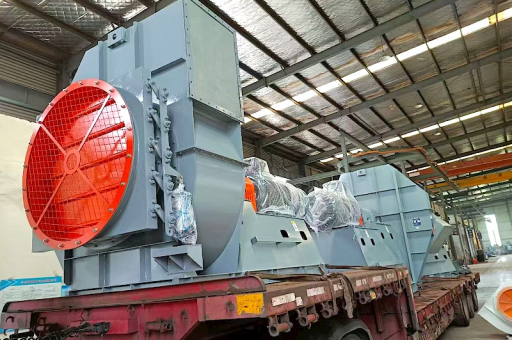
- Introduction: What Is an Anti-Wear Single Suction Induced Draft Blower?
- Core Components and Working Principle
- Why "Anti-Wear" Matters in High-Volume Fans & Blowers
- Key Applications in Industry
- Comparison with Other Fan Types
- Maintenance Best Practices for Longevity
- Frequently Asked Questions (FAQ)
- Conclusion: Choosing the Right Fan for Your Operations
** The Ultimate Guide to Anti-Wear Single Suction Induced Draft Blower: High Volume Fans & Blowers for Industrial Efficiency
Table of Contents
- Introduction: What Is an Anti-Wear Single Suction Induced Draft Blower?
- Core Components and Working Principle
- Why "Anti-Wear" Matters in High-Volume Fans & Blowers
- Key Applications in Industry
- Comparison with Other Fan Types (Forward Curved vs. Backward Inclined)
- Maintenance Best Practices for Longevity
- Frequently Asked Questions (FAQ)
- Conclusion: Choosing the Right Fan for Your Operations
Introduction: What Is an Anti-Wear Single Suction Induced Draft Blower?
In the world of industrial ventilation and combustion air supply, the Anti-Wear Single Suction Induced Draft Blower stands out as a specialized solution designed for demanding environments. Unlike standard high-volume fans blowers, this equipment is engineered to handle particulate-laden gases, high temperatures, and continuous operation without rapid degradation. The term "single suction" refers to the air intake design where the impeller draws gas from one side only, making it ideal for applications requiring high static pressure and moderate airflow volumes.
These blowers are classified under induced draft (ID) systems, meaning they pull flue gases or process air through a system (e.g., a boiler, furnace, or dust collector) and then exhaust them to the atmosphere or a downstream treatment unit. The "anti-wear" feature is achieved through specialized materials, thick-walled housings, and replaceable wear liners that resist erosion from abrasive particles.
For operators seeking reliability in cement plants, steel mills, or power generation facilities, understanding how these blowers differ from standard centrifugal fans is critical to avoiding unplanned downtime.
Core Components and Working Principle
A typical Anti-Wear Single Suction Induced Draft Blower consists of these key parts:
- Impeller: Usually made of high-strength steel with hardened blades. Some designs use wear-resistant coatings or ceramic tiles. The impeller is directly mounted on a shaft driven by an electric motor or steam turbine.
- Volute Housing: A spiral-shaped casing that converts kinetic energy into pressure. In anti-wear versions, the volute walls are thicker (often 10–16 mm) and may have removable liners.
- Inlet Box & Inlet Damper: Controls the gas flow rate. Single suction means gas enters from a single opening (typically on the side), which simplifies ductwork.
- Bearings & Lubrication System: Heavy-duty roller bearings or split bearings designed for high radial loads. External cooling (e.g., oil circulation or water jackets) prevents overheating.
- Shaft Seal: Prevents gas leakage around the shaft. For corrosive or high-temperature gases, mechanical seals or labyrinth seals are common.
Working Principle: Gas enters axially through the single suction inlet, is accelerated by the rotating impeller blades, and then forced radially outward into the volute. The volute's expanding cross-section slows the gas, converting velocity into static pressure. The induced draft effect pulls the gas from the upstream process (e.g., a boiler furnace), overcoming system resistance.
Why "Anti-Wear" Matters in High-Volume Fans & Blowers
Standard centrifugal fans can suffer severe erosion when handling dust-laden gases. In a high-volume fans blowers application like a cement kiln or steel converter, fly ash, silica, and metallic particles can abrade impeller blades and cut through housing in months. Here’s how anti-wear design addresses this:
| Wear Mechanism | Standard Fan | Anti-Wear Modified Fan |
|---|---|---|
| Erosion from particles | Rapid thinning of impeller blades; vibration; balance loss | Hard-faced blades (e.g., Stellite welding); replaceable airfoil inserts |
| Hot gas corrosion | Mild steel fails above 400°C | Stainless steel (SS304/316); hot-dip aluminized surfaces |
| Impact damage | Dents from large debris | Reinforced blade leading edges; oversized shaft and bearing |
| Continuous operation fatigue | Bearing failure in 6–12 months | Oversized oil-lubricated bearings; vibration monitoring ports |
The result is 2–4 times longer service life compared to standard fans, reducing replacement costs and maintenance shutdowns.
Key Applications in Industry
Anti-Wear Single Suction Induced Draft Blowers are not one-size-fits-all. Their unique design excels in these environments:
- Power Plants: Pulverized coal boilers require ID fans to evacuate flue gas containing fly ash. Anti-wear blowers with 500,000–800,000 m³/h capacity are standard.
- Cement & Lime Kilns: Raw material grinding and clinker cooling produce abrasive dust. Single suction design fits tight footprint constraints.
- Steel & Metallurgy: Sintering plants, blast furnaces, and converters use ID fans to handle gas at 200–350°C with fine iron oxide particles.
- Chemical & Petrochemical: Catalytic cracking units and thermal oxidizers need fans to sustain combustion while resisting corrosive byproducts.
- Mining & Mineral Processing: Ventilation of dry grinding mills and material conveying systems.
Comparison with Other Fan Types
Which is better? Anti-Wear Single Suction Induced Draft Blower vs. double suction fans vs. axial flow bIowers?
| Feature | Single Suction ID Fan (Anti-Wear) | Double Suction ID Fan | Axial Flow Fan |
|---|---|---|---|
| Airflow (m³/h) | 50,000 – 800,000 | 100,000 – 1,500,000 | 30,000 – 500,000 |
| Pressure (Pa) | High (2000–8000 Pa) | Medium-High (1500–6000 Pa) | Low (200–2000 Pa) |
| Wear Resistance | Excellent (targeted design) | Good (but larger housing surface) | Poor (direct particle impact on blades) |
| Efficiency at low load | Good with inlet damper control | Moderate | Good with blade pitch control |
| Space requirement | Compact (one-sided duct) | Larger (two inlet ducts) | Small (inline installation) |
| Cost per m³/h | Medium | Lower | Lowest |
Bottom line: For high dust loads and moderate-to-high pressure, the single suction anti-wear blower often provides the best compromise between wear life and footprint.
Maintenance Best Practices for Longevity
To maximize the return on investment of a high volume fans blowers system, follow these maintenance steps:
- Inspect wear liners every 3 months. Replace if thickness drops below 50% of original.
- Check impeller balance after any repair. Even a 5-gram weight change can cause vibration.
- Monitor bearing temperature. If above 85°C, check lubrication and cooling system.
- Clean inlet screen weekly to prevent organic material accumulation.
- Lubricate bearings with manufacturer-recommended grease; avoid over-greasing.
- Measure gas velocity distribution at the inlet duct. Uneven flow accelerates wear.
- Perform vibration analysis to detect blade erosion early (increase in 1X and 2X harmonic).
Pro tip: Use a portable shaft alignment laser to ensure motor and fan shafts are within 0.05 mm. Misalignment is a leading cause of premature bearing failure.
Frequently Asked Questions (FAQ)
Q1: What is the maximum temperature an Anti-Wear Single Suction Induced Draft Blower can handle? A: Standard models operate up to 400°C. With special high-temperature alloys (e.g., Inconel) or ceramic coatings, continuous operation at 650°C is possible. Always check the manufacturer’s allowable temperature curve.
Q2: How do I calculate the required fan size for my system? A: Use the formula: Power (kW) = (Flow × Pressure) / (3,600 × Efficiency). Consult a fan selection chart from the manufacturer (e.g., fan). Provide system pressure loss and gas density to the supplier.
Q3: Can a single suction fan be used for clean air in a commercial HVAC system? A: Technically yes, but it’s oversized and inefficient. For clean ventilation, choose a standard double-width, double-inlet (DWDI) fan or an axial fan. Single suction blowers are optimized for industrial dust loads.
Q4: What causes vibration in an induced draft blower? A: Common causes: imbalance from particle buildup, blade erosion, worn bearing, loose foundation bolts, or misalignment. Always perform a vibration spectrum analysis to isolate the root cause.
Q5: How often should I replace the impeller? A: In a cement plant, typical life is 2–4 years. With hardened blades and regular wear checkups, 5–7 years is achievable. Replace immediately if cracks appear in the hub or blade weld areas.
Q6: Are anti-wear blowers louder than standard fans? A: Yes, due to thicker housing and high-pressure flow. Install silencers (both at inlet and outlet) and use vibration isolators to meet occupational noise limits (below 85 dB(A) at operator’s ear).
Conclusion: Choosing the Right Fan for Your Operations
The Anti-Wear Single Suction Induced Draft Blower is not the cheapest option upfront, but it delivers superior reliability when handling abrasive, hot, or corrosive gases in high-volume applications. When selecting a high volume fans blowers for your next project, consider this design if:
- Dust concentration exceeds 1 g/m³.
- Gas temperature stays above 150°C.
- System pressure exceeds 3000 Pa.
- Space on the inlet side is limited (single duct approach).
Always request a fan datasheet from the manufacturer (e.g., fan) detailing material grades, wear allowances, and guaranteed efficiency curves. Properly specified and maintained, these blowers are a workhorse that keeps your plant running year after year.
By understanding the balance between initial investment and long-term maintenance cost, operators can optimize both the reliability and profitability of their industrial ventilation systems.





