
This article's table of contents introduction:
- The Core Technology: Multi-Stage Centrifugal or PD Blowers
- Key Specifications You Need to Define
- Leading Manufacturers for Power Plant Blowers
- Critical Selection Criteria for Power Plants
- Summary Recommendation
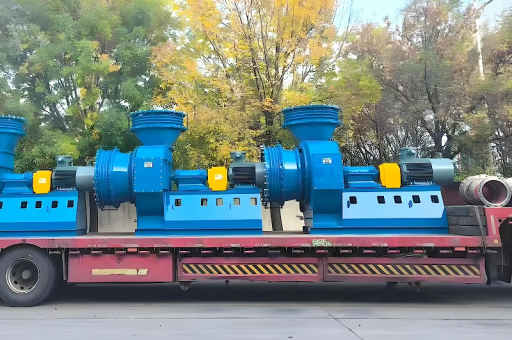
It sounds like you are looking for a high-pressure blower for a power plant application, specifically a large or medium-sized unit that requires high output pressure.
Here is a breakdown of the specific types of blowers used in power plants for this requirement, along with key specifications, manufacturers, and selection criteria.
The Core Technology: Multi-Stage Centrifugal or PD Blowers
For "high output pressure" in a power plant, the standard technology is either:
-
Multi-Stage Centrifugal Blower (Most Common):
- How it works: Air is accelerated by multiple impellers in series. Each stage increases the pressure significantly.
- Pressure Range: Typically 10 PSI to 40 PSI (0.7 bar to 2.75 bar) for medium/large sizes.
- Key Features: Oil-free air, high efficiency (up to 85% for large units), relatively low maintenance, and very high flow rates (up to 100,000+ CFM).
- Application in Power Plant: Fluidized Bed Boilers (CFB), Forced Draft (FD) fans, Primary Air (PA) fans.
-
Rotary Lobe or Screw Compressors (Less common for high pressure but used for specialized tasks):
- How it works: Positive displacement (trapping air and pushing it out).
- Pressure Range: Can go up to 50+ PSI (3.5 bar) but often at lower flow rates.
- Application: Pneumatic conveying of fly ash or Flue Gas Desulfurization (FGD) aeration.
Key Specifications You Need to Define
To select the correct blower, you must provide these three parameters:
| Parameter | What it means for Power Plant | Typical Range |
|---|---|---|
| Air Flow (CFM / m³/min) | How much air is needed to burn coal/biomass or fluidize the bed. | 5,000 – 150,000+ CFM |
| Discharge Pressure (PSI / kPa) | The resistance the blower must overcome (e.g., boiler backpressure, ductwork). | 5 – 35+ PSI (350 – 2400+ kPa) |
| Power (HP / kW) | Motor size required. | 200 – 5,000+ HP (150 – 3,700+ kW) |
Leading Manufacturers for Power Plant Blowers
- Spencer Turbine (USA): Renowned for custom-engineered multi-stage centrifugal blowers (Power Mizer line). Excellent for high pressure. Very common in large power plants.
- Gardner Denver (now part of Ingersoll Rand): Manufactures high-efficiency multi-stage centrifugal blowers (e.g., Hoffman, Lamson lines). Very reliable for 24/7 operation.
- Turbomachinery (formerly SIEMENS / Elliot): Produces very large, heavy-duty multi-stage centrifugal compressors for power generation (often for the highest pressure applications).
- Aerzen (Germany): Excellent for both positive displacement (Delta Blower) and turbo technology for power plants.
- Kawasaki Heavy Industries (Japan): Large, high-speed motor-driven centrifugal blowers used in major power stations.
Critical Selection Criteria for Power Plants
- Pressure Stability: For a CFB boiler, the blower must maintain constant pressure despite fluctuations in fuel feed. Multi-stage centrifugals with IGV (Inlet Guide Vanes) are best for this.
- Efficiency: Power plants run 24/7. A 5% efficiency difference on a 2,000 HP motor saves ~$50,000/year in electricity.
- Oil-Free Air: Essential for FD/PA fans to avoid contaminating boiler instrumentation and combustion air.
- Material: High-pressure air can cause heat. Look for stainless steel (SS316) impellers and cast iron housings.
Summary Recommendation
If you need high output pressure (15 PSI+) for a Large/Medium Power Plant:
Choose a Multi-Stage Centrifugal Blower (e.g., Spencer Power Mizer or Gardner Denver Hoffman).
- Pros: Best efficiency at that pressure, oil-free, long life.
- Cons: Higher initial cost than PD blowers.
Avoid: Single-stage centrifugal fans (they cannot achieve high pressure).
Next Step: To get a quote, you will need to provide:
- Required Flow (in CFM or m³/hr) .
- Required Pressure (in PSI or kPa) .
- Operating Temperature (ambient or heated?).
- Altitude of the plant.
Would you like me to help you calculate the required flow for a specific boiler size (e.g., 100 MW CFB boiler)?





