
This article's table of contents introduction:
- The Configuration: Single Width, Single Inlet (SWSI)
- The Material: "Hard Material"
- The Application: Thermal Energy Transmission
- Why combine "Hard Material" with "Thermal Energy Transmission"?
- Bottom Line
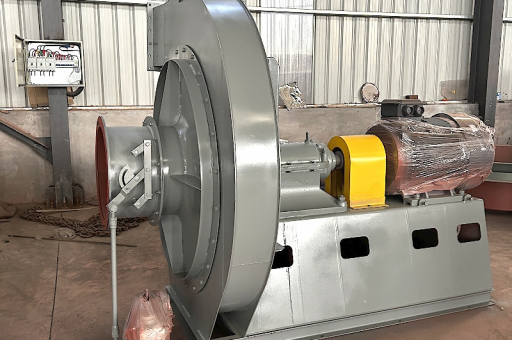
It appears you are describing a specific industrial application: a Single Width, Single Inlet (SWSI) Centrifugal Fan constructed from hard material, used for thermal energy transmission (moving hot air or gases for heat transfer).
Let’s break down this specification and what makes this fan suitable for high-temperature thermal systems.
The Configuration: Single Width, Single Inlet (SWSI)
- Design: Air enters the fan wheel from one side only (as opposed to a Double Inlet fan which pulls air from both sides). The wheel is as wide as the inlet.
- Airflow: It produces high pressure and medium-to-high volume flow.
- Application: Typically used in industrial ovens, dryers, furnaces, boilers, and HVAC systems where ductwork brings air to one side of the fan.
- Arrangement: For high temperature, it is almost always Arrangement 4 (Overhung, with the wheel mounted on the shaft between bearings, isolated from the heat source via a shaft cooler or heat slinger).
The Material: "Hard Material"
In the context of a fan for thermal energy transmission, "hard material" usually refers to:
- Wear Resistance: The fan handles moving air that contains particulate matter (ash, dust, sand) which erodes standard steel.
- High Temperature: The material must retain its strength at elevated temperatures.
Common "Hard Materials" used:
- Abrasion-Resistant (AR) Steel: E.g., AR200 or AR400. Used for fans moving hot, dirty air.
- Hardened Tool Steel / Alloy Steel: Sometimes used for critical wear strips or blades.
- Stainless Steel (SS-304, SS-310, SS-316): While work-hardening, SS-304 is considered "hard" for corrosion and moderate temp resistance. SS-310 is superior for high temp (up to 2000°F / 1093°C).
- Cast Iron: Used in older or very robust designs.
- Ceramic-Lined Steel: A "hard" surface layer bonded to a softer steel base for extreme abrasion.
The Application: Thermal Energy Transmission
This is the core function—the fan is not just moving air; it is moving heat. The fan's role is to:
- Convection Heating: Force hot air over a product (e.g., drying food, curing paint).
- Recirculation: Pull hot exhaust air from a furnace or kiln, pass it through a heat exchanger to recover energy, and blow it back into the system.
- Combustion Air Supply: Feed hot, preheated air to a burner to increase efficiency.
Key Thermal Design Factors for this Fan:
| Factor | Critical Requirement | Hard Material Solution |
|---|---|---|
| Thermal Expansion | Housing and wheel must expand uniformly to prevent rubbing. | Material selection and design clearances. |
| Shaft Distortion | Shaft must not sag or warp under heat. | Oversized steel shaft with heat slinger/cooling collar. |
| Strength Loss | Steel loses ~50% strength at 800°F. | Use of high-temp alloys (SS-310, Hastelloy). |
| Bearing Cooling | Bearings cannot survive radiated heat. | External bearings, shaft cooler, cooling wheel, purge air. |
| Spark Resistance | Hot moving parts can create ignition sources. | Non-ferrous tips (Monel, brass) on hard material blades. |
Why combine "Hard Material" with "Thermal Energy Transmission"?
The primary reason is Longevity in Harsh Environments.
- Example 1 (Cement Kiln): A SWSI fan pulls 700°F exhaust gas loaded with abrasive cement dust. Standard steel would erode in weeks. Hardened AR steel or a ceramic-lined impeller extends life to years.
- Example 2 (Induction Furnace): A fan recirculates hot air over cooling coils. Moisture and thermal cycling can cause corrosion and stress cracks. Hard, high-nickel stainless steel resists both.
- Example 3 (Wood Pellet Dryer): The air is hot (250-400°F) and laden with abrasive wood particles and ash. Hard material blades (like hardened steel) fight wear, while the thermal design prevents stress failure.
Bottom Line
A Single Width Single Inlet Centrifugal Fan made of hard material for thermal energy transmission is a specialized piece of industrial equipment. It is designed to reliably and continuously move high-temperature, potentially abrasive gas streams for heat recovery, drying, or combustion processes. The "hard material" component is the key to ensuring the fan survives the combination of heat + wear that would rapidly destroy a standard HVAC fan.
Would you like to discuss specific material grades (like 310 stainless vs. AR400) or a particular temperature range for your application?





