
This article's table of contents introduction:
- The Core Challenge
- The Paradox
- The Solution: "Dual-Phase" or "Hybrid" Approach
- Alternative: "Wear-Resistant Plate" (Pre-Fabricated)
- The Ultimate "Gold Standard" (Rare & Expensive)
- Summary Recommendation for Your Application
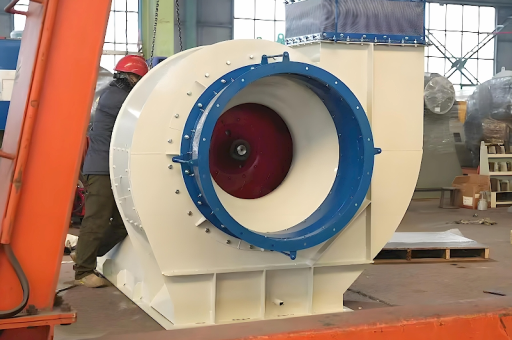
This is a specific and technically informed topic. It appears you are looking for a solution or a material specification for a component (likely an impeller or blade) in a Circulating Fluidized Bed (CFB) boiler flue gas blower, where the key requirements are the ability to undergo ultrasonic flaw detection (UT) and possess high wear resistance.
Here is a breakdown of the challenge and the recommended engineering solution.
The Core Challenge
- CFB Flue Gas Environment: CFB boilers produce flue gas laden with highly abrasive fly ash particles. The blower (Induced Draft or ID fan) operates in this harsh environment, leading to severe erosion wear on the impeller blades and casing.
- Ultrasonic Flaw Detection (UT): For safety and reliability (especially in critical power plant equipment), the impeller must be periodically inspected for cracks (fatigue, stress corrosion). UT requires a material that has:
- Good acoustic transmission.
- A homogenous, fine-grained microstructure (to reduce background noise/scattering).
- Low attenuation of sound waves.
- The ability to produce a clear back-wall echo.
The Paradox
- High Hardness Materials (for wear resistance): Materials like high-chrome white iron (e.g., 27% Cr) or hardfacing overlays are extremely wear-resistant but are un-inspectable via UT. Their coarse carbide structure, high attenuation, and casting defects make UT impossible. They are also brittle.
- Good UT Materials (like standard steel): These are easy to inspect but wear out very quickly in a CFB ash flow.
The Solution: "Dual-Phase" or "Hybrid" Approach
There is no single monolithic material that perfectly satisfies both requirements for a CFB blower impeller. The industry standard solution is a layered or coated system.
Recommended Design: High-Strength Alloy Steel Substrate + Wear-Overlay
This is the most common and effective solution for CFB ID fan impellers.
Substrate Material (Enables UT & Supports Structure)
- Material: High-strength, quenched and tempered alloy steel (e.g., ASTM A514 / A517 Grade B or E (e.g., T-1 steel) or DIN 1.8907 (e.g., Weldox 700).
- Why:
- Excellent for UT: Fine-grained martensitic/bainitic structure provides low noise and high sound velocity, allowing for reliable crack detection down to 1-2 mm.
- High Strength: Handles the high centrifugal and dynamic stresses of a large blower.
- Weldable: Allows for the application of a wear overlay.
- UT Testing Standard: ISO 17640 Level B (Striving for high-quality UT from the backside of the blade).
Wear-Resistant Overlay (Provides Erosion Protection)
- Application Method: Air Plasma Transfer (PTA) Welding or Submerged Arc Welding (SAW) hardfacing. Do not use thermal spray (HVOF) in this case, as it delaminates under CFB impact.
- Material: Chromium Carbide Overlay (CCO) or a Fe-Cr-C-Nb (Iron-Chromium-Carbon-Niobium) hardfacing alloy.
- Specific Grade Example: Stoody 110 or Welding Alloys TeroMatec 820 (~ 58-64 HRC).
- Crucial UT Consideration: The overlay is applied after the substrate's initial UT inspection. After service, the UT inspection is performed from the opposite side of the blade (the clean, back side) . The inspector must angle the probe to look for cracks initiating from the wear overlay, which are typically surface-breaking.
Alternative: "Wear-Resistant Plate" (Pre-Fabricated)
If hardfacing is not possible, use a pre-manufactured, corrosion-resistant steel.
- Material: UNS S32205 (Duplex Stainless Steel) or Sanicro 38 (High-Si, Ni-based alloy).
- Why: These have a fine-grained duplex structure (austenite + ferrite) making them UT-inspectable while offering much better resistance to both erosion and fly ash corrosion than standard carbon steel. They are easier to inspect but wear out faster than a CCO overlay.
The Ultimate "Gold Standard" (Rare & Expensive)
For the most extreme CFB conditions where UT is critical:
- Substrate: Precipitation-hardened nickel superalloy (e.g., Inconel 718 or A-286). These offer exceptional UT inspectability (very fine grain) and high strength at elevated temperatures.
- Wear Protection: Laser-clad Tungsten Carbide (WC/W2C) in a Ni-Cr matrix. This is extremely wear-resistant but also very expensive and difficult to repair.
Summary Recommendation for Your Application
For a CFB Boiler Flue Gas Blower Impeller requiring Ultrasonic Flaw Detection and High Wear Resistance:
- Material: High-strength quenched & tempered steel (e.g., A514 Grade B / Weldox 700).
- Wear Protection: Chromium Carbide Overlay (CCO) applied via PTA welding (59-64 HRC).
- UT Procedure:
- Pre-Service: 100% UT of bare substrate (blade backside) to ensure no manufacturing defects.
- In-Service: UT performed from the smooth, backside of the blade using a shear wave transducer (e.g., 2-4 MHz, 45-60° angle) specifically looking for cracks emanating from the overlay interface.
- Minimum Detectable Flaw: Aim for a target of 3 mm flat-bottom hole equivalent in the substrate.
Key Takeaway: You cannot have a monolithic material that is both highly wear-resistant AND perfectly inspectable. The correct engineering solution is a weld-overlaid system where the base metal is optimized for UT and the overlay is optimized for wear. Always test the UT procedure on a representative test block (with the wear overlay) before finalizing the design.





