
This article's table of contents introduction:
- Table of Contents / Article Guide
- Introduction: Understanding the Core Components
- What Is a High Pressure Flue Gas Fan?
- Why V Belt Driving Is Still a Preferred Power Transmission Method
- SWSI (Single Width Single Inlet) Design: Engineering Principles and Benefits
- Key Applications in Power Plants, Steel Mills, and Chemical Processing
- Common Technical Challenges and Troubleshooting Q&A
- Maintenance, Safety, and Efficiency Best Practices
- Conclusion: Future Trends and System Integration
Article Title:
Optimizing Industrial Ventilation: The Role of High Pressure Flue Gas Fan V Belt Driving SWSI Single Width Single Inlet Systems
Table of Contents / Article Guide
- Introduction: Understanding the Core Components
- What Is a High Pressure Flue Gas Fan?
- Why V Belt Driving Is Still a Preferred Power Transmission Method
- SWSI (Single Width Single Inlet) Design: Engineering Principles and Benefits
- Key Applications in Power Plants, Steel Mills, and Chemical Processing
- Common Technical Challenges and Troubleshooting Q&A
- Maintenance, Safety, and Efficiency Best Practices
- Conclusion: Future Trends and System Integration
Introduction: Understanding the Core Components
In heavy industrial environments, the movement of flue gases—hot, corrosive, and often particulate-laden—demands robust fan systems. Among the most reliable configurations is the High Pressure Flue Gas Fan driven by a V Belt system, designed with a SWSI (Single Width Single Inlet) housing. This combination is widely adopted in thermal power plants, cement kilns, steel converters, and chemical recovery boilers. The fan’s ability to handle high static pressures (often exceeding 2000 Pa) while maintaining stable airflow makes it indispensable. This article synthesizes current technical literature and field practices to deliver a comprehensive guide.
What Is a High Pressure Flue Gas Fan?
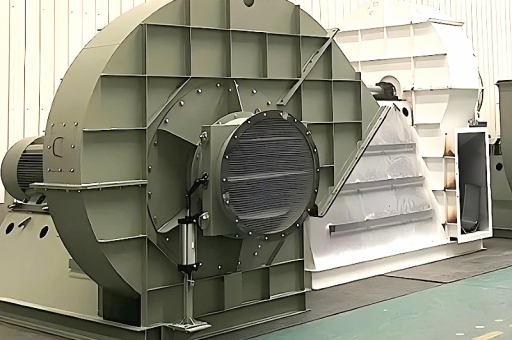
A High Pressure Flue Gas Fan is a heavy-duty centrifugal fan specifically engineered to move combustion gases from boilers, furnaces, or incinerators through ducts, scrubbers, and stacks. Unlike standard ventilation fans, these units must withstand:
- Elevated temperatures (typically 150°C to 400°C, with some peak excursions up to 600°C).
- Corrosive gases (sulfur oxides, chlorine compounds, acidic vapors).
- Abrasive particulates (ash, soot, unburned carbon).
The fan impeller is typically made of abrasion-resistant steel or stainless alloys, and the housing is often lined with wear-resistant coatings. The term "high pressure" indicates that the fan develops significant static pressure—often between 2.5 kPa and 10 kPa—to overcome duct resistance and system back pressure.
Why V Belt Driving Is Still a Preferred Power Transmission Method
In modern industrial fan systems, direct drive (motor-to-shaft coupling) and V belt drive are the two dominant configurations. V belt driving remains popular for flue gas fans for several reasons:
| Advantage | Explanation |
|---|---|
| Speed flexibility | Easily adjust fan RPM by changing pulley diameters—no need to replace motor. |
| Cushioning effect | Belts absorb shock loads caused by sudden pressure fluctuations or particle impact. |
| Overload protection | Belts will slip under extreme torque, protecting motor windings from burnout. |
| Simplified maintenance | Replacing a set of V belts is faster and cheaper than realigning a direct-coupled shaft. |
However, engineers must ensure proper belt tension, alignment, and sheave condition. Loose belts cause slippage and reduced flow; overtightened belts accelerate bearing wear.
SWSI (Single Width Single Inlet) Design: Engineering Principles and Benefits
The SWSI designation (also sometimes written as "Single Width, Single Inlet") refers to the aerodynamic configuration of the fan housing:
- Single Width: The impeller has only one row of blades across its width—it is not a double-width arrangement.
- Single Inlet: Air (or gas) enters the fan from only one side of the impeller, not from both sides (as in a double inlet, or D.I., fan).
Key characteristics of SWSI high pressure flue gas fans:
- Higher pressure capability per stage compared to double-width designs, because the gas flow is concentrated over a narrow impeller width.
- Compact footprint – ideal for retrofits where space is constrained.
- Easier sealing – only one inlet requires a duct connection, reducing potential leak points.
The SWSI design is especially effective when combined with backward-curved or airfoil blades, which deliver high efficiency and stable operation across a wide flow range.
Key Applications in Power Plants, Steel Mills, and Chemical Processing
Coal-Fired Power Plants
Induced draft fans in coal plants handle hot, ash-laden flue gas exiting the economizer or air preheater. A SWSI fan with V belt drive allows operators to tune fan speed to fluctuating boiler loads without expensive variable frequency drives (VFDs).
Steel Converters & Sintering Plants
High pressure flue gas fans extract fumes from basic oxygen furnaces (BOF) or electric arc furnaces (EAF). V belt driving provides mechanical isolation from motor vibration, crucial for maintaining seal integrity in high-temperature ducts.
Chemical & Petrochemical Facilities
Recovery boilers in pulp mills, or incinerators in chemical plants, rely on these fans to move corrosive, moist gases. The SWSI housing simplifies the installation of corrosion-resistant linings.
Common Technical Challenges and Troubleshooting Q&A
Q: Why does my high pressure flue gas fan V belt drive slip under heavy load, even when correctly tensioned?
A: Belt slip under high pressure conditions often indicates pulley wear or misalignment. Check sheave grooves for glazing or uneven wear. Also verify that the belt section (e.g., SPB, XPA) matches the fan’s power requirement. For severe duty, consider using narrow-section high-capacity belts (e.g., wedge belts).
Q: The SWSI fan vibrates excessively at startup. What could cause this?
A: Probable causes: (1) Accumulated dust or ash on the impeller blades causing imbalance. (2) Uneven thermal expansion of the shaft or housing. (3) Worn motor or fan bearings. Always perform a balancing check after cleaning. Also ensure that the inlet duct is straight and smooth for at least two duct diameters before the fan inlet to avoid flow-induced vibration.
Q: Is V belt drive less efficient than a direct-drive motor?
A: Belt drive efficiency is typically 94–97%, compared to 98–99% for direct drive. However, the ability to optimize fan speed by changing pulleys—without replacing the motor—often results in better system energy efficiency over the fan’s life. Additionally, belts reduce transmitted motor vibration to the fan, which can extend bearing life.
Maintenance, Safety, and Efficiency Best Practices
| Practice | Description |
|---|---|
| Weekly belt inspection | Check for fraying, cracking, or oil contamination. Use a belt tension gauge—never rely on thumb pressure alone. |
| Monthly vibration monitoring | Measure acceleration on fan bearings (horizontal, vertical, axial). An increase of 1.5x from baseline signals impending failure. |
| Quarterly impeller cleaning | Remove accumulated deposits with compressed air or non-abrasive brushes. For sticky deposits (e.g., tar), use approved solvents. |
| Annual shaft alignment check | Even slight misalignment between motor and fan pulleys reduces belt life and increases radial load on bearings. |
| Safety guards | Always install belt guards to prevent entanglement. Use hinged guards for easy inspection. |
Efficiency tip: When replacing belts, use a matched set from the same manufacturer and specification. Mismatched belts load unevenly and cause premature failure.
Conclusion: Future Trends and System Integration
The High Pressure Flue Gas Fan V Belt Driving SWSI configuration is far from obsolete. While variable speed drives (VFDs) gain popularity, belt-driven fans remain the most cost-effective solution for retrofits, dirty environments, and high-temperature applications where VFD electronics are vulnerable. Emerging trends include:
- IoT-enabled belt tension monitors that alert operators to slippage in real-time.
- Advanced belt materials (aramid fiber-reinforced) for higher load capacity at elevated temperatures.
- Hybrid systems – V belt drive combined with a damper control for wide flow turndown.
For plant engineers seeking a reliable, serviceable, and pressure-capable fan system, the SWSI V belt-driven high pressure flue gas fan remains a benchmark solution. Understanding its design principles, maintenance needs, and application-specific behavior is essential for maximizing uptime and minimizing energy cost.
Disclaimer: This article is intended for educational and technical reference purposes. Always consult your fan manufacturer’s documentation for specific installation, operation, and maintenance guidelines. For parts or engineering support, refer to a qualified fan and ventilation specialist.





