
This article's table of contents introduction:
- What is it?
- How It Works: The Core Principle
- Key Components (Designed for Tough Service)
- Key Performance Characteristics
- Applications: "Gas and Materials Delivery"
- Key Selection Considerations
- Advantages & Disadvantages
- Summary
Here is a detailed breakdown of what an Industrial Centrifugal Extractor Fan for Gas and Materials Delivery is, how it works, and its key applications.
This type of fan is a critical piece of equipment in many industrial processes, moving beyond simple ventilation to actively conveying materials and handling potentially hazardous gases.
What is it?
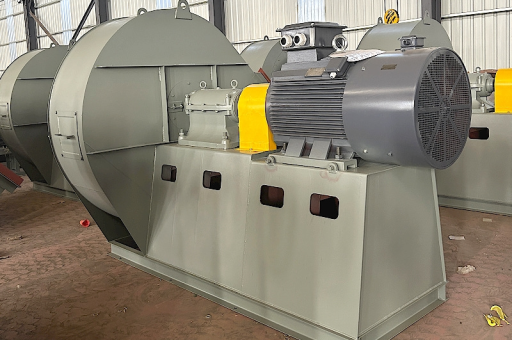
An Industrial Centrifugal Extractor Fan is a mechanical device that uses centrifugal force to move air, gases, or a mixture of gas and solid particulate (materials). Unlike an axial fan (like a household box fan), it draws air into the center of a rotating impeller and then throws it outward at a 90-degree angle. The term "extractor" highlights that its primary function is to remove air, gas, or materials from a specific point in a system (e.g., a dust collector, a process vessel, or a duct).
The key differentiator for "Gas and Materials Delivery" is that the fan is specifically designed to handle:
- Gases: These can be clean, hot, corrosive, or explosive.
- Materials: These are typically solid particulates like dust, chips, fibers, granules, or powders suspended in the gas stream.
How It Works: The Core Principle
- Induction: The rotating impeller (a wheel with blades) creates a low-pressure area at its center (the "eye"). This vacuum pulls air and material in from the inlet duct.
- Acceleration: The gas and material are caught by the impeller blades. The centrifugal force created by the spinning wheel accelerates them outward from the center to the outer edge of the housing.
- Conversion to Pressure: The high-velocity gas/material stream enters the volute (the spiral-shaped fan housing). As the cross-sectional area of the volute increases, the velocity of the gas decreases, converting kinetic energy (speed) into static pressure (push).
- Discharge: This pressurized gas/material mixture is then expelled through the fan's outlet, pushing it through the downstream ductwork to its destination (e.g., a storage silo, a filter, or back into the process).
Key Components (Designed for Tough Service)
- Impeller: The heart of the fan. For material handling, impellers are typically radial (paddle-wheel or radial-tip) or open design to prevent clogging. Blades are often thicker and have wear-resistant facings.
- Housing (Volute): Thick-gauge steel or abrasion-resistant lined steel. It may have an access door for cleaning and inspection.
- Shaft & Bearings: Heavy-duty, often oversized, and positioned outside the gas stream to protect them from heat, dust, and corrosive gases. Often mounted on a heavy base plate.
- Drive Mechanism: Usually driven by an electric motor via V-belts (allows for speed adjustment) or a direct-drive coupling (higher efficiency, fixed speed). A variable frequency drive (VFD) is common for precise control.
- Inlet Box: Can include dampers or variable inlet vanes to control airflow.
Key Performance Characteristics
- High Static Pressure: Essential for overcoming the resistance of long ducts, filters, and cyclones.
- High Air Volume (CFM): For moving large quantities of gas or material.
- Material Handling Capability: Designed to pass solids without clogging or damaging the fan. Impeller design is critical.
- Temperature Resistance: Can be built with alloys or special coatings to handle gases up to 2000°F or more (e.g., for industrial ovens or furnaces).
- Corrosion Resistance: Made from stainless steel, fiber-reinforced plastic (FRP), or lined with rubber/lead for handling acidic or alkaline gases.
Applications: "Gas and Materials Delivery"
This fan is used in systems where the gas stream is a vehicle for moving solid materials.
| Application | Gas/Material Handled | Key Function |
|---|---|---|
| Pneumatic Conveying | Grain, cement, plastic pellets, wood chips, fly ash, powders. | Delivers materials from one point to another (e.g., silo to truck, truck to process). The fan provides the air velocity to keep the material airborne. |
| Dust Collection Systems | Wood dust, metal grinding fines, concrete dust, textile fibers. | Extracts dusty air from the point of generation (saws, grinders, sanders) and delivers it to a baghouse or cyclone filter. |
| Central Vacuum Systems | Metal shavings, chips, powders. | Extracts waste material from multiple machine tools and delivers it to a central collection point. |
| Fume Extraction & Scrubbers | Acid fumes, solvent vapors, welding fumes, chemical gases. | Extracts hazardous gases and delivers them to a scrubber, thermal oxidizer, or carbon filter for treatment. |
| Biofuel & Wood Pellet Production | Sawdust, wood chips, bark, finished pellets. | Conveys raw material and finished product between stages (drying, grinding, cooling, storage). |
| Cement & Mining | Raw meal, clinker dust, stone fines. | Moves materials between crushers, mills, classifiers, and storage silos. |
Key Selection Considerations
- Material Type & Characteristics:
- Abrasiveness (e.g., sand vs. sawdust) dictates impeller material and thickness.
- Stickiness (e.g., wet clay vs. dry powder) influences the need for a non-clog design.
- Explosibility (e.g., coal dust, grain dust) requires spark-resistant construction and explosion-proof motor. This is critical.
- Gas Characteristics:
- Temperature affects material selection (e.g., carbon steel vs. stainless steel).
- Corrosiveness (e.g., chlorine gas vs. nitrogen) dictates housing and impeller material.
- Moisture content can lead to rust or material build-up.
- System Resistance (Static Pressure): The total pressure drop the fan must overcome through ducts, cyclones, filters, and bends. This is calculated in inches of water gauge (in. wg) or Pascals (Pa).
- Air Volume (CFM or m³/hr): The required airflow rate needed to convey the material or achieve the desired ventilation.
- Fan Location: Is the fan in the clean air stream (after the filter) or the dirty air stream (before the filter)? A fan in the dirty stream must be a heavy-duty material handling fan.
Advantages & Disadvantages
Advantages:
- High efficiency for high-pressure, medium-volume applications.
- Reliable and robust for continuous industrial use.
- Excellent for handling large volumes of material-laden air.
- Can be designed for extreme temperatures and corrosive environments.
Disadvantages:
- Physically large and heavy.
- Higher initial cost than axial fans.
- Noise can be significant (often requires silencers).
- Subject to wear from abrasive materials (requires maintenance and rebuilds).
- Clogging can occur in poorly designed or sticky-material applications.
Summary
An Industrial Centrifugal Extractor Fan for Gas and Materials Delivery is a specialized, heavy-duty fan that generates high pressure and is designed to withstand the harsh conditions of conveying abrasive, corrosive, or hot materials. It is a cornerstone of pneumatic conveying, dust collection, and fume extraction systems across manufacturing, processing, and bulk materials handling industries. Choosing the right one requires a thorough understanding of the material, gas, and system resistance.





