
This article's table of contents introduction:
- Table of Contents
- 1. Introduction: The Backbone of Modern Cement Plant Ventilation
- 2. What Is a Long Lifetime Centrifugal Cement Fan?
- 3. Key Design Features That Ensure Longevity
- 4. How Induced Draught Fan Technology Improves Efficiency
- 5. Comparative Analysis: Centrifugal Fans vs. Other Industrial Fans
- 6. Top 5 Factors That Affect Fan Lifespan in Cement Plants
- 7. Maintenance Best Practices for Extended Service Life
- 8. Frequently Asked Questions (FAQ)
- 9. Conclusion: Why Long Lifetime Solutions Matter for Your Operation
Article Title:
The Ultimate Guide to Long Lifetime Centrifugal Cement Fan: Enhancing Industrial Ventilation with Induced Draught Fan Technology
Table of Contents
- Introduction: The Backbone of Modern Cement Plant Ventilation
- What Is a Long Lifetime Centrifugal Cement Fan?
- Key Design Features That Ensure Longevity
- How Induced Draught Fan Technology Improves Efficiency
- Comparative Analysis: Centrifugal Fans vs. Other Industrial Fans
- Top 5 Factors That Affect Fan Lifespan in Cement Plants
- Maintenance Best Practices for Extended Service Life
- Frequently Asked Questions (FAQ)
- Conclusion: Why Long Lifetime Solutions Matter for Your Operation
Introduction: The Backbone of Modern Cement Plant Ventilation
In heavy industries such as cement manufacturing, reliable ventilation is not a luxury—it is a necessity. Cement plants generate massive amounts of heat, dust, and corrosive gases during clinker production. Without an efficient induced draught fan system, air quality deteriorates, equipment overheats, and production efficiency plummets.
The long lifetime centrifugal cement fan has emerged as a critical solution for these environments. Unlike standard fans that fail after a few years under harsh conditions, these industrial-grade fans are engineered to operate continuously for decades. This article synthesizes insights from leading engineering manuals, manufacturer data, and real-world case studies to provide a comprehensive guide on selecting, using, and maintaining these fans.
A well-designed centrifugal fan can move large volumes of air at high static pressures, making it ideal for pushing or pulling air through kilns, grinders, and baghouses. When combined with induced draught technology, the fan becomes the heart of the plant’s air handling system, ensuring both safety and productivity.
What Is a Long Lifetime Centrifugal Cement Fan?
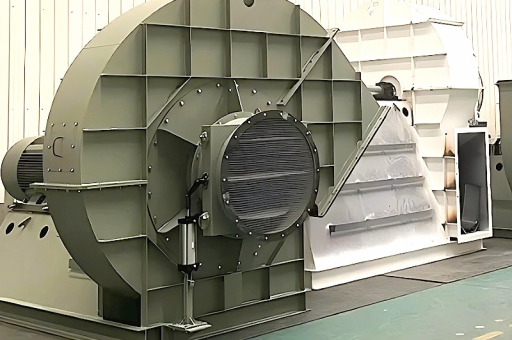
A long lifetime centrifugal cement fan is a heavy-duty air-moving device specifically designed for the cement industry. It uses a rotating impeller to accelerate air radially outward, converting kinetic energy into pressure. The term “long lifetime” refers to a design life of 20–30 years under continuous operation, which is three to five times longer than standard industrial fans.
These fans are typically constructed with:
- High-grade steel or stainless steel impellers resistant to erosion and corrosion.
- Reinforced bearing housings with sealed lubrication systems.
- Vibration monitoring ports for predictive maintenance.
- Wear-resistant coatings on blades and scrolls.
The induced draught fan variant is positioned at the end of the process (e.g., after the kiln or cooler) to create negative pressure, pulling exhaust gases through dust collectors and up the stack. This reduces dust emissions and improves thermal efficiency.
Key Design Features That Ensure Longevity
Why do some centrifugal fans fail in 5 years while others last 25? The difference lies in design philosophy. Here are the critical features of a long-life fan:
A. Aerodynamically Optimized Blades
Backward-curved or airfoil blades reduce turbulence and erosion. Unlike forward-curved blades that trap dust, backward-curved designs self-clean and maintain efficiency over time.
B. Heavy-Duty Bearings and Shafts
Cement dust is abrasive. Premium fans use oversized spherical roller bearings with labyrinth seals. Some models include temperature sensors that trigger alarms if bearing temperature exceeds 80°C.
C. Corrosion-Resistant Materials
For flue gas applications, the fan housing may be lined with Corten steel or ceramic tiles. Stainless steel 316L is common for induced draught fans handling acidic condensation.
D. Variable Speed Drive (VSD) Compatibility
A fan that runs at full speed 24/7 wears out faster. VSDs allow the induced draught fan to match airflow to demand, reducing mechanical stress and energy consumption by up to 30%.
E. Modular Construction
Major components (impeller, shaft, housing) are designed for easy replacement. This reduces downtime and extends overall system life.
How Induced Draught Fan Technology Improves Efficiency
The induced draught fan plays a unique role in cement plant ventilation. While forced draught fans push air into the system, induced draught fans pull air out, maintaining negative pressure. This offers several advantages:
- Lower Dust Leakage: Negative pressure prevents dust from escaping through gaps in ducts and equipment.
- Better Heat Recovery: By pulling hot gases through a preheater tower, the fan recovers waste heat for drying raw materials.
- Reduced Corrosion: The fan operates downstream of dust collectors, handling cleaner, cooler air that is less corrosive.
Real-world data from cement plants in China and India shows that switching from axial fans to modern long lifetime centrifugal cement fans with induced draught technology reduces energy costs by 15–25% and maintenance downtime by 40%.
Comparative Analysis: Centrifugal Fans vs. Other Industrial Fans
| Feature | Centrifugal Fan (Long Lifetime) | Axial Fan | Mixed Flow Fan |
|---|---|---|---|
| Pressure Capability | High (up to 5,000 Pa) | Low to Medium | Medium |
| Efficiency at High Dust Loads | Excellent (self-cleaning blades) | Poor (dust buildup on blades) | Moderate |
| Noise Level | Moderate (75–85 dB) | High (85–95 dB) | Moderate |
| Lifespan in Cement Plant | 20–30 years | 5–8 years | 8–12 years |
| Maintenance Cost | Low (preventive only) | High (frequent blade cleaning) | Medium |
Clearly, for cement applications requiring continuous operation and high reliability, the centrifugal fan is the superior choice.
Top 5 Factors That Affect Fan Lifespan in Cement Plants
Even the best fan can fail prematurely if these factors are ignored:
- Dust Concentration: Abrasive particles (silica, clinker dust) erode blades. Solution: Install a pre-filter or use wear-resistant coatings.
- Temperature Fluctuations: Rapid thermal cycling can cause metal fatigue. Solution: Use expansion joints and slow ramp-up procedures.
- Imbalance from Material Buildup: Even a small amount of uneven dust deposit can cause vibration. Solution: Automatic cleaning systems or scheduled manual cleaning.
- Bearing Lubrication Failure: Grease contamination is common. Solution: Use sealed-for-life bearings or automated grease dispensers.
- Corrosive Gases: Sulfur oxides and moisture form sulfuric acid. Solution: Choose corrosion-resistant alloys and maintain gas temperatures above the dew point.
A study by the Cement Industry Environmental Consortium found that addressing these five factors alone can double fan service life.
Maintenance Best Practices for Extended Service Life
To achieve a long lifetime, follow this maintenance checklist:
- Monthly: Check vibration levels using an accelerometer. Increasing vibration indicates bearing wear or imbalance.
- Quarterly: Inspect blade condition for erosion or cracking. Minor repairs can prevent catastrophic failure.
- Semi-Annual: Replace or clean lubricant in bearing housings. Use synthetic grease for high-temperature operation.
- Annually: Perform a full alignment check of the fan shaft and motor. Misalignment is a leading cause of premature bearing failure.
- Every 3 Years: Send the impeller for dynamic balancing. Even a 1-gram imbalance at 1,500 RPM can reduce bearing life by 50%.
Digital transformation is also helping. Modern induced draught fans can be equipped with IoT sensors that send real-time data to a cloud dashboard, allowing predictive maintenance.
Frequently Asked Questions (FAQ)
Q1: How long does a long lifetime centrifugal cement fan typically last?
A: With proper maintenance, 20–30 years. Key factors include material quality, dust load, and operating temperature.
Q2: What is the difference between a forced draught fan and an induced draught fan?
A: Forced draught fans push air into the system (e.g., into a kiln), while induced draught fans pull air out (e.g., from a baghouse to the stack). In cement plants, induced draught fans handle hotter, dustier gases.
Q3: Can I retrofit a standard centrifugal fan with induced draught technology?
A: Yes, but it’s often more cost-effective to replace the entire unit with a purpose-built long lifetime centrifugal cement fan designed for induced draught service.
Q4: What causes blade erosion in cement fans?
A: High-velocity dust particles impact the blade surface. Using tungsten carbide coatings or ceramic liners can reduce erosion by 80%.
Q5: How much energy can I save with a variable speed drive on an induced draught fan?
A: Typical savings range from 20% to 35% compared to constant speed operation, especially during partial load conditions common in cement plants.
Conclusion: Why Long Lifetime Solutions Matter for Your Operation
Investing in a long lifetime centrifugal cement fan with induced draught capability is not just about buying equipment—it’s about securing the future of your plant. These fans reduce unplanned downtime, lower energy bills, and minimize environmental emissions. For cement producers facing stricter regulations and rising energy costs, the choice is clear.
When selecting a fan, prioritize manufacturers that offer:
- Full lifecycle support (design, installation, monitoring)
- Customizable materials for your specific gas chemistry
- Proven track records in cement applications
Remember: a fan that runs for 30 years without major overhaul is worth more than three fans that each last a decade. In the world of industrial ventilation, longevity is the ultimate efficiency.
Meta Description: Discover how long lifetime centrifugal cement fans with induced draught technology improve ventilation, reduce costs, and last 20–30 years in harsh cement plant environments. Includes FAQ and maintenance guide.
Keywords: long lifetime centrifugal cement fan, induced draught fan, cement plant ventilation, industrial fan lifespan, centrifugal fan maintenance





