
This article's table of contents introduction:
- What is it?
- Why are these features critical for cement plants?
- Primary Applications in a Cement Plant
- Key Specifications to Look For
- Typical Benefits for Cement Plants
- Potential Downsides & Considerations
- How to Find and Select a Supplier
- Conclusion
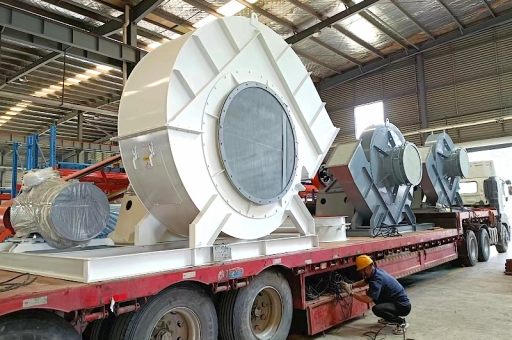
It appears you are looking for information on a very specific piece of industrial equipment: an energy-efficient, stainless steel centrifugal blower designed for cement exhaust and air supply.
This is a highly specialized combination of materials and features designed to withstand the harsh environment of a cement plant. Here is a detailed breakdown of what this equipment is, its key features, applications, and how to source it.
What is it?
This is a centrifugal fan (or blower) built from stainless steel (typically 304L or 316L), optimized for high energy efficiency (often meeting IE3 or IE4 motor standards), and used specifically in the cement industry for either extracting hot, particulate-laden exhaust or supplying combustion air to the process.
Why are these features critical for cement plants?
Cement production is one of the most demanding industrial environments for fan systems. Standard carbon steel fans would fail rapidly.
-
Stainless Steel (SS) Construction:
- Corrosion Resistance: Cement exhaust contains sulfur oxides (SOx), nitrogen oxides (NOx), and moisture, especially in raw mills and preheater towers. These form acidic condensates (sulfuric acid) at lower temperatures. SS (especially 316L) resists this acidic attack far better than carbon steel.
- Abrasion Resistance: The airstream carries a high load of cement dust, clinker dust, and raw meal. While SS is not as hard as abrasion-resistant steel (AR), it provides a better balance of corrosion and moderate abrasion. Often, the impeller and housing are fitted with wear plates.
-
Energy Efficiency:
- High Cost of Operation: Fans can consume 20-30% of a cement plant's total electrical power. Energy efficiency pays back quickly.
- Design Features:
- Backward-Curved (BC) Impellers: These are the most efficient impeller design for high-pressure applications.
- High-Efficiency Motors (IE3/IE4/IE5): Premium efficiency motors (e.g., NEMA Premium or Super Premium) reduce electrical losses.
- Variable Frequency Drives (VFDs): The most impactful energy-saving technology. It allows the fan to run at exactly the required speed, avoiding energy waste from dampers.
- Aerodynamic Design: Computational Fluid Dynamics (CFD) optimized housing and inlet cones to minimize turbulence and friction losses.
-
Centrifugal Design:
- High Pressure: Required to overcome the pressure drop across baghouses, preheater towers, and long ducting.
- Stable Operation: Centrifugal fans handle varying loads and high temperatures better than axial fans.
Primary Applications in a Cement Plant
| Application | Condition | Why Stainless Steel & Efficiency Matter |
|---|---|---|
| Kiln/Preheater Exhaust | Very hot (300-400°C), dusty, corrosive gas. | Corrosion: Cold starts cause condensation. Efficiency: This is the largest fan in the plant, so EE is paramount. |
| Raw Mill Exhaust | Hot, moist, highly abrasive. | Corrosion: Moisture + sulfur. Efficiency: High volume, continuous run. |
| Cooler Exhaust | Hot, dusty air from the clinker cooler. | Abrasion: High dust load. Efficiency: Often re-circulated, requiring precise control. |
| Baghouse / ESP Induced Draft (ID) Fan | Hot, high dust load after pollution control. | Corrosion: Condensation in the baghouse. Efficiency: The VFD is critical for maintaining differential pressure. |
| Combustion Air (FD Fan) | Clean, ambient air supplied at low pressure. | Efficiency: Often less critical, but SS is overkill unless the plant is in a corrosive environment. |
Key Specifications to Look For
When sourcing or specifying this fan, you will need to define:
- Airflow (CFM / m³/hr): The volume of gas to be moved.
- Static Pressure (in. wg. / Pa): The resistance the fan must overcome.
- Temperature (Max & Normal): The operating temperature and the design temperature (plus safety margin).
- Material of Construction: 304L (general purpose) vs. 316L (higher chlorine/acid resistance). Ensure the impeller is also SS.
- Wear Protection: Ask for hard-facing (e.g., Stellite, tungsten carbide) on blades or replaceable wear plates in the housing.
- Motor Efficiency: IE4 (Super Premium) is now common. IE5 is emerging.
- Drive Type:
- Direct Drive: Higher efficiency, fewer maintenance points.
- Belt Drive: Allows for speed changes, but has mechanical losses.
- Aeration: High-speed, low-pressure fans for fluidizing cement in silos.
Typical Benefits for Cement Plants
- Extended Equipment Life: SS resists corrosion, especially in the ductwork following a baghouse or ESP where acid dew point is critical.
- Reduced Downtime: Less frequent replacement of fan impellers and housings.
- Lower Energy Bills: A well-designed IE4 motor + VFD can reduce energy consumption by 25-40% compared to a fixed-speed fan with a damper.
- Compliance: Helps meet strict emissions limits by providing stable flow to pollution control equipment.
Potential Downsides & Considerations
| Issue | Mitigation |
|---|---|
| High Initial Cost | Stainless steel is 2-4x more expensive than carbon steel. Justify it with longer life and lower maintenance. |
| Abrasion | SS is softer than AR plate. Must use wear liners or hard-facing where erosion is high. |
| Weight | SS is the same weight as carbon steel, but thick sections can be heavier. Need robust foundations. |
| Resonance / Vibration | Cement plants have many natural frequencies. VFD operation must avoid skip frequencies to prevent damage. |
How to Find and Select a Supplier
You should contact reputable heavy-duty centrifugal fan manufacturers that specialize in the cement industry. Do not use a standard HVAC fan.
Key Suppliers to Research (Global):
- Howden (A global leader in heavy industry fans for cement)
- AirPro Fan & Blower (Custom industrial fans)
- Robinson Fans (Known for heavy-duty abrasion/corrosion fans)
- New York Blower (NYB) (Extensive industrial line, including SS)
- Cincinnati Fan / Chicago Blower
- Saudi Fans / Dynamic Fan (Regional specialists in the Middle East)
Request a detailed Lifecycle Cost Analysis (LCA) from the supplier. This should compare the purchase price vs. the 10-year cost of ownership (energy + maintenance).
Conclusion
An Energy Efficient Stainless Steel Centrifugal Blower for Cement Exhaust/Air Supply is an excellent, high-performance investment for a modern cement plant. It directly addresses the three biggest pain points of the industry:
- Abrasion (moderate wear resistance)
- Corrosion (excellent chemical resistance)
- Energy Costs (high operational savings)
Recommendation: Prioritize a supplier with proven experience in the cement industry, and insist on a VFD as a mandatory component for energy efficiency. Specify 316L stainless steel for any fan handling preheater exhaust or after a baghouse, and 304L with wear liners for cooler exhaust.





