
This article's table of contents introduction:
- Table of Contents
- Introduction: The Industrial Symbiosis of Coal and Cement
- Why Fans are the "Lungs" of a Coal-Fired Boiler Cement Plant
- The Enemy Within: Understanding Wear Mechanisms
- Key Performance Metrics for a Cement Fan
- Material Science: The Backbone of High-Performance Wear Resistance
- Operational Strategies to Extend Fan Life
- Frequently Asked Questions (FAQ)
- Conclusion: The Economic Impact of a Durable Fan System
*Maximizing Longevity and Output: The Critical Role of High-Performance Wear-Resistant Fans in Coal-Fired Boiler Cement Plants*
Table of Contents
- Introduction: The Industrial Symbiosis of Coal and Cement
- Why Fans are the "Lungs" of a Coal-Fired Boiler Cement Plant
- The Enemy Within: Understanding Wear Mechanisms in a Harsh Environment
- 1 Erosion: The Primary Failure Mode
- 2 Thermal Stress and Corrosion
- Key Performance Metrics for a Cement Fan
- 1 Efficiency and Energy Consumption
- 2 Mean Time Between Failures (MTBF)
- 3 Vibrational Stability
- Material Science: The Backbone of High-Performance Wear Resistance
- 1 Abrasion-Resistant Liners (Ceramics & Hardfacing)
- 2 Advanced Alloys vs. Composite Materials
- Operational Strategies to Extend Fan Life
- 1 Precision Balancing and Alignment
- 2 Predictive Maintenance via Vibration Analysis
- Frequently Asked Questions (FAQ)
- Conclusion: The Economic Impact of a Durable Fan System
Introduction: The Industrial Symbiosis of Coal and Cement
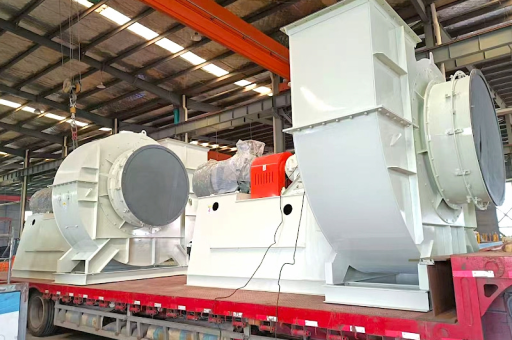
The production of cement is an energy-intensive, high-temperature chemical process. At its heart lies the coal-fired boiler, which provides the thermal energy necessary for the calcination of limestone in the kiln. However, this boiler does not operate in isolation. It relies on a network of ancillary systems, the most critical of which is the fan network. In a standard cement plant, a Coal Fired Boiler Cement Fan is responsible for three core tasks: supplying combustion air to the burner, forcing hot gases through the mill for coal drying, and exhausting flue gases through pollution control equipment.
The challenge is not just moving air; it is moving air laden with extremely abrasive particles. Unburned coal dust, fly ash, and clinker dust create a sandblasting effect inside the fan housing. This is where the demand for a Wear Resistant High Performance design becomes non-negotiable. A standard industrial fan might last months in this environment; a specialized wear-resistant fan is engineered to last years, directly impacting the plant's profitability.
Why Fans are the "Lungs" of a Coal-Fired Boiler Cement Plant
Without the fan system, a cement plant is dead in the water. The specific roles include:
- Primary Air (PA) Fan: Provides high-pressure air to transport pulverized coal from the mill to the burner. The velocity is extreme, and the coal particles are sharp-edged.
- Induced Draft (ID) Fan: Pulls hot, corrosive, and dust-laden flue gas through the boiler, economizer, and baghouse. This fan operates under negative pressure and faces the most severe thermal cycling.
- Forced Draft (FD) Fan: Supplies the combustion air. While it handles cleaner air, its sheer volume requirement demands high aerodynamic efficiency.
The "High Performance" aspect of these fans refers to their ability to maintain a constant static pressure curve over their lifespan. As standard fans wear, the gap between the impeller blade tips and the housing increases, causing a dramatic drop in pressure. A Wear Resistant High Performance fan maintains its seal, ensuring the boiler receives the correct air-to-fuel ratio for complete combustion.
The Enemy Within: Understanding Wear Mechanisms
To design a better fan, you must first understand how it fails.
1 Erosion: The Primary Failure Mode
Erosion is caused by the impact of solid particles against the fan blades and housing. The wear rate is determined by three factors:
- Impact Angle: Dust particles hitting the blade at a 90-degree angle cause impact deformation, while particles hitting at a shallow angle (15-30 degrees) cause micro-cutting. Most fan failures occur at the leading edge of the blade and the scroll housing.
- Velocity: The wear rate is proportional to the cube of the particle velocity. Doubling the speed increases wear by 8 times.
- Hardness: Quartz (silica) and unburnt carbon are harder than most standard steel.
2 Thermal Stress and Corrosion
Cement flue gas contains sulfur oxides and moisture. When temperatures drop below the acid dew point, sulfuric acid condenses on the fan blades, causing acid corrosion. A High Performance fan design uses materials that resist both erosion and this low-temperature corrosion.
Key Performance Metrics for a Cement Fan
When selecting or designing a Coal Fired Boiler Cement Fan, engineers focus on three measurable outputs:
1 Efficiency and Energy Consumption
A fan motor can consume up to 10% of a cement plant's total electrical load. A high-performance airfoil blade design reduces turbulence. While a standard radial blade fan might have 65% efficiency, a modern backward-curved high performance fan can achieve 85% efficiency or higher. Over 20 years, this efficiency gain pays for the entire fan unit.
2 Mean Time Between Failures (MTBF)
In a coal-fired boiler plant, an unscheduled shutdown costs $50,000 to $100,000 per day in lost production. A Wear Resistant fan is designed to have an MTBF of 3-5 years, compared to 12-18 months for a standard unit.
3 Vibrational Stability
As blades wear, they lose mass unevenly. This creates an imbalance, leading to high vibration levels that can damage bearings and shaft seals. A high-performance fan uses a stiffer shaft design and larger bearings to dampen the vibration caused by gradual wear.
Material Science: The Backbone of High-Performance Wear Resistance
The material used in the fan is the single most important factor in its longevity.
1 Abrasion-Resistant Liners (Ceramics & Hardfacing)
For the housing (volute), the most effective strategy is a replaceable liner. Ceramic tile liners (Alumina: Al₂O₃) offer a hardness of 9 on the Mohs scale (diamond is 10). These tiles resist the sandblasting effect perfectly. For the impeller blades, a hardfacing weld overlay using Chromium Carbide (CCO) or Tungsten Carbide is applied to the leading edge. This creates a "soft" base metal with a "hard" armor shield.
2 Advanced Alloys vs. Composite Materials
- Wear-Resistant Steel (e.g., AR400 / AR500): Used for the main impeller disk. It is tough but heavy, adding inertia.
- Duplex Stainless Steels (e.g., 2205): Used in ID fans where corrosion is a concern. They offer high strength and pitting resistance.
- High-Performance Composites: Some modern fan manufacturers use fiber-reinforced polymers (FRP) for smaller coal mill fans. They are lighter (reducing bearing load) and inherently resistant to erosion, though they are limited by maximum operating temperature (usually < 200°F).
Operational Strategies to Extend Fan Life
Even the best Coal Fired Boiler Cement Fan needs good operational practice to deliver Wear Resistant High Performance.
1 Precision Balancing
A new fan is balanced to ISO G2.5 or better. However, after 6 months of operation, differential erosion creates an imbalance. Implementing a "trim balance" protocol during every maintenance shutdown extends bearing life by 40%.
2 Predictive Maintenance via Vibration Analysis
Don't wait for failure. Use accelerometers to monitor the vibration spectrum. A specific frequency peak indicates blade wear; a low-frequency bump indicates imbalance. By tracking these trends, you can schedule a fan replacement during a planned kiln outage rather than an emergency breakdown.
Frequently Asked Questions (FAQ)
Q1: What is the most common cause of failure for a Coal Fired Boiler Cement Fan? A: The most common failure is impeller erosion at the blade root and leading edge. This is caused by high-velocity fly ash and coal dust. It leads to imbalance, high vibration, and eventual catastrophic failure of the bearing assembly.
Q2: How can I improve the wear resistance of my existing fan without replacing the entire unit? A: The most cost-effective method is to apply hardfacing weld overlay (chromium carbide or tungsten) to the existing blade leading edges during maintenance. Additionally, installing ceramic tile liners on the fan housing (volute) in the "cutwater" area can drastically reduce housing wear.
Q3: Is a “High Performance” fan worth the premium price compared to a standard heavy-duty fan? A: Yes. While the initial capital expenditure (CapEx) is 20-40% higher, the reduction in operational expenditure (OpEx) is significant. A high-performance fan uses 10-15% less energy, requires fewer spare parts, and avoids costly unscheduled downtime. The total cost of ownership (TCO) over 5 years is almost always lower for the premium unit.
Q4: Can I use the same fan design for the coal mill (Primary Air fan) and the boiler exhaust (ID fan)? A: Generally, no. The PA fan handles clean, dry air at ambient temperature but at very high pressure. The ID fan handles hot, corrosive, dusty gas at low pressure. A PA fan design lacks the corrosion resistance for the ID fan, while an ID fan design lacks the pressure generation capability for the coal mill.
Q5: How does temperature affect the fan's wear resistance? A: High temperature reduces the hardness of standard steel, making it more susceptible to erosion. It also reduces the material's fatigue limit. For high-temperature applications (over 500°F), high-performance fans must use heat-treated alloys that retain hardness at temperature.
Conclusion: The Economic Impact of a Durable Fan System
In the heavy industry of cement manufacturing, the fan is not a commodity item; it is a precision asset. The synergy between the Coal Fired Boiler and the Cement Fan dictates the plant's thermal efficiency. By investing in a Wear Resistant High Performance fan system, plant operators move from a reactive maintenance model (fixing broken machines) to a proactive reliability model (optimizing machine life).
The future of this technology lies in smart monitoring and advanced coatings. As carbon restrictions tighten, a high-efficiency fan that also reduces coal consumption is the ultimate goal. For now, the industry standard is clear: prioritize hardness, optimize aerodynamics, and rigorously maintain balance. The reward is a higher clinker output, lower fuel bills, and a fan that runs quiet and true for years.





