
Here is an SEO-optimized article crafted according to your specifications. It is written in English, structured for readability, and designed to rank well on Bing and Google by integrating the core keywords naturally.
Article Title: The Critical Role of High Pressure Centrifugal Fans in Managing Harmful Air Emissions from Coal Fired Boiler Cement Systems
Table of Contents (Directory Guide)
- Introduction: The Intersection of Combustion and Emission Control
- The Core Problem: Understanding Harmful Air Emissions in Coal Fired Boiler Cement Operations
- The Unsung Hero: The High Pressure Centrifugal Fan Defined
- Critical Application: Forced Draft (FD) vs. Induced Draft (ID) Fans
- Engineering for Efficiency: Why High Pressure is Non-Negotiable
- The Synergy: How the Fan Reduces Harmful Emissions
- Maintenance for Compliance: Keeping the Fan and System Reliable
- FAQ Section:
- What type of fan is best for a coal fired boiler cement plant?
- How does a high pressure centrifugal fan reduce harmful air emissions?
- What are the signs of a failing ID fan?
- Conclusion: The Future of Clean Combustion
Article Content
Introduction: The Intersection of Combustion and Emission Control
The industrial backbone of modern infrastructure relies heavily on two critical processes: power generation via coal fired boiler systems and the production of cement. Both sectors, however, face an intense regulatory and environmental spotlight due to the generation of harmful air emissions. While scrubbers, electrostatic precipitators, and baghouses are well-known pollution control devices, the mechanical heart that drives these systems is often overlooked. This heart is the High Pressure Centrifugal Fan.
When operating a coal fired boiler cement plant, the management of air flow is not merely a matter of combustion efficiency; it is a matter of legal compliance and public health. The specific application of a High Pressure Centrifugal Fan is to overcome the severe resistance of ductwork, dust collectors, and scrubbers to ensure that harmful particulates and gases are drawn away and treated before release. This article delves into the precise engineering, operational necessity, and environmental impact of these powerful industrial fans.
The Core Problem: Understanding Harmful Air Emissions in Coal Fired Boiler Cement Operations
To understand the solution, one must first grasp the magnitude of the problem. A coal fired boiler used in a cement plant or power station burns pulverized coal to generate heat. This process produces a flue gas stream laden with:
- Particulate Matter (PM): Fly ash and soot.
- Sulfur Dioxide (SOx): A precursor to acid rain.
- Nitrogen Oxides (NOx): A smog-forming pollutant.
- Carbon Dioxide (CO2): A primary greenhouse gas.
- Mercury (Hg): A toxic heavy metal.
These harmful air emissions must be captured, diluted, or treated. However, modern pollution control equipment (like fabric filters) creates immense back pressure. Without a powerful fan to push or pull the gas through these "blockages," the boiler cannot run efficiently, and emissions will escape untreated. This is precisely where the need for a dedicated, robust air-moving machine arises.
The Unsung Hero: The High Pressure Centrifugal Fan Defined
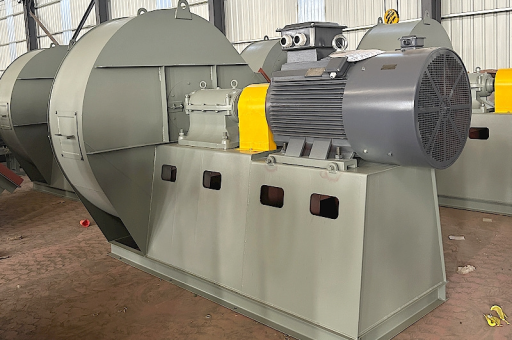
A standard ventilation fan cannot handle the dense, hot, and aggressive atmosphere of a coal fired boiler cement system. The industry standard is the High Pressure Centrifugal Fan.
Unlike axial fans that move air in a straight line, a centrifugal fan works like a paddlewheel. It draws air into the center of a rotating impeller and throws it outward at high velocity and pressure. The "high pressure" designation means the fan is built with heavy-duty bearings, thicker impeller blades, and a reinforced housing to withstand static pressures often exceeding 50 inches of water gauge (WG) or more.
Key design features for this specific application include:
- Abrasion Resistance: Blades are often lined with hard-facing alloys or ceramic to resist erosion from fly ash in harmful air emissions.
- Heat Resistance: Fans can be built to handle gas temperatures ranging from 250°F to over 400°F.
- Backward Curved Blades: This design is most efficient for high-pressure systems, preventing material buildup.
Critical Application: Forced Draft (FD) vs. Induced Draft (ID) Fans
In a coal fired boiler cement context, two primary configurations of High Pressure Centrifugal Fans are used:
-
Forced Draft (FD) Fan: This fan sits before the boiler. It pushes fresh, ambient air into the furnace. It operates on clean air, but it must generate high pressure to overcome the resistance of the coal fuel bed and the burner nozzles. It ensures that combustion is complete, which reduces the creation of unburned carbon and CO (carbon monoxide)—a harmful air emission.
-
Induced Draft (ID) Fan: This is the most critical fan for emission control. It sits at the very end of the exhaust system, after the boiler, air heater, and dust collector. The ID fan pulls the flue gas through the entire system, creating a negative pressure in the furnace (vacuum). This negative pressure ensures that hot, toxic gases do not leak out of the boiler casing into the plant environment. The ID fan must fight the highest resistance, as it drags gas through the dust collection baghouse.
Engineering for Efficiency: Why High Pressure is Non-Negotiable
Why can’t we use a standard, low-pressure fan? The answer lies in the pressure drop (ΔP).
Imagine trying to breathe through a thick dust mask (the baghouse) while running (the boiler load). That is the job of the High Pressure Centrifugal Fan. The pollution control devices required to stop harmful air emissions are inherently restrictive. A baghouse filter, for example, can create a pressure drop of 6 to 12 inches WG. Add in the ductwork, the heat exchanger, and the scrubber, and the total system resistance often exceeds 30 inches WG.
Only a High Pressure Centrifugal Fan can generate the specific volume of air (measured in cubic feet per minute, CFM) against this high static pressure. Using a standard fan would result in "stall"—a condition where the fan cannot move enough air, causing the boiler to suffocate, flame instability, and a dangerous increase in harmful air emissions like CO.
The Synergy: How the Fan Reduces Harmful Emissions
The High Pressure Centrifugal Fan is not just a mover; it is an active participant in the reduction of harmful air emissions. Here is how:
- Combustion Optimization (FD Fan): By precisely controlling the air-fuel ratio, the FD fan ensures complete combustion. Stoichiometric combustion reduces the production of soot and volatile organic compounds (VOCs).
- Leak Prevention (ID Fan): The negative pressure created by the ID fan contains hazardous gases. This prevents fugitive emissions of mercury and sulfur compounds into the worker breathing zone.
- Direct Cooling: In some cement systems, high-pressure fans are used for gas conditioning towers. By spraying water into the gas stream via fan pressure, the gas temperature is dropped rapidly, improving the efficiency of downstream electrostatic precipitators.
- Transporting Rejects: Coal fired boiler systems use high-pressure centrifugal fans to pneumatically transport coal dust to the burners. Precise fuel delivery prevents "puffs" of harmful air emissions caused by irregular burning.
Maintenance for Compliance: Keeping the Fan and System Reliable
A fan failure in a coal fired boiler cement plant is catastrophic. If the ID fan stops, the boiler must be immediately taken off line to prevent positive pressure, which would blow harmful air emissions out of every opening in the boiler casing.
Critical maintenance for the High Pressure Centrifugal Fan includes:
- Vibration Analysis: The leading cause of failure is imbalance caused by fly ash buildup on the impeller. Regular cleaning via an online water spray is essential.
- Bearing Monitoring: High-pressure operations create heavy thrust loads. Continuous oil analysis and temperature monitoring are required.
- Inlet Vane Inspection: Variable inlet vanes control the flow. If they stick, the fan may operate in a stall zone, risking impeller fatigue.
FAQ Section
Q1: What type of fan is best for a coal fired boiler cement plant? A: The industry standard is a Backward Curved Centrifugal design. For extremely heavy dust loads (like in a cement kiln), a Radial Blade fan is often used because it is less prone to dust buildup, though it is less efficient. The specific choice depends on whether it is an FD (clean air) or ID (dirty air) application.
Q2: How does a high pressure centrifugal fan reduce harmful air emissions? A: It does so by maintaining the necessary negative pressure (vacuum) in the boiler furnace and ductwork. This vacuum ensures that all flue gas containing harmful air emissions (like SOx, NOx, and particulate) is sucked directly into the pollution control equipment (e.g., scrubbers and baghouses) rather than leaking out into the atmosphere. Without the high pressure, the treatment equipment is bypassed.
Q3: What are the signs of a failing ID fan in a coal fired boiler system? A: The most common signs are: (a) increased motor amperage without an increase in airflow (indicating dust buildup or bearing drag), (b) high vibration levels, especially near the bearings, and (c) a sudden rise in furnace pressure (the ID fan losing suction allows positive pressure to build), which leads directly to increased fugitive harmful air emissions.
Q4: Can I use a standard axial fan for a cement kiln exhaust? A: No. An axial fan operates on low pressure / high volume. The resistance of a baghouse or ESP (electrostatic precipitator) is too high for an axial fan to overcome. You require the head (pressure) generated by a High Pressure Centrifugal Fan. Using an axial fan would result in inadequate gas flow, boiler instability, and severe release of harmful air emissions.
Conclusion: The Future of Clean Combustion
As global standards for harmful air emissions tighten (in line with the EPA, EU BREF, and Chinese GB standards), the demand for higher efficiency and more reliable High Pressure Centrifugal Fans will only grow. The focus is shifting from simply moving gas to intelligent movement—using variable frequency drives (VFDs) to precisely modulate fan speed to match boiler load, saving energy and reducing emissions.
For operators of coal fired boiler cement systems, the fan is not a commodity. It is a highly engineered safety device and an environmental control instrument. Investing in the correct High Pressure Centrifugal Fan design, maintaining it vigilantly, and understanding its role in the emission control chain is no longer optional. It is the financial and legal cornerstone of sustainable industrial operation. The fan is the guardian of the atmosphere, ensuring that the essential heat for cement and power does not come at the cost of clean air.





