
This article's table of contents introduction:
- Understanding the Terminology (The Combined System)
- Why Use a FD Fan for Dust Extraction? (The "High Performance" Rationale)
- Key Design Features for High Performance in this Role
- Potential Performance Specifications
- Common Problems Solved by this Configuration
- Recommendation for Sourcing
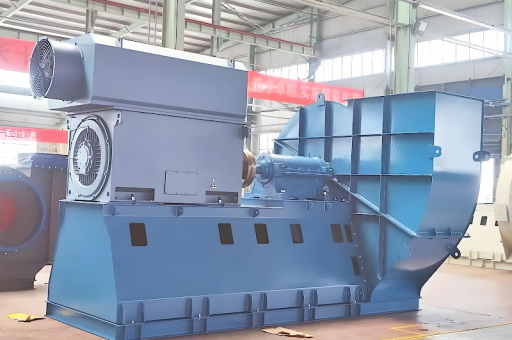
It looks like you are describing a specific industrial application: using a Forced Draft (FD) Fan in a Boiler Dust Extraction system, with the goal of High Performance.
This is technically a bit of a misnomer in standard boiler terminology (FD fans are for combustion air, not dust extraction), but in the context of high-performance industrial upgrades or specialized systems, there is a clear engineering logic behind it.
Here is a detailed breakdown of what this configuration likely means, the challenges it addresses, and how to achieve "high performance."
Understanding the Terminology (The Combined System)
- Standard FD Fan (Forced Draft): Sucks air from the atmosphere and forces it into the furnace to support combustion. It operates on the pressure side of the boiler.
- Standard Dust Extraction Fan (ID Fan - Induced Draft): Sucks flue gas (containing fly ash and dust) out of the boiler, through the dust collector (ESP or Baghouse), and up the chimney. It operates on the vacuum side.
Your combination likely refers to one of two scenarios:
- Scenario A (Most Likely): A High-Pressure FD Fan is being used to assist a dust collection system by pressurizing the air inlet or handling heavy dust loads in the air stream (e.g., in a CFB boiler or biomass boiler).
- Scenario B (Specialized): You are using the impeller design of an FD fan (which handles clean air) and applying it to a dust extraction system through a closed-loop, where the air is cleaned and recirculated.
Why Use a FD Fan for Dust Extraction? (The "High Performance" Rationale)
| Standard ID Fan (for dust) | Modified FD Fan for Dust Extraction | High Performance Benefit |
|---|---|---|
| Handles hot, dirty, abrasive gas. | Modified to handle specific particle size. | Higher static pressure for a given air volume. |
| Prone to erosion & wear. | Uses wear-resistant liners. | Less maintenance downtime. |
| Lower efficiency due to heavy dust. | Optimized aerodynamics. | Lower power consumption per ton of coal/biomass. |
| Requires heavy duty bearings. | High-performance bearings & shaft seals. | Higher RPM and air handling capacity. |
Key Design Features for High Performance in this Role
If you are designing or selecting a fan for this specific application, the following are critical for achieving "high performance":
A. Impeller Design
- Radial or Backward-Curved Blades: For high dust loads, a radial blade (paddle wheel) design is best for handling abrasion and preventing build-up.
- High-Strength Materials: Use Hardox, Corten, or Stainless Steel (SS 316). For extreme abrasive dust (e.g., fly ash), ceramic tile lining on the impeller leading edges and casing is essential.
- Balance: Precision dynamic balancing (ISO 1940 G2.5 grade) is required for high-speed operation.
B. Casing & Inlet
- High Static Pressure: The casing must be reinforced (stiffeners and thicker plate) to handle pressures > 500 mmWC (if used as a boost fan).
- Inlet Box: A tangential inlet or inlet vane control is preferred for modulating airflow without causing dust deposits.
C. Drive System
- Variable Frequency Drive (VFD): Essential for high performance. It allows the fan to run at exactly the required speed, saving massive energy compared to dampers.
- Motor: IE4 or IE5 ultra-premium efficiency motor to reduce electrical costs.
D. Sealing & Bearings
- Shaft Seals: A purged labyrinth seal or compressed air seal is critical to prevent dust from leaking into bearings and destroying them.
- Bearing Housing: Use a plummer block with vibration probes (accelerometers) and temperature sensors for predictive maintenance.
Potential Performance Specifications
For a "High Performance" FD Fan dedicated to dust extraction (e.g., in a biomass boiler or a baghouse booster), typical targets would be:
| Metric | Standard Fan | High-Performance Fan |
|---|---|---|
| Static Efficiency | 60-70% | 82-88% |
| Noise Level | 85-95 dBA | < 80 dBA (with silencer) |
| Vibration (RMS) | 5 mm/s | < 2.5 mm/s (Bearing life > 50,000 hrs) |
| Wear Life | 6-12 months | 3-5 years (with hard facing) |
| Turndown Ratio | 50% (damper) | 20-100% (VFD) |
Common Problems Solved by this Configuration
- Air Leakage: If a standard ID fan is leaking air, a high-pressure FD fan used as a booster in the dust extraction line can overcome pressure drops.
- Dust Settling: In long horizontal ducts, high velocity from the FD fan keeps dust in suspension.
- Energy Recovery: In some advanced setups, the FD fan pushes air through a heat exchanger before the boiler, maximizing thermal efficiency while also cleaning the air.
Recommendation for Sourcing
If you are looking to purchase a "High Performance FD Fan for Boiler Dust Extraction," search for these terms with your supplier:
- "Heavy-Duty Radial Bladed Fan"
- "Booster Fan with Wear Liners"
- "Fly Ash Handling Fan"
- "High Pressure Baghouse Booster Fan"
Warning: Do NOT use a standard "clean air" FD fan (forward-curved blades) for this duty. It will clog and vibrate heavily within hours.
Conclusion: You are looking for a high-static-pressure, abrasion-resistant, variable-speed-controlled fan capable of handling high dust loads. It is essentially a specialized ID fan with FD fan power and aerodynamics. If done correctly, it will significantly reduce downtime and power bills.





