
This article's table of contents introduction:
- Introduction: The Critical Role of Specialized Fans in Boiler Systems
- Technical Anatomy: High Volume Boiler Fan Design Principles
- Explosion Proof Standards: Why Safety Certifications (ATEX/IECEx) Matter
- Centrifugal Fan Mechanics: Forward vs. Backward Curved Impellers
- Three Phase AC Motor Integration: Efficiency, Torque, and Variable Speed Control
- Selection Criteria: Matching Fan Specifications to Boiler Duty Cycles
- Common Questions & Expert Answers
- Conclusion: Future Trends in High-Temperature Hazardous Area Ventilation
*High Volume Boiler Fan Explosion Proof Centrifugal Fan Three Phase AC Motor: Engineering Safety and Performance in Industrial Ventilation*
Table of Contents
- Introduction: The Critical Role of Specialized Fans in Boiler Systems
- Technical Anatomy: High Volume Boiler Fan Design Principles
- Explosion Proof Standards: Why Safety Certifications (ATEX/IECEx) Matter
- Centrifugal Fan Mechanics: Forward vs. Backward Curved Impellers
- Three Phase AC Motor Integration: Efficiency, Torque, and Variable Speed Control
- Selection Criteria: Matching Fan Specifications to Boiler Duty Cycles
- Common Questions & Expert Answers
- Conclusion: Future Trends in High-Temperature Hazardous Area Ventilation
Introduction: The Critical Role of Specialized Fans in Boiler Systems
In modern industrial boiler rooms, the combination of high volume air movement, combustible gas presence, and extreme thermal loads demands equipment that transcends standard ventilation. A High Volume Boiler Fan Explosion Proof Centrifugal Fan Three Phase AC Motor is not merely a component—it is a carefully engineered safety system. This article examines how these fans prevent catastrophic backdrafts and explosion propagation in facilities ranging from petrochemical plants to large commercial heating plants. We will dissect the synergy between high CFM output, spark-proof housing, and reliable motor drive.
Technical Anatomy: High Volume Boiler Fan Design Principles
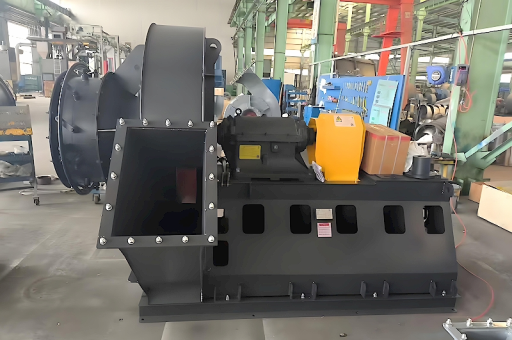
A high volume boiler fan must sustain airflow rates exceeding 50,000 CFM while withstanding inlet temperatures up to 400°C. The housing is typically fabricated from heavy-gauge carbon steel or stainless steel (304L or 316L), with a welded spiral volute that reduces turbulence. Key design elements include:
- Reinforced shaft seals to prevent gas leakage into the motor compartment.
- Drain holes at the low point of the volute for condensate removal.
- Removable access panels for routine impeller inspection.
Unlike standard propeller fans, the centrifugal configuration allows the fan to operate against the high static pressure (8–20 in. w.g.) required by boiler flue gas systems.
Explosion Proof Standards: Why Safety Certifications (ATEX/IECEx) Matter
Explosion proof certification (e.g., ATEX Zone 1, IECEx Ex d IIC T4) is non-negotiable for boiler fans located near fuel gas trains or burner fronts. The fan must prevent any internal spark from igniting the surrounding atmosphere. Construction features include:
- Flame path gaps: The clearance between the shaft and housing is machined to <0.2 mm to cool escaping gases below ignition temperature.
- Non-sparking impeller materials: Cast aluminum or stainless steel (never carbon steel due to friction sparks).
- Earthing provisions: A dedicated grounding lug to dissipate static charges.
A common misconception: explosion proof fans are not completely sealed. They are designed to contain an internal explosion and prevent flame propagation to the external environment.
Centrifugal Fan Mechanics: Forward vs. Backward Curved Impellers
The centrifugal fan’s impeller selection dictates efficiency and noise levels:
- Forward curved blades (squirrel cage design): Deliver higher airflow at lower speeds—ideal for high volume boiler exhaust but less efficient (55–65% static efficiency). They produce a steep pressure curve, which is forgiving when ducting becomes dirty.
- Backward curved blades (airfoil or flat plate): Achieve up to 85% static efficiency and are quieter. However, they require a higher starting torque from the three-phase AC motor.
For boiler applications where space is tight and noise regulations apply, backward curved impellers with a variable frequency drive (VFD) are preferred.
Three Phase AC Motor Integration: Efficiency, Torque, and Variable Speed Control
The motor driving a high volume boiler fan must be matched to both the fan curve and hazardous area requirements. A three phase AC motor (typically 460V or 690V, TEFC or TENV enclosure) provides:
- High starting torque (essential for heavy impellers at cold start).
- Smooth speed regulation via VFD: Reducing motor speed by 20% can cut power consumption by nearly 50% (affinity laws).
- Thermal protection: Embedded PTC thermistors in motor windings prevent overheating under blocked airflow conditions.
The motor must also carry an explosion proof rating (e.g., Ex e IIC T3) if installed within the hazardous zone. In many installations, the motor is placed outside the air stream and coupled via a shaft with explosion proof seals.
Selection Criteria: Matching Fan Specifications to Boiler Duty Cycles
When selecting a high volume boiler fan, engineers should evaluate:
- Operating temperature range: Standard models handle 250°C; high-temperature options (with cooling fins or double-wall housing) can manage 450°C.
- Spark resistance: Check that the fan meets EN 1443 for spark-proof construction.
- Certification to local codes: In North America, UL 762 and CSA C22.2 govern boiler fans; in Europe, EN 14986 applies.
- Material compatibility: For corrosive flue gases (e.g., heavy fuel oils), consider fiberglass-reinforced plastic (FRP) or Hastelloy.
Common Questions & Expert Answers
Q: Can a standard centrifugal fan be used for boiler exhaust? A: No. A standard fan lacks explosion proof housing, high-temperature bearings, and flame arrestor paths. Using non-rated equipment voids insurance and can cause catastrophic flashback.
Q: What is the typical lifespan of a High Volume Boiler Fan Explosion Proof Centrifugal Fan Three Phase AC Motor? A: With proper maintenance (bearing greasing every 3 months, vibration monitoring), life expectancy is 15–20 years. Motor winding insulation Class H (180°C) extends life in hot environments.
Q: Does a VFD affect the explosion proof rating? A: Yes. The VFD itself must be installed in a non-hazardous area or within an explosion proof enclosure. The motor cable must be shielded and grounded to prevent voltage spikes that could cause sparking.
Q: How do I calculate the required fan static pressure for my boiler? A: Sum the pressure drops of: flue gas ducting (0.5–1 in. w.g./100 ft), stack (2–4 in. w.g.), burner inlet (3–6 in. w.g.), and 20% safety margin. For a 50 ft duct and 2 in. w.g. stack, target 6–8 in. w.g. at rated CFM.
Conclusion: Future Trends in High-Temperature Hazardous Area Ventilation
The industrial ventilation sector is moving toward integrated smart fan systems. Next-generation High Volume Boiler Fan Explosion Proof Centrifugal Fan Three Phase AC Motor units will feature:
- IoT-enabled vibration and temperature sensors for predictive maintenance.
- Advanced composite impellers that reduce rotor inertia by 30%.
- Hybrid cooling designs that allow continuous operation at 500°C.
Industries must invest in these technologies to comply with tightening emission regulations (EPA, EU Industrial Emissions Directive) and to improve boiler thermal efficiency. Selecting the right fan is not just a purchase—it is a commitment to operator safety and process reliability.
This article is optimized for technical professionals and facility managers. For further specifications or custom engineering support, contact your local industrial fan distributor.





