
This article's table of contents introduction:
- Table of Contents / Article Guide
- Introduction: The Imperative of Flue Gas Denitrification
- Understanding the Core Components
- Synergy in System Design: How These Technologies Work Together
- Technical Deep Dive: Centrifugal SIMO Blower vs. Traditional Fans
- Anti-Abrasive Materials and Coatings: A Practical Guide
- Frequently Asked Questions (FAQ)
- Conclusion: Future Trends in Denitrification and Fan Technology
** Optimizing Industrial Emission Control: The Role of Flue Gas Denitrification, Boiler Fan, Centrifugal SIMO Blower, and Anti-Abrasive Technologies
Table of Contents / Article Guide
- Introduction: The Imperative of Flue Gas Denitrification
- Understanding the Core Components
- 1. Boiler Fans: The Respiratory System of Power Plants
- 2. Centrifugal SIMO Blowers: High Efficiency Meets Variable Demand
- 3. The Anti-Abrasive Challenge: Protecting Equipment from Ash & Particulates
- Synergy in System Design: How These Technologies Work Together
- Technical Deep Dive: Centrifugal SIMO Blower vs. Traditional Fans
- Anti-Abrasive Materials and Coatings: A Practical Guide
- Frequently Asked Questions (FAQ)
- Conclusion: Future Trends in Denitrification and Fan Technology
Introduction: The Imperative of Flue Gas Denitrification
In the modern landscape of industrial power generation and heavy manufacturing, environmental compliance is not just a legal requirement—it is a cornerstone of operational sustainability. Flue gas denitrification (typically achieved through Selective Catalytic Reduction or Selective Non-Catalytic Reduction) is the critical process designed to remove nitrogen oxides (NOx) from exhaust gases before they are released into the atmosphere. Left untreated, NOx contributes to acid rain, smog, and respiratory diseases.
However, the effectiveness of any denitrification system hinges entirely on the reliability and performance of its supporting mechanical equipment. At the heart of this system lie high-capacity boiler fans and specialized Centrifugal SIMO blowers. Furthermore, the abrasive nature of flue gas—laden with fly ash, dust, and unburned carbon—demands robust anti-abrasive engineering. This article provides a detailed, technical examination of how these four elements—flue gas denitrification, boiler fans, centrifugal SIMO blowers, and anti-abrasive solutions—interconnect to form a high-efficiency, low-maintenance emission control system.
Understanding the Core Components
1. Boiler Fans: The Respiratory System of Power Plants
A boiler fan is a large, powerful fan that provides the necessary airflow for combustion and for moving flue gases through the pollution control equipment. In a denitrification context, the Induced Draft (ID) fan is the most critical. It operates downstream of the boiler and upstream of the scrubber or stack, pulling the hot, dusty flue gases through the denitrification reactor. The design of this fan must account for operating temperatures often exceeding 150°C (302°F) and a gas stream containing high concentrations of particulate matter. A failure in the boiler fan directly leads to a plant shutdown, making its reliability paramount.
2. Centrifugal SIMO Blowers: High Efficiency Meets Variable Demand
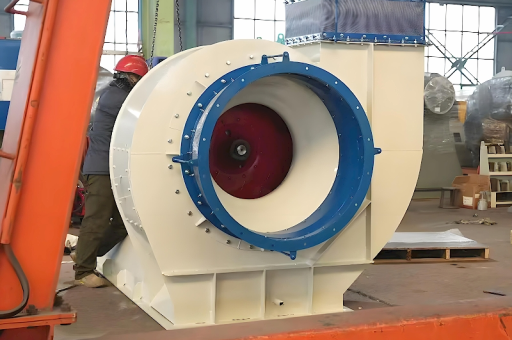
A Centrifugal SIMO Blower refers to a centrifugal blower driven by a SIMO motor. "SIMO" stands for Single Induction Multi-velocity Output motor. Unlike standard fixed-speed motors, the SIMO motor is designed to operate at two or more discrete speeds (e.g., 4-pole and 6-pole configurations). This is a significant advantage for denitrification systems where load conditions vary. The centrifugal design allows for the creation of high static pressure, which is essential for overcoming the resistance offered by the denitrification catalyst bed and ductwork. The blower operates at a higher pressure ratio than a standard fan, making it ideal for precise gas injection and movement through the catalyst layers.
3. The Anti-Abrasive Challenge: Protecting Equipment from Ash & Particulates
Flue gas from coal or biomass combustion is a high-velocity stream of hot gas containing hard, sharp silica and alumina particles. Without anti-abrasive protection, a standard fan or blower impeller would experience severe erosion in weeks or months, leading to catastrophic imbalance and failure. Anti-abrasive strategies include:
- Material Selection: Using high-chrome alloy steels or special cast irons (e.g., 16Cr-2Ni or KMTBCr28).
- Coatings: Applying ceramic tile linings, tungsten carbide spray coatings, or polymer-based abrasion-resistant overlays.
- Design Geometry: Utilizing backward-inclined blades that reduce the angle of particle impact (impingement wear) compared to radial blades.
Synergy in System Design: How These Technologies Work Together
The efficiency of flue gas denitrification requires a delicate balance. The Centrifugal SIMO blower injects either ammonia (NH₃) or urea solution into the flue gas stream at the optimum pressure and velocity. The boiler fan then ensures that the mixture moves uniformly across the catalyst or through the spray zone. The variable speed capability of the SIMO motor is critical here. When the boiler load is low, the blower can switch to the lower speed setting, reducing energy consumption while maintaining the required injection ratio.
Simultaneously, the anti-abrasive design of both the fan and the blower ensures that the thousands of tons of ash passing through the system do not destroy the critical components. A well-designed system will feature a hard-faced impeller on the boiler fan and a ceramic-lined housing on the centrifugal blower, extending the Mean Time Between Repairs (MTBR) from 6 months to over 3 years.
Technical Deep Dive: Centrifugal SIMO Blower vs. Traditional Fans
Many engineers assume a fan and a blower are interchangeable. However, in denitrification applications, the distinction matters.
| Feature | Standard Boiler Fan (ID Fan) | Centrifugal SIMO Blower |
|---|---|---|
| Primary Task | Move large volumes of gas against low resistance | Move moderate volumes against high resistance |
| Pressure Rating | Typically < 0.5 bar (5000 Pa) | Typically > 0.5 bar (High static pressure) |
| Motor Type | Single speed or VFD | SIMO (Discrete multi-speed) for high starting torque |
| Application | Pulling gas through the entire duct system | Injecting reagent into a high-pressure zone |
| Wear Zone | Impeller tip and leading edge | Impeller root and diffuser sections |
The Centrifugal SIMO Blower offers a unique advantage: high starting torque without the harmonic distortion issues associated with Variable Frequency Drives (VFDs) in high-power applications. It provides "on-demand" pressure changes through speed switching, making it highly reliable in harsh environments where electronic VFDs might fail due to heat or dust ingress.
Anti-Abrasive Materials and Coatings: A Practical Guide
To maximize the service life of equipment handling flue gas, facility managers must invest in anti-abrasive technology. Here is a practical hierarchy of protection for a boiler fan and Centrifugal SIMO blower:
- Sacrificial Wear Plates: Weldable plates of high-hardness steel placed at the point of highest particle impact (the impeller inlet and cut-off tongue).
- Ceramic Matrix Composite: A layer of densely packed ceramic beads (e.g., Al₂O₃) embedded in a rubber or epoxy matrix. This is the gold standard for centrifugal blower housings.
- Thermal Spray Coatings: HVOF (High Velocity Oxy-Fuel) applied tungsten carbide or chromium carbide coatings on the fan blades. These coatings offer a hardness of 1400-1700 HV, making them nearly impervious to fly ash.
- Surface Hardening: Induction hardening of the leading edges to create a high-carbon martensitic surface layer.
Important Note: When selecting an anti-abrasive solution, ensure the chosen material can withstand the operating temperature. Standard epoxy coatings may fail above 120°C, whereas ceramic tiles can withstand temperatures over 500°C.
Frequently Asked Questions (FAQ)
Q1: What is the primary difference between a SIMO blower and a regular VFD blower for denitrification? A: The Centrifugal SIMO Blower uses a multi-speed induction motor (SIMO) that mechanically switches poles to achieve different speeds. This is extremely robust and tolerant of voltage fluctuations. A VFD blower is more precise but is sensitive to dust, heat, and electrical interference, which are common near boiler fans.
Q2: Why is anti-abrasive protection so critical for the boiler fan in a denitrification system? A: The boiler fan handles the entire gas flow. Flue gas contains abrasive fly ash. Without anti-abrasive coatings or materials, the impeller will erode unevenly. This causes vibration, bearing failure, and ultimately, catastrophic fan failure, leading to a complete plant shutdown.
Q3: Can I use a standard centrifugal fan for reagent injection? A: Not effectively. Reagent injection (like ammonia or urea) requires high static pressure to penetrate the gas stream and mix uniformly. A standard fan cannot produce this pressure. You need a Centrifugal SIMO Blower designed for high pressure to ensure proper atomization and distribution across the catalyst.
Q4: How often should I inspect the anti-abrasive features of my blower? A: For a Centrifugal SIMO Blower operating on coal-fired flue gas, inspect the impeller and housing lining every 3 months. A visual inspection of the "wear stripe" on the blade tip will tell you if the erosion rate is accelerating. Ceramic tile installations should be checked for tile delamination.
Q5: What happens if the SIMO motor fails on the blower? A: If the SIMO motor fails, the Centrifugal SIMO Blower stops. The denitrification reaction cannot happen. Most plants have a 100% standby blower system. The advantage of the SIMO design is its simple, rugged construction; repairs are often faster than repairing a complex electronic VFD drive.
Conclusion: Future Trends in Denitrification and Fan Technology
The integration of Flue Gas Denitrification, Boiler Fan, Centrifugal SIMO Blower, and Anti-Abrasive technologies is a testament to precise mechanical engineering. As global emission standards become stricter, the demand for higher reliability and efficiency will grow.
Future developments will likely focus on:
- Smart SIMO Drives: Integrating gentle start controllers with the pole-changing motor for reduced mechanical shock.
- Nanoceramic Coatings: Next-generation anti-abrasive layers that are thinner but harder, reducing the weight of the impeller and improving bearing life.
- Digital Twin Monitoring: Using sensors on the boiler fan and blower to predict wear and schedule maintenance before failure occurs.
For the industrial engineer or plant manager, the lesson is clear: you cannot view denitrification in isolation. The fan that moves the gas and the blower that injects the reagent, protected by anti-abrasive materials, form a single, interdependent system. Mastering the selection and maintenance of these components is the key to achieving clean, compliant, and cost-effective power generation. For further technical specifications or to discuss retrofit options, visit your local industrial fan specialist.





