
This article's table of contents introduction:
- The Core Problem: Why Fans Are Energy Hogs
- The Highest Efficiency Strategy: Variable Frequency Drives (VFDs)
- Advanced Aerodynamic Fan Designs
- Intelligent Control Systems (Optimization)
- High-Efficiency Motors & Drivetrain
- System-Level & Maintenance Optimization
- Summary: How to Achieve "High Efficient Energy Saving"
- A Note on "Coal" and the Future
While the term "coal-fired boiler fan ventilation" might seem contradictory to modern energy efficiency trends, there have been significant advancements in making these systems as efficient as possible for facilities that still rely on coal.
Here is a breakdown of how high-efficiency, energy-saving ventilation is achieved for coal-fired boiler fans, focusing on the key technologies and strategies.
The Core Problem: Why Fans Are Energy Hogs
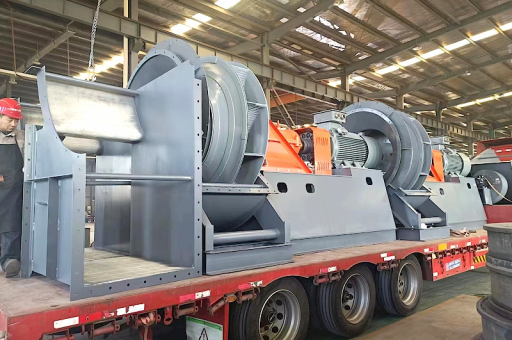
In a coal-fired boiler, fans are massive. They move hundreds of thousands of cubic meters of air per hour to:
- Forced Draft (FD) Fans: Push air into the furnace for combustion.
- Induced Draft (ID) Fans: Pull flue gas out of the boiler and through pollution control equipment (ESP, FGD).
- Primary Air (PA) Fans: Dry and transport pulverized coal to the burners.
The energy consumption of these fans can be 7-10% of the entire power plant's output. Traditional methods (dampers, inlet vanes) waste massive amounts of energy by throttling the airflow—like driving a car with one foot on the gas and one on the brake.
The Highest Efficiency Strategy: Variable Frequency Drives (VFDs)
This is the single most effective technology for energy savings. Instead of running the fan motor at 100% speed and then mechanically restricting airflow, a VFD adjusts the motor's speed to match the exact demand.
- The "Affinity Laws" (The Physics of Savings): The power required by a fan is proportional to the cube of its speed.
- Running at 80% speed consumes only 51% of the power.
- Running at 50% speed consumes only 5% of the power.
- Savings: 20-40% reduction in fan energy consumption vs. damper control.
- Bonus: Reduced mechanical stress on belts, bearings, and motors, extending their lifespan.
Advanced Aerodynamic Fan Designs
The shape of the fan blades themselves is critical. Modern designs minimize turbulence and drag.
- Backward-Curved / Backward-Inclined (BC/BI) Fans: These are the standard for high-efficiency coal plants. They are non-overloading (power draw peaks at a specific point) and have a flat efficiency curve.
- Airfoil Blades: The most efficient design. Blades are shaped like an airplane wing, minimizing turbulence. Efficiency can exceed 88-90%.
- Winglet Fan Blades: A cutting-edge retrofit. Small winglets on the blade tips reduce vortex energy loss, similar to winglets on aircraft. This can add 2-5% efficiency gain over standard airfoil blades.
Intelligent Control Systems (Optimization)
A VFD is only as good as the brain that controls it. Modern control systems use advanced algorithms:
- Constant Pressure Control: The system monitors duct pressure and adjusts fan speed to maintain the minimum required pressure, rather than a fixed high setpoint.
- O₂ Trim Control: A sensor measures the oxygen content in the flue gas. The control system automatically adjusts the FD/ID fan speeds to maintain the precise ideal air-to-fuel ratio for combustion (a "lean burn"). This reduces excess air, which means less air to heat and less energy for the ID fan.
- Load-Following Predictive Control: The system anticipates load changes (e.g., a turbine ramp-up) and adjusts fans proactively, preventing oscillations and waste.
High-Efficiency Motors & Drivetrain
The motor that spins the fan is just as important.
- IE4 / NEMA Super-Premium Efficiency Motors: These motors have lower electrical losses (better magnetic steel, thinner laminations). They can be 1-3% more efficient than standard high-efficiency motors.
- Direct-Drive (vs. Belt Drive): Belts have inherent friction and slip losses. High-power fans are almost always direct-drive or use a hollow-shaft motor, eliminating these losses.
- Magnetic Bearings: For very large ID fans, magnetic bearings eliminate the friction of traditional oil-lubricated bearings. This is a high-investment but ultra-efficient solution.
System-Level & Maintenance Optimization
- Minimize Ductwork Pressure Loss: Every bend, transition, and damper in the duct creates resistance. Redesigning ductwork with smoother radii and fewer obstructions can reduce the total pressure the fan must overcome, saving energy.
- Differential Pressure Monitoring: Fluctuating pressure across the air preheater or pollution control equipment (ESP) indicates fouling or blockage. Cleaning these components regularly maintains low system resistance and prevents the fan from having to "fight" harder.
- Variable Pitch Fan Blades (for large ID/FD Fans): On extremely large fans, some designs use hydraulically adjustable blades. This allows precise control while the fan runs at a constant (or limited) speed, offering another layer of efficiency, though VFDs are now the preferred method.
Summary: How to Achieve "High Efficient Energy Saving"
| Technology | Energy Savings Potential | Implementation |
|---|---|---|
| Variable Frequency Drive | 20-40% vs. dampers | Best ROI; essential for new or retrofit |
| Airfoil / Winglet Fan Blades | 2-8% vs. standard blades | Fan replacement or wheel retrofit |
| IE4 Super-Premium Motor | 1-3% vs. standard motor | Motor replacement |
| Advanced Control (O₂ Trim) | 2-5% (via combustion efficiency) | Software and sensor upgrade |
| Ductwork Optimization | 2-10% (depends on design) | Duct modification or cleaning |
A Note on "Coal" and the Future
In the context of global decarbonization, the highest "energy saving" is often retrofitting a biomass or natural gas burner to the existing boiler. However, for existing coal plants operating today, the above strategies are the most effective ways to reduce operating costs and carbon intensity until the plant transitions.
The "Low Hanging Fruit" Action Plan for a Coal Plant:
- Audit your fan system with a power analyzer.
- Install VFDs on the largest FD and ID fans.
- Implement O₂ trim control to optimize combustion.
- Retrofit standard fan wheels with airfoil or winglet designs.
- Upgrade motors to IE4/NEMA Premium efficiency when they fail.





