
This article's table of contents introduction:
- Table of Contents
- Introduction: The Critical Shift Towards Quiet & Safe Ventilation
- What is an Indoor Low Noise Centrifugal Fan (Chemical Exhaust Blower)?
- Why Noise Reduction Matters in Industrial Chemical Exhaust Systems
- Core Technical Specifications for Industrial Chemical Exhaust Blowers
- Application-Specific Benefits: Laboratory, Factory & Cleanroom
- Key Design Features: Backward Curved vs. Forward Curved Impellers
- Installation Best Practices for Indoor Low Noise Operations
- Frequently Asked Questions (FAQ)
- Conclusion: Choosing the Right Fan for Health, Safety & Compliance
The Definitive Guide to Indoor Low Noise Centrifugal Fan for Chemical Exhaust Blowers in Industrial Settings
Table of Contents
- Introduction: The Critical Shift Towards Quiet & Safe Ventilation
- What is an Indoor Low Noise Centrifugal Fan (Chemical Exhaust Blower)?
- Why Noise Reduction Matters in Industrial Chemical Exhaust Systems
- Core Technical Specifications for Industrial Chemical Exhaust Blowers
- Motor Efficiency & Low Noise Design
- Material Compatibility (Corrosion Resistance)
- Static Pressure & Airflow (CFM)
- Application-Specific Benefits: Laboratory, Factory & Cleanroom
- Key Design Features: Backward Curved vs. Forward Curved Impellers
- Installation Best Practices for Indoor Low Noise Operations
- Frequently Asked Questions (FAQ)
- Q1: What is the typical noise level for an industrial chemical exhaust blower?
- Q2: Can a centrifugal fan handle corrosive fumes?
- Q3: What is the difference between a standard fan and a low-noise fan?
- Q4: How do I calculate the required static pressure for my chemical exhaust system?
- Conclusion: Choosing the Right Fan for Health, Safety & Compliance
Introduction: The Critical Shift Towards Quiet & Safe Ventilation
In modern industrial environments—spanning from pharmaceutical research labs to heavy chemical processing plants—the demand for Indoor Low Noise Centrifugal Fan Chemical Exhaust Blowers has never been higher. The days of tolerating deafening machinery in exchange for proper ventilation are over. Regulatory bodies like OSHA (Occupational Safety and Health Administration) and ISO standards now mandate stringent limits on both airborne chemical contaminants and noise pollution.
This article synthesizes the latest engineering research and real-world application data to provide a comprehensive guide on selecting, installing, and optimizing Industrial exhaust blowers that are designed to operate quietly indoors while handling aggressive chemical fumes. Whether you are a facility manager, a safety engineer, or a procurement specialist, understanding the intersection of low-noise acoustics and high-corrosion resistance is critical for a compliant, safe, and productive workspace. Here, we focus exclusively on fan technology that meets these dual demands.
What is an Indoor Low Noise Centrifugal Fan (Chemical Exhaust Blower)?
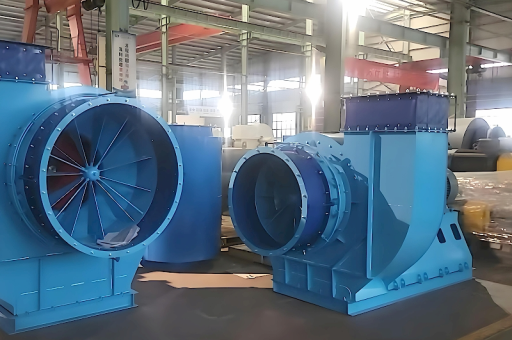
A centrifugal fan operates by drawing air into the center of a rotating impeller and discharging it at a 90-degree angle, creating high static pressure. When specified for chemical exhaust, this fan is typically constructed from materials such as polypropylene (PP), PVDF (polyvinylidene fluoride), or FRP (fiberglass-reinforced plastic) to withstand acidic and alkaline fumes.
The "Low Noise" designation is not just a marketing term. It refers to specific engineering modifications:
- Aerodynamic Impeller Geometry: Blades are designed to minimize turbulence and vortex shedding, which are primary sources of airborne noise.
- Stator & Casing Damping: The housing is often lined with sound-dampening materials or designed with thicker walls to reduce mechanical vibration.
- Premium Bearings & Vibration Isolation: High-precision, sealed bearings and rubber vibration isolators decouple the motor's mechanical energy from the ductwork and building structure.
For Industrial applications, these fan units are typically direct-drive (motor connected directly to the impeller) to eliminate belt noise and slippage, or they feature high-efficiency belt drives with toothed belts that are significantly quieter than traditional V-belts.
Why Noise Reduction Matters in Industrial Chemical Exhaust Systems
Noise is not merely an annoyance; it is a measurable health and safety hazard.
- Worker Safety & Productivity: According to NIOSH (National Institute for Occupational Safety and Health), prolonged exposure to noise levels above 85 dB(A) can cause permanent hearing loss. A typical industrial exhaust blower without noise optimization can easily reach 80–95 dB(A). A low-noise design, by contrast, targets 55–70 dB(A), allowing for clearer communication and reduced fatigue.
- Regulatory Compliance: Many municipalities now enforce strict noise ordinances for indoor facilities, especially those located near office spaces or residential areas.
- Equipment Longevity: Lower operational noise typically correlates with lower mechanical stress. A well-balanced, low-vibration fan will experience less wear on bearings and motor windings, translating directly to longer service life and reduced maintenance costs.
The unique challenge with chemical exhaust blowers is that adding sound-attenuation materials inside the air stream often restricts flow or becomes clogged with corrosive particles. Therefore, the noise reduction must be achieved primarily at the fan's aerodynamic and mechanical design level, not through add-on mufflers.
Core Technical Specifications for Industrial Chemical Exhaust Blowers
When selecting a fan for this niche, you must evaluate three critical pillars:
Motor Efficiency & Low Noise Design
High-efficiency motors (IE3 or IE4 standard) run cooler and generate less electromagnetic noise. However, for low noise applications, the motor's rotational speed (RPM) is the primary factor. A larger impeller running at a lower RPM moves the same volume of air as a smaller impeller running at a high RPM—but with exponentially less noise. An indoor low noise design typically operates at speeds below 1,750 RPM.
Material Compatibility (Corrosion Resistance)
For chemical exhaust, the fan casing and impeller must be chemically inert. For most acids (HCl, H₂SO₄) and solvents, PP (Polypropylene) is the standard. For extremely corrosive gases like chlorine or high-temperature fumes, PVDF is preferred. FRP offers a great strength-to-weight ratio but requires a gel coat for chemical resistance. Never use standard steel or aluminum for chemical exhaust—it will corrode rapidly.
Static Pressure & Airflow (CFM)
- Airflow (CFM): The volume of air needed to safely dilute or capture chemical fumes (calculated based on the hood opening, face velocity, and cross-draft).
- Static Pressure (SP - in. wg): The resistance the fan must overcome (duct friction, filters, and scrubbers).
For a typical industrial setup, a low-noise centrifugal fan might deliver 1,000 CFM at 2.5" static pressure with a noise level of just 68 dB(A). It is critical to match the fan curve to the system curve to avoid "surge" or "stall," which produces excessive low-frequency noise.
Application-Specific Benefits: Laboratory, Factory & Cleanroom
Different indoor environments have unique requirements:
- Chemical Laboratories: Fume hoods demand constant volume exhaust. A low noise centrifugal fan ensures that sensitive experiments are not disturbed by vibration and that researchers can work in a quiet environment.
- Industrial Factories (Plating & Etching): These plants generate massive amounts of acid vapor. The fan must be robust enough to handle high humidity and acidic droplets. Here, a fan with a wash-down feature and a heavy-duty polypropylene casing is essential.
- Cleanrooms (Pharmaceutical/Biotech): Beyond noise, these environments require zero particle shedding. A low noise fan with a fully welded, non-porous surface is critical to prevent contamination.
Key Design Features: Backward Curved vs. Forward Curved Impellers
| Feature | Backward Curved (BC) | Forward Curved (FC) |
|---|---|---|
| Noise Level | Lower noise (35-50 dB) | Higher noise (50-70 dB) |
| Efficiency | Higher (up to 85%) | Lower (up to 65%) |
| Static Pressure | High static pressure | Medium static pressure |
| Airflow | Stable over a wide range | Tends to overload at low SP |
| Self-Cleaning | Excellent (blades push debris outward) | Poor (debris gets trapped) |
| Best Use | Chemical exhaust, dust control | General HVAC, low-pressure supply |
Recommendation: For indoor low noise chemical exhaust blowers, Backward Curved (BC) impellers are the undisputed standard. Their aerodynamic profile produces less turbulence and they handle the higher static pressure typical of ducted chemical exhaust systems.
Installation Best Practices for Indoor Low Noise Operations
Even the best fan will be noisy if installed incorrectly. Follow these steps:
- Vibration Isolation: Install the fan on a heavy concrete inertia base with spring isolators, not directly on a metal frame.
- Flexible Connections: Use neoprene or stainless steel flex connectors at the inlet and outlet to break the transmission of vibration to the ductwork.
- Duct Silencers: If the fan's inherent noise is still too high, install a cylindrical or rectangular silencer downstream. However, for chemical exhaust, ensure the acoustic media is chemically inert.
- Location: Place the fan away from walls and corners to allow for unrestricted airflow on the inlet. Avoid mounting it on resilient ceilings or walls.
- Speed Control: Use a VFD (Variable Frequency Drive) not only to save energy but to fine-tune the airflow and reduce noise to the lowest acceptable level for the process.
Frequently Asked Questions (FAQ)
Q1: What is the typical noise level for an industrial chemical exhaust blower?
A: Standard industrial blowers often operate at 80–95 dB(A). A dedicated indoor low noise centrifugal fan for chemical exhaust can achieve noise levels between 55–75 dB(A) at 5 feet, depending on the RPM and static pressure. The target for a comfortable indoor industrial environment is usually <70 dB(A).
Q2: Can a centrifugal fan handle corrosive fumes?
Yes, but only if constructed from the correct materials. For chemical exhaust, the fan must be made from corrosion-resistant materials such as PP (Polypropylene), PVDF, or FRP (Fiberglass-Reinforced Plastic) . The impeller must also be made of welded polypropylene or coated metal. Never use standard painted steel or aluminum for chemical applications.
Q3: What is the difference between a standard fan and a low-noise fan?
A standard fan prioritizes cost and maximum airflow. A low-noise fan uses a larger impeller running at lower speed, precision-balanced parts, thicker housing for damping, and high-quality bearings. The design process for low-noise fan involves computational fluid dynamics (CFD) to minimize turbulence, resulting in significantly quieter operation without sacrificing static pressure.
Q4: How do I calculate the required static pressure for my chemical exhaust system?
You must sum the pressure drops of all components:
- Duct friction loss (calculate per linear foot based on diameter and roughness).
- Hood entry loss (typically 0.5–1.0 in. wg).
- Filter/Scrubber pressure drop (as specified by manufacturer).
- Exhaust stack loss.
A chemical exhaust fan must be selected to produce at least 10% more static pressure than this calculated total to account for future filter loading. A professional duct designer should perform this calculation for safety-critical systems.
Conclusion: Choosing the Right Fan for Health, Safety & Compliance
The Indoor Low Noise Centrifugal Fan for Chemical Exhaust Blowers is no longer a luxury item—it is a necessary component for modern Industrial facilities aiming for high productivity, worker safety, and environmental compliance. By focusing on fan designs that feature backward-curved impellers, corrosion-resistant polypropylene or PVDF construction, high-efficiency low-RPM motors, and proper vibration isolation, you can achieve a ventilation system that is both whisper-quiet and aggressive in removing dangerous fumes.
When purchasing, always demand a certified performance curve and a noise-level test report (per AMCA 311) from the manufacturer. Investing in a high-quality fan today will pay dividends in reduced hearing loss claims, lower worker fatigue, and longer equipment life. For specific sizing and material compatibility, always consult with an engineered ventilation specialist or a manufacturer that specializes in Chemical Exhaust and Low Noise technologies.





