
This article's table of contents introduction:
- What is it?
- Key Characteristics & Components
- Why Choose an Alloy Steel Single Inlet Centrifugal Fan?
- Typical Applications
- Design Considerations & Variants
- Summary for a Project Manager or Engineer
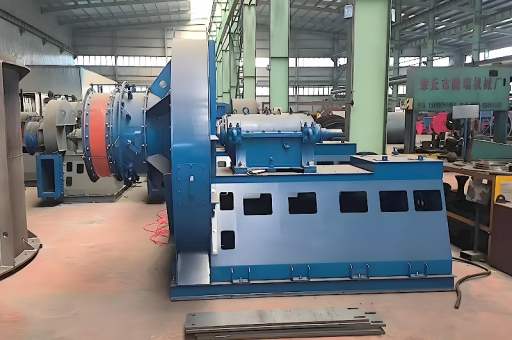
This is a specific request for a type of industrial fan. Here is a detailed breakdown of what an Alloy Steel Single Inlet Air Supply Industrial Centrifugal Fan is, its key characteristics, applications, and why you would choose it.
What is it?
In simple terms, this is a heavy-duty fan designed to move large volumes of air (or gas) at relatively high pressures, specifically for supplying clean air into a system or process. The "Single Inlet" means the air enters the fan housing from only one side. "Alloy Steel" refers to the primary construction material, chosen for its strength and durability.
Key Characteristics & Components
-
Single Inlet (Arrangement 1 or 8):
- Air enters the impeller from one side only (as opposed to a double inlet where air comes from both sides).
- The fan wheel is typically mounted between the bearings (overhung design) in Arrangement 1, or with a bearing on the inlet side in Arrangement 8.
- Advantage: Easier to connect to ductwork on the inlet side, simpler shaft sealing, and often more cost-effective for moderate air volumes.
-
Centrifugal Design:
- How it works: Air enters the center of a rotating impeller (wheel) and is forced outward by centrifugal force. The kinetic energy is then converted into pressure (static pressure) in the scroll housing.
- Performance: This design allows for high pressures (e.g., 10-100+ inches of water gauge) and stable performance.
-
Air Supply Function:
- Primary Role: To push clean, filtered, or conditioned air into a system. This is the opposite of an "exhaust" fan which pulls air out.
- Common Uses: Combustion air for boilers/furnaces, process air for drying or conveying, ventilation air for positive pressure clean rooms or mines.
-
Alloy Steel Construction:
- The Material (e.g., ASTM A514, 4140, 4130, or heat-treated carbon steel): This is not standard stainless steel. Alloy steel contains chromium, molybdenum, nickel, or vanadium to improve hardness, tensile strength, and sometimes impact resistance.
- Why use it?
- High Strength: Ideal for high-pressure applications where standard carbon steel would be too weak or heavy.
- Temperature Resistance: Can handle higher gas temperatures (e.g., >200°C/400°F) better than standard carbon steel.
- Wear Resistance: Higher hardness makes it more resistant to erosion from particulate-laden air (though not as good as stainless steel for corrosion).
- Thinner, Lighter Construction: Allows for a lighter fan wheel for a given strength, reducing bearing loads and startup torque.
Why Choose an Alloy Steel Single Inlet Centrifugal Fan?
| Feature | Benefit |
|---|---|
| Alloy Steel | Superior strength-to-weight ratio, high-temperature capability, good wear resistance. |
| Single Inlet | Simpler duct connection, lower initial cost for moderate flow, easier sealing. |
| Centrifugal Design | High static pressure capability, stable operation, high efficiency for clean air. |
Typical Applications
- Industrial Boilers & Furnaces: Supplying precisely controlled combustion air.
- Cement & Mining: Air supply for pneumatic conveying, dust collection system makeup air.
- Power Generation: Forced draft fans for coal or gas-fired boilers.
- Chemical Processing: Supplying clean air for oxidation, drying, or vacuum systems.
- Steel & Metal Processing: Air supply for cupolas, annealing furnaces, or blast furnaces.
- Pharmaceutical & Food Processing: Clean air supply for HVAC systems in critical environments.
- Waste Incinerators: Combustion air supply.
Design Considerations & Variants
- Wheel Types:
- Radial Blade (or Paddle Wheel): For high pressure, moderate efficiency, and handling small amounts of dust.
- Backward Inclined (or Airfoil): Most efficient, for clean or slightly dusty air at medium to high pressure.
- Drive Arrangements:
- Arrangement 1: Fan wheel overhung on shaft, driven by V-belts or direct drive (most common for general supply).
- Arrangement 8: Overhung with a bearing on the inlet side (for very high temperatures or heavy wheels).
- Seals: Shaft seals are critical to prevent air leakage, especially in positive pressure (supply) duty.
- Inlet Box & Dampers: Often equipped with an inlet box (a 90° turn on the inlet) and a controlled damper for precise air flow regulation.
Summary for a Project Manager or Engineer
"This is a workhorse fan for moving clean, high-pressure air into an industrial process. The use of alloy steel makes it ideal for high-temperature, high-stress, or moderately abrasive environments where standard carbon steel would fail, but where the full corrosion resistance of stainless steel is not needed. It is designed for long life and reliable operation in a fixed, single-direction air supply role."





