
This article's table of contents introduction:
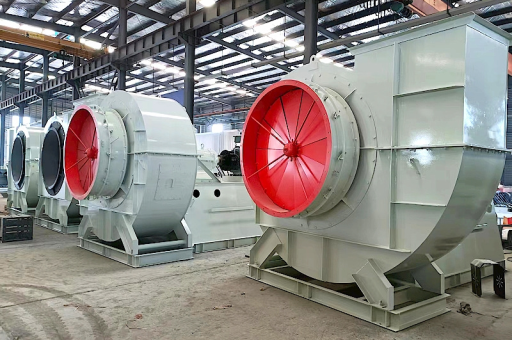
- What this Fan Does in a CFB Boiler
- Typical Fan Design
- Key Selection Criteria for a 250°C CFB Fan
- Common Manufacturers & Models
- Summary for Your Purchase Order
This is a request for a specific type of industrial fan. You are describing a fan used in a Circulating Fluidized Bed (CFB) Boiler, with key specifications:
- Temperature: 250°C Maximum (Single Inlet)
- Application: Air Circulation (typically Primary Air or Secondary Air)
Here is a breakdown of what this fan is, its typical design, and key considerations for selection.
What this Fan Does in a CFB Boiler
In a Circulating Fluidized Bed (CFB) boiler, solid fuel (like coal or biomass) is suspended in an upward-flowing stream of air. This fan provides that air. There are two main types of circulation fans in a CFB:
- Primary Air (PA) Fan: Supplies air through the grate (distributor plate) at the bottom of the furnace to fluidize the bed material and fuel. This is the most critical fan. It requires high pressure.
- Secondary Air (SA) Fan: Supplies air above the bed to ensure complete combustion of the volatile gases. It operates at a lower pressure than the PA fan.
Your specification of "Single Inlet" and "250°C Max" is very important.
- Single Inlet vs. Double Inlet: A single inlet fan draws air from one side. For high-temperature applications (250°C), single inlet is common because the shaft seal and bearing arrangement are simpler to cool and manage on one side. Double inlet fans have two intake sides and are used for very high volume, lower pressure applications.
- 250°C Max: This is a high-temperature application. Standard industrial fans are designed for ambient air (~40°C). A fan for 250°C requires significant material changes and cooling features.
Typical Fan Design
For a CFB boiler fan with a 250°C max inlet temperature, the most common design is a Centrifugal Fan with Backward Curved (Airfoil or Flat) Blades.
| Feature | Why for 250°C CFB? |
|---|---|
| Type | Centrifugal (Radial) |
| Blade Design | Backward Curved / Airfoil (High efficiency, non-overloading power curve). For high pressure duty (PA fan), Backward Inclined is also common. |
| Housing | Heavy-gauge steel with expansion joints to handle thermal expansion. |
| Shaft | Larger diameter to handle thermal expansion and keep critical speeds safe. |
| Bearings | Water-cooled (or oil-cooled) pillow block bearings. The shaft extends through a cooling shaft (quill), and the bearing housing is often cooled with a water jacket to keep the grease/oil from breaking down. |
| Impeller | High-strength alloy steel (e.g., Corten or similar) to maintain strength at 250°C. Welds must be stress-relieved. |
| Drive | Typically a V-Belt drive (for speed variability) or a direct drive with a Variable Frequency Drive (VFD). VFD is preferred for precise airflow control. |
| Seal | Shaft seal (often a labyrinth or carbon ring seal) to prevent hot gas leakage out of the housing. |
Key Selection Criteria for a 250°C CFB Fan
When specifying or selecting this fan, the following are critical:
-
Material of Construction:
- Impeller & Casing: Must be made from a material that retains its yield strength at 250°C. Standard Carbon Steel (ASTM A36) loses strength. You typically need Corten A/B or ASTM A516 Gr.60 or ASTM A588. For very high erosion (common in CFBs with ash), you may need a hard-faced impeller.
- Shaft: Typically Alloy Steel (AISI 4140 or 4340).
-
Cooling System:
- Bearings: Must have a water cooling jacket around the bearing housing. The cooling water keeps the bearing temperature below 80°C.
- Shaft Cooling: An internal cooling shaft (a hollow inner tube) can be added to the fan shaft to circulate cooling air or water directly to the bearing.
-
Performance:
- Flow (m³/hr or ACFM): How much air volume is needed?
- Pressure (Pa or inches w.g.): Primary Air requires high pressure (5000–8000 Pa or more). Secondary Air requires lower pressure.
- Temperature Rise: The fan itself will add a few degrees of heat due to inefficiency, so the outlet temperature will be slightly higher than 250°C.
-
Erosion Resistance:
CFB boilers have fly ash. The fan impeller must have a replaceable wear plate or be coated with a hard-facing material (e.g., Stellite or ceramic tile) on the leading edge of the blades.
-
Vibration & Balance:
- Fan vibration must be monitored. At high temperatures, thermal expansion can cause shaft misalignment. Inlet box designs (single inlet) must have a flexible connection to the ductwork.
Common Manufacturers & Models
You would typically purchase this from a heavy-duty fan manufacturer. Examples of companies that build these types of fans:
- Howden (USA/UK)
- TLT-Turbo (Germany)
- New York Blower (USA)
- Robinson Fans (USA)
- Chicago Blower (USA)
- AirPro Fan & Blower (USA)
- Greenheck (USA) - (Less common for this heavy-duty CFB application)
- Zhejiang Shangfeng (China)
- Shenyang Blower (China)
Summary for Your Purchase Order
If you are writing a specification, include these points:
Fan, Centrifugal, Single Inlet, for CFB Boiler
- Type: Centrifugal, Backward Curved Airfoil / Backward Inclined
- Inlet Temperature: 250°C (Max continuous)
- Design: Heavy duty, with water-cooled bearings, expansion joints, and thermal stress relief.
- Impeller Material: High-strength alloy steel (A516 or Corten) with replaceable wear protection.
- Shaft Seal: High-temp labyrinth seal.
- Drive: [V-Belt / Direct Drive] with [Motor kW] and [RPM].
- Certification: [AMCA, ISO, etc.] for performance and sound.
Crucial questions before ordering:
- Is this for Primary Air (high pressure) or Secondary Air (lower pressure)? (This changes the blade design significantly.)
- What is the required airflow (m³/hr) and pressure (Pa)?
- What is the ambient temperature on the fan floor? (This affects the drive and cooling system design).
- Is the air clean or does it contain flue gas or dust? (If it's a recirculation fan, it will be much more erosive).





