
This article's table of contents introduction:
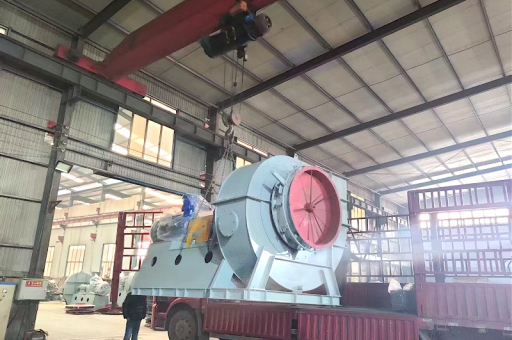
- What it is: A High-Temperature Centrifugal Fan for a High-Volume Furnace
- Key Components of the Term Explained
- Primary Applications
- Key Design Considerations for this Fan
- Summary
This is a highly specific technical term referring to a critical piece of industrial equipment. Here is a breakdown of what this fan is, where it is used, and its key characteristics.
What it is: A High-Temperature Centrifugal Fan for a High-Volume Furnace
This fan is designed to move a large volume of gas (typically air or combustion byproducts) through a furnace system where the gas temperature is extremely high. The "HG785 Alloyed Steel" specifies the primary material of construction, which must withstand the mechanical and thermal stresses of the application.
Key Components of the Term Explained
HG785 Alloyed Steel
- High Strength: HG785 is a high-strength, low-alloy (HSLA) structural steel. The "785" typically refers to its minimum yield strength of 785 MPa (megapascals). This is significantly stronger than common carbon steel (e.g., Q235 or S235JR, which have ~235 MPa yield strength).
- Alloying Elements: It contains small amounts of elements like manganese, chromium, nickel, molybdenum, and vanadium. These provide:
- Higher Strength: Allows for a lighter, thinner fan housing and impeller (wheel) while maintaining structural integrity at high temperatures.
- Improved Weldability: Formulated to be welded without cracking, crucial for fabricating the complex fan shape.
- Better Toughness: More resistant to impact and stress at elevated temperatures compared to plain carbon steel.
- Temperature Limit Note: While strong, HG785 is not a heat-resistant stainless steel like 309S or 310S. Its mechanical properties degrade above ~400°C (752°F). For applications above this, the fan may need cooling systems (e.g., shaft cooling, water-cooled bearings) or a different material for the impeller itself.
High Volume Furnace
- Context: This typically refers to large industrial furnaces used in steelmaking (e.g., electric arc furnaces - EAF), glass manufacturing, cement kilns, or large heat treatment furnaces.
- Requirement: These furnaces generate massive volumes of hot, dirty, and often corrosive exhaust gases that must be extracted to maintain draft, control temperature, and remove combustion products.
High Temperature
- Range: "High temperature" for centrifugal fans generally means operating temperatures from 200°C (392°F) to over 1000°C (1832°F) .
- Implications:
- Material Selection: The impeller, housing, and especially the shaft seals and bearings must withstand or be isolated from the heat.
- Thermal Expansion: The fan must be designed with expansion joints or sliding bases to accommodate metal growth.
- Cooling: Bearings are often mounted on a water-cooled pedestal or have a heat shield. The shaft may have a cooling fan or water jacket.
Centrifugal Fan
- Working Principle: Air/gas enters the center of the rotating impeller (wheel) and is flung outward by centrifugal force. This creates a high-pressure airflow.
- Types suitable for this application:
- Industrial Exhauster (Paddle Wheel / Radial Blade): The most common type for high-temperature, high-volume, dirty gas. Blades are flat and radial. They are strong, easy to repair, and less prone to material buildup.
- Backward Curved / Backward Inclined (BC/BI): More efficient than radial blades, but more sensitive to dust and erosion. Used when the gas is cleaner.
- Airfoil (AF): Very efficient, but delicate. Rarely used in dirty, high-temperature furnace applications.
Primary Applications
- Electric Arc Furnace (EAF) Fume Extraction: The primary application for "high volume, high temperature" and "HG785". The fan extracts the massive, hot, dusty plume from the furnace.
- Basic Oxygen Furnace (BOF) Gas Recovery: Handling converter gas.
- Heat Treatment Furnace Recirculation: Circulating hot air within a furnace for uniform heating (cleaner gas).
- Cement Kiln Induced Draft (ID) Fans: Moving hot gases through the preheater system.
- Glass Furnace Exhaust: Extracting hot, corrosive gases from glass melting tanks.
Key Design Considerations for this Fan
| Feature | Why it's Critical |
|---|---|
| Material (HG785) | Provides high strength-to-weight ratio for the housing and impeller, resisting deformation at high RPM and temperature. |
| Impeller Type | Typically a radial blade (paddle wheel) or backward inclined design, depending on gas cleanliness. |
| Shaft & Bearings | Must be protected from radiant heat. Often uses water-cooled bearing housings, labyrinth seals, or carbon ring seals. |
| Drive System | Typically connected to a motor via a V-belt (allows speed changes) or a direct-drive coupling. A variable frequency drive (VFD) is standard for precise volume control and energy savings. |
| Thermal Expansion | The housing base is often a sliding or hinged design to allow the metal to grow without warping the fan. |
| Wear Protection | The interior of the housing and the impeller blades may have hardfacing or replaceable wear liners (e.g., ceramic tiles, chrome carbide) to resist erosion from dust particles. |
Summary
You are likely referring to a heavy-duty, industrial centrifugal exhaust fan used in a steelmaking, glass, or cement plant. It is built from HG785 high-strength steel to handle the immense mechanical stress at high rotational speeds, while moving large volumes of extremely hot gas (often exceeding 400°C / 750°F). The specific design (e.g., radial blade vs. backward inclined) depends on the dust load of the gas stream.
If you need a specific specification or have a problem in mind (e.g., "Why is my fan vibrating?" or "What is the maximum RPM for this material?"), please provide more details.





