
This article's table of contents introduction:
- "Aluminium Alloyed" (Why not steel?)
- "Long Lifetime" (Design Features)
- "Backward Exhaust" (Wheel Design)
- "Induced Draft Fan" (System Role)
- Typical Applications
- How to Specify or Purchase One
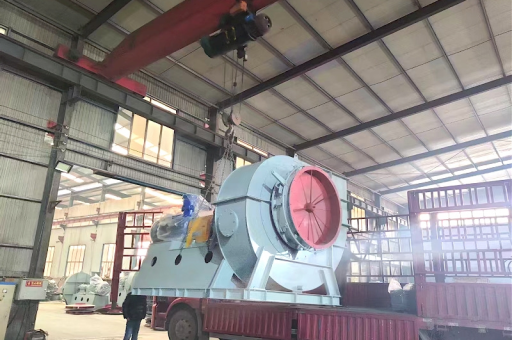
This sounds like a highly specific piece of industrial equipment, likely used in HVAC, power generation, or chemical processing. Let me break down each component of the name to explain what it is, its application, and why those specific materials and design choices are used.
The Core Definition: It is a fan designed to move hot, corrosive, or particulate-laden gas (the "induced draft") by pulling it through a system (like a boiler or furnace) and exhausting it out the back (axial or centrifugal, depending on orientation), built to have a long operational life using an aluminum alloy construction.
"Aluminium Alloyed" (Why not steel?)
This is the most critical feature for longevity.
- Corrosion Resistance: The fan handles "backward exhaust" which is often hot, acidic (from combustion), or moist. Aluminum alloys (often 3000 or 5000 series like 5052 or 6061) form a protective oxide layer. Unlike carbon steel, they do not rust. Unlike stainless steel, they are lighter and often cheaper.
- Spark Resistance: In environments with flammable gases, aluminum is a non-ferrous material. It will not spark if the impeller rubs against the housing (a major safety risk in exhaust systems).
- Weight Reduction: Aluminum has ~1/3 the density of steel. This significantly reduces the starting torque on the motor and the load on bearings, extending the life of the mechanical components.
"Long Lifetime" (Design Features)
Given the harsh service, "long lifetime" implies specific engineering choices:
- Heavy-Duty Bearings: Likely oversized, sealed, or greased-for-life bearings designed for high axial loads (from the fans weight) and thermal expansion.
- Corrosion-Resistant Coatings: Even on the aluminum, the fan may have an anodized coating or a specific hard-coat to handle acidic condensate.
- Thermal Management: The fan is designed to dissipate heat effectively. Aluminum's high thermal conductivity helps.
- Balanced Impeller: Precision dynamic balancing ensures minimal vibration, which is the #1 killer of electric motors and bearings.
"Backward Exhaust" (Wheel Design)
This refers to the impeller/blade geometry.
- Backward-Curved Blades: The blades curve away from the direction of rotation.
- Characteristic: High efficiency, non-overloading power curve (meaning if the system resistance drops, the motor will not burn out), and relatively quiet operation.
- Application: Perfect for induced draft (pulling air through the system) because it can handle higher static pressure than a forward-curved fan.
"Induced Draft Fan" (System Role)
This defines where the fan sits in the system.
- Position: Installed at the outlet of the equipment (e.g., after a boiler, furnace, or kiln).
- Function: It creates a slight negative pressure (vacuum) inside the system. This pulls hot gases out of the equipment, preventing them from leaking out of other openings (like burner doors) and ensuring safe, efficient operation.
- Key Challenges:
- Handles hot gas (often 150°C to 400°C / 300°F to 750°F).
- Handles contaminated gas (dust, chemicals, acidic vapors).
- Must be robust enough to handle the thermal expansion of the ducting.
Typical Applications
- Boiler Draft Systems: Removing flue gas from gas, oil, or biomass boilers.
- Fume Extraction: Removing corrosive fumes from chemical scrubbers or industrial ovens.
- Grain Drying: Moving hot, moist air.
- Greenhouse Heating: Circulating hot exhaust air.
How to Specify or Purchase One
If you are looking for a replacement or a new unit, you need to know:
- CFM (Cubic Feet per Minute) or m³/hr: The volume of air/gas to be moved.
- Static Pressure (SP) in "wg or Pa: The resistance the fan must overcome (ductwork, filters, burners).
- Gas Temperature: Max and normal operating temperature (critical for bearing and shaft choice).
- Gas Composition: Is it just hot air, or does it contain sulfur, chlorine, or solids?
- Mounting: Horizontal or vertical discharge? Belt-driven or direct drive?
Bottom Line: You are describing a high-end, corrosion-resistant industrial fan for critical duty. It is a significant piece of capital equipment. The aluminum alloy makes it suitable for clean, corrosive environments (e.g., natural gas boiler exhaust) but less suitable for abrasive environments (e.g., coal fly ash) where hard steel would be required.





