
This article's table of contents introduction:
- Component Breakdown
- Primary Application
- Key Design & Selection Parameters
- Advantages of this Configuration
- Potential Issues to Watch For
- Summary Recommendation
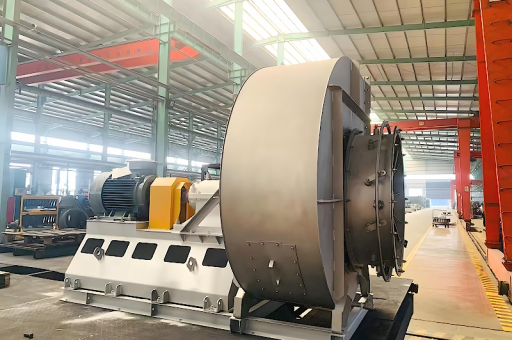
Based on the description "16Mn Double Inlet Backward Biomass Boiler Dust Collector Blower Fan," you are referring to a specific type of heavy-duty industrial fan designed for harsh environments. Here is a detailed breakdown of what each term means, the application, and key considerations.
Component Breakdown
- 16Mn (Material): This is a low-alloy, high-strength structural steel (similar to Q345B or ASTM A572 Grade 50).
- Why it's used: It offers approximately 50% higher yield strength than standard carbon steel (Q235).
- Benefit: Allows the fan impeller and housing to be lighter yet stronger, resisting deformation from high rotational speeds and resisting wear from abrasive fly ash better than mild steel.
- Double Inlet: Air enters the fan from both sides of the impeller.
- Why: To handle very high air volumes (CFM/m³/h) without requiring an excessively wide impeller or a massive single-sided motor.
- Benefit: Reduces bearing load and provides more stable airflow for large boiler systems.
- Backward (Curved Blades): The blades curve away from the direction of rotation (backward-inclined or backward-curved).
- Why: These are non-overloading fans; power draw peaks at the design point and drops off if airflow is restricted. They are highly efficient.
- Benefit: Ideal for dust collectors (baghouses, cyclones) where the system pressure can fluctuate. They handle dirty air better than forward-curved fans.
- Biomass Boiler: The fuel source (wood chips, pellets, agricultural waste, MSW).
- Implication: The gas stream is hot (150-250°C / 300-480°F), humid, and contains sticky ash, tars, and abrasive particulate.
- Dust Collector: The fan is installed after the dust collector (ID fan or Clean Air Fan) or before it (FD fan for pneumatic conveying). Usually, it is a Induced Draft (ID) fan pulling gas through the baghouse or cyclone.
Primary Application
This fan is typically used as an Induced Draft (ID) Fan for a biomass boiler's emission control system.
- Function: It creates negative pressure in the boiler furnace, drawing combustion gases through the heat exchangers, then through the dust collector (baghouse or ESP), and finally out the stack.
- Alternative Use: It could be a Forced Draft (FD) Fan blowing air through a pneumatic conveying system to move biomass fuel from storage to the boiler, with the dust collector cleaning the transport air.
Key Design & Selection Parameters
If you are sourcing or specifying this fan, you must provide these critical data points to the manufacturer:
- Gas Temperature: Biomass flue gas can range from 140°C to 250°C. The fan material (16Mn) is good for these "hot" applications, but the shaft seal and bearing cooling method must match the temperature.
- Volume Flow (Q): Typically high, e.g., 50,000 to 300,000 m³/h.
- Total Pressure (Pt): Needs to overcome the resistance of the dust collector (e.g., 1500 - 4000 Pa).
- Gas Density: Varies significantly with temperature. The motor power calculation must be based on cold air density (1.2 kg/m³) , but the actual operating power is based on hot gas density (lighter).
- Dust Content: Is this fan seeing "clean" gas (after the baghouse) or "dirty" gas (before the baghouse)? If dirty, you may need abrasion-resistant liners on the impeller leading edges and scroll wear plates.
- Shaft Seal: Crucial to prevent leakage of hot, dusty gas into the bearings. Options include labyrinth seals, packed gland seals, or purge air seals.
Advantages of this Configuration
| Feature | Benefit |
|---|---|
| Double Inlet | High volume capacity with compact axial length; balanced rotor loads. |
| Backward Blades | High efficiency (75-85%); non-overloading power curve; self-cleaning potential (less dust build-up than forward curved blades). |
| 16Mn Material | Cost-effective strength; good weldability; moderate temperature resistance (up to ~400°C with limitations); better wear resistance than standard carbon steel. |
| Biomass Rating | Designed to handle the corrosive and sticky nature of biomass ash (chlorides, alkalis) if properly designed with bolt-in liners. |
Potential Issues to Watch For
- Ash Fouling: Biomass flue gas contains sticky ash (high potassium/chlorine content). The backward-inclined blades must be designed with a "flat" or "radial" root to prevent ash from sticking and causing imbalance.
- Vibration: High-speed double-inlet fans are sensitive to rotor balance. Over time, ash build-up causes massive vibration. An automatic cleaning system (compressed air puffer) inside the housing is recommended.
- Bearing Cooling: Because of the hot gas, the bearing housings (usually pillow blocks) on the double-inlet shaft need cooling (shaft cooling fins, water jackets, or forced ventilation).
- Shaft Deflection: The long shaft between the two inlets must be stiff enough to handle the impeller weight and belt drive tension (if not direct drive).
Summary Recommendation
If you are buying this fan:
- Specify: "16Mn Double Inlet ID Fan for Biomass Boiler, Backward Inclined Blades, Temperature 200°C, Volume 100,000 m³/h, Pressure 3000 Pa."
- Request: A dynamic balancing report (G2.5 grade), an ash cleaning port, and a shaft seal design suitable for negative pressure (to prevent air ingress, which lowers efficiency).
- Alternative: If the gas contains very high tar or sticky fly ash, consider a Radial Tip or Paddle Wheel fan as an alternative, as backward blades can clog.





