
This article's table of contents introduction:
- Core Components of Your Specification
- Typical Fan Design (for this application)
- How to Select the Correct Fan (Parameters Needed)
- Common Manufacturer Standards & Potential Pitfalls
- Recommendation for a Supplier Inquiry
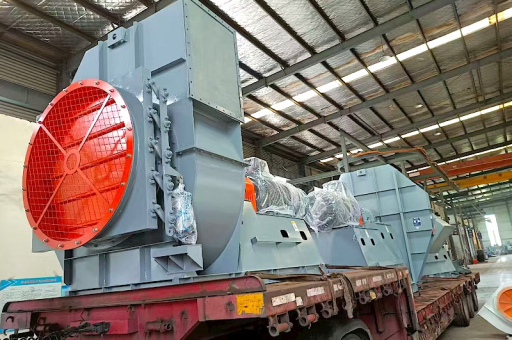
It seems you are looking for an Induced Draft (ID) Fan specifically designed for a Q235 steel, large-capacity, corrosion-resistant steam boiler.
This is a highly specific industrial requirement, usually found in facilities burning high-sulfur fuels (like heavy oil or certain coals) or operating in recovery processes (like in pulp & paper).
Here is a detailed breakdown of what this specification means and how to select or specify this fan.
Core Components of Your Specification
-
Q235 Steel: This is a Chinese standard (GB/T 700) low-carbon structural steel (equivalent to ASTM A36 or S235JR). It means the fan housing is made of this material.
- Pros: Good weldability, low cost, moderate strength.
- Cons: Not corrosion resistant by itself. Q235 will rust rapidly in a wet, acidic flue gas environment.
- Implication: The fan is built from Q235 for structural rigidity, but must have an internal corrosion protection lining (e.g., rubber, epoxy, or stainless steel cladding).
-
Large Capacity: This implies a very high volumetric flow rate (e.g., >100,000 m³/h or >60,000 CFM). The fan will be a large, double-inlet (D.I.) or radial design, often requiring heavy-duty bearings and a robust base frame.
-
Corrosion Resistant: This is the critical challenge. Standard Q235 is not corrosion resistant. To achieve this, the fan must be modified. Common methods include:
- Flue Gas Dew Point: The fan must handle gases containing SOx/NOx which form sulfuric/nitric acid upon condensation. The fan must keep gas temperatures above the acid dew point or use acid-proof materials.
- Solutions: Rubber lining (hard or soft), glass flake lining (vinyl ester), or using a higher alloy for the impeller (e.g., 316L, 2205 Duplex, or Hastelloy for extreme cases) while the housing remains Q235.
-
Steam Boiler Induced Draft Fan:
- Function: Sucks flue gas out of the boiler, creating negative pressure (draft) inside the furnace.
- Environment: Handles hot, dusty, corrosive, and humid gas.
- Key Metrics: Static pressure (usually 2000-6000 Pa), high temperature capability (typically 120°C to 200°C), and dust erosion resistance.
Typical Fan Design (for this application)
The most common design for this heavy-duty application is a Centrifugal Fan with Backward-Curved or Radial Blades.
| Feature | Recommended Type | Why? |
|---|---|---|
| Blade Type | Backward-Curved (BC) or Radial (R) | BC for higher efficiency (lower power cost); Radial for handling dust/particulates (self-cleaning). |
| Casing | Q235 Steel | Structural strength, but lined with Rubber or Glass Flake (Vinyl Ester) for corrosion. |
| Impeller | Stainless Steel (316L or 2205) or Q235 with Wear Lining | The impeller spins fast. Corrosion here causes immediate imbalance and vibration. 316L is the minimum for acidic flue gas. |
| Bearings | Heavy-Duty, Split Pillow Block (e.g., SKF, FAG) | Allows for easy maintenance in large fans; rated for the high radial load from the heavy rotor. |
| Shaft | Alloy Steel (40Cr) or Stainless Steel (1.4021) | Must withstand fatigue and resist corrosion near bearings/seals. |
| Drive | V-Belt or Direct Drive | V-Belt allows speed adjustment (lower cost for speed change). Direct drive is more efficient for fixed speeds. |
| Inlet Box | Tapered Cone with Inlet Vanes | For large capacity, inlet vanes (dampers) control flow and reduce power consumption. |
How to Select the Correct Fan (Parameters Needed)
You (or a manufacturer) must provide these parameters to get the right fan:
- Gas Flow Rate (m³/h or CFM): At actual operating temperature (e.g., 150°C).
- Total Static Pressure (Pa or mmWG): Resistance of the boiler, economizer, scrubber, and ductwork.
- Gas Temperature (°C): Normal operating AND maximum peak temperature (e.g., 180°C normal, 250°C transient during soot blowing).
- Gas Composition: % of O₂, CO₂, SO₂, H₂O. Crucial for corrosion.
- High sulfur (S>1%) → High risk of Acid Dew Point. Need Acid Dew Point calculation.
- Presence of Chlorides (Cl) → Very aggressive corrosion (pitting). Requires High Molybdenum SS (e.g., 6Mo) or FRP.
- Dust Content (mg/Nm³): Determines if a Radial blade (for high dust) or Backward blade (for clean gas) is needed.
- Altitude: Affects air density and motor power.
Common Manufacturer Standards & Potential Pitfalls
- Chinese Standard: Look for GB/T 3235 (Fan basic parameters) and JB/T 8699 (High-temperature fans).
- Critical Issue: Corrosion at Welds: The weld area between Q235 and any lining is the weakest point. If the lining fails, acid attacks the Q235, leading to rapid failure (often within weeks).
- Vibration: A large impeller must be dynamically balanced (G2.5 or better). Unbalance due to uneven corrosion/dust buildup is the #1 cause of shutdown.
- Motor: The motor must be rated for the ambient temperature and altitude. For large capacity fans, a YJKK (large HV motor) or YE3 (IE3 high efficiency) is common. High starting torque may be required.
Recommendation for a Supplier Inquiry
If you are sourcing this, your Request for Quotation (RFQ) text should look like this:
RFQ: Large Capacity Steam Boiler ID Fan
Application: Q235 Steel Boiler Induced Draft Flow Rate: [e.g., 200,000 m³/h at 140°C] Static Pressure: [e.g., 3500 Pa] Gas Temp: 140°C (Peak 180°C) Gas Type: Flue gas from coal/heavy oil (Sulfur content: 1.5%) Casing Material: Q235B, rubber lined (thickness: 4mm) or glass flake lining (Vinyl Ester) for acid protection. Impeller Material: SS316L (to resist dew point corrosion). Shaft Material: 40Cr. Bearings: SKF/FAG heavy-duty split type. Drive: V-Belt with motor on slide rails. Inlet Damper: Radial louver type. Balancing: ISO 1940 G2.5.
Final Warning: Do not use a standard Q235 fan without a proper corrosion-resistant lining for a steam boiler, especially if the fuel has any sulfur content. The boiler's flue gas will reach its acid dew point during startup or low-load operation, and within 6-12 months, the impeller will disappear and the casing will have holes. You need a lined fan or an FRP (Fiberglass Reinforced Plastic) fan for the most corrosive cases.





