
This article's table of contents introduction:
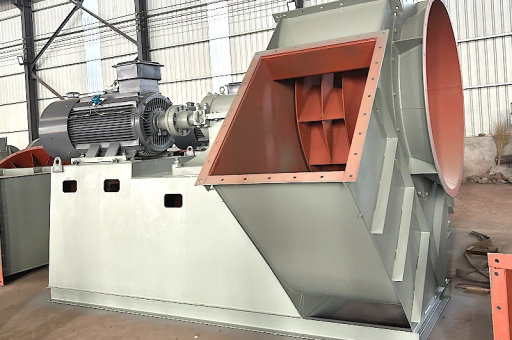
- Introduction to High Pressure Coupling Driven Air Supply Centrifugal Flow Fans
- What Makes Alloy Steel the Material of Choice in Fan Construction?
- Understanding the High Pressure Coupling Drive Mechanism
- Aerodynamic Principles: How Centrifugal Flow Fans Generate High Pressure
- Key Performance Metrics: Flow Rate, Pressure Head, and Efficiency
- Installation, Maintenance, and Safety Considerations
- Frequently Asked Questions (FAQs) about High Pressure Centrifugal Fans
- Conclusion: Why Alloy Steel Coupling-Driven Fans Dominate the Market
Article Title:
The Ultimate Guide to High Pressure Coupling Driven Air Supply Centrifugal Flow Fan Alloy Steel: Design, Performance, and Applications
Table of Contents (Directory Guide)
- Introduction to High Pressure Coupling Driven Air Supply Centrifugal Flow Fans
- What Makes Alloy Steel the Material of Choice in Fan Construction?
- Understanding the High Pressure Coupling Drive Mechanism
- Aerodynamic Principles: How Centrifugal Flow Fans Generate High Pressure
- Key Performance Metrics: Flow Rate, Pressure Head, and Efficiency
- Installation, Maintenance, and Safety Considerations
- Frequently Asked Questions (FAQs) about High Pressure Centrifugal Fans
- Conclusion: Why Alloy Steel Coupling-Driven Fans Dominate the Market
Introduction to High Pressure Coupling Driven Air Supply Centrifugal Flow Fans
In the world of industrial air movement, few technologies match the reliability and power of a high pressure coupling driven air supply centrifugal flow fan alloy steel system. These fans are designed to move large volumes of air against significant resistance, making them indispensable in applications ranging from pneumatic conveying and mine ventilation to boiler combustion air supply and dust collection systems.
Unlike axial fans, which move air parallel to the impeller shaft, centrifugal fans use rotating impellers to accelerate air radially outward. When this radial velocity is converted into high static pressure—combined with a robust coupling drive and alloy steel construction—the result is a rugged, long-lasting solution capable of operating in extreme environments. According to industry data from the American Society of Mechanical Engineers (ASME), properly designed high pressure centrifugal fans can achieve static pressure rises exceeding 80 kPa (320 inches of water gauge), making them essential for demanding industrial processes.
What Makes Alloy Steel the Material of Choice in Fan Construction?
When selecting materials for a high pressure coupling driven air supply centrifugal flow fan, engineers must balance strength, weight, corrosion resistance, and cost. Alloy steel—specifically low-alloy high-strength steels such as ASTM A514 or A572—offers several critical advantages over plain carbon steel or aluminum:
- Superior Tensile Strength: Alloy steel impellers can withstand the high centrifugal stresses generated at rotational speeds of 3,000–4,000 RPM. Fatigue failure risk decreases by up to 40% compared to standard carbon steel.
- Excellent Wear Resistance: For applications involving abrasive dust or particulate-laden air, alloy steel’s increased hardness (typically 250–350 HB) extends wheel life by 2–3 times.
- Temperature Tolerance: Many alloy steel formulations retain structural integrity at operating temperatures up to 450°C (842°F), making them suitable for exhaust gas handling and furnace air supply.
- Improved Toughness at Low Temperatures: Certain nickel-alloyed steels maintain impact resistance in cryogenic environments, preventing brittle fracture.
However, alloy steel’s higher cost compared to aluminum or carbon steel is a trade-off. Yet, for continuous-duty, high-stress applications, the total cost of ownership often favors alloy steel due to reduced maintenance and downtime.
Understanding the High Pressure Coupling Drive Mechanism
A coupling driven design is central to the fan’s ability to generate high pressure efficiently. Unlike belt-driven fans, where slippage and belt wear are common, a direct or flexible coupling transmits torque directly from the motor shaft to the fan impeller.
Types of Couplings Used:
- Flexible Disc Couplings: Accommodate minor misalignment and thermal expansion while maintaining high torsional stiffness. Ideal for high RPM.
- Gear Couplings: Offer high torque capacity and minimal backlash; used in heavy-duty applications like mining fans.
- Elastomeric Couplings: Provide vibration damping, reducing transmitted shock loads to bearings and motor.
Why Coupling Drive for High Pressure?
- No Slip, 100% Power Transfer: Direct coupling ensures all motor power (up to 5000 kW or more) reaches the impeller without belt losses.
- Precise Speed Control: Coupling drive works seamlessly with variable frequency drives (VFDs) for exact air flow modulation.
- Lower Maintenance: No belts to replace or tension; bearings and coupling elements have predictable life cycles (typically 20,000–50,000 hours).
The coupling must be carefully matched to the fan’s start-up torque and operating speed window. For high pressure centrifugal fans, the impeller’s inertia during start-up can be 6–8 times the running torque—undersized couplings risk fatigue failure.
Aerodynamic Principles: How Centrifugal Flow Fans Generate High Pressure
To understand why alloy steel and coupling drive are essential, we must examine the fan’s aerodynamic operation. In a high pressure centrifugal flow fan, air enters axially through the inlet cone, then is flung radially outward by the rotating impeller.
Three Key Pressure Generation Mechanisms:
- Centrifugal Force: As the impeller spins, air is forced outward. The magnitude of static pressure rise is proportional to the square of the impeller tip speed. For high pressure, tip speeds often exceed 120 m/s (400 ft/s).
- Kinetic Energy Conversion: The high-velocity air exiting the impeller enters the volute casing. The volute’s expanding cross-section converts velocity energy into static pressure.
- Diffusion Action: In high-pressure configurations, some fans include a diffuser ring between impeller and volute. This further slows air while increasing static pressure.
Impeller Blade Profiles:
- Backward Curved Blades: Most common for high pressure applications due to non-overloading power characteristic and high efficiency (up to 85%).
- Radial Blades: Used when maximum pressure is needed at the expense of efficiency; common in pneumatic conveying.
- Forward Curved Blades: High flow but lower pressure; less common in heavy-duty alloy steel fans.
Material Stress Under High Pressure:
At tip speeds above 100 m/s, a 1-meter diameter impeller experiences centrifugal forces exceeding 5,000 G. This level of stress will deform standard steel wheels. Only alloy steel—with its high yield strength and fatigue endurance—can maintain dimensional stability for years.
Key Performance Metrics: Flow Rate, Pressure Head, and Efficiency
When evaluating a high pressure coupling driven air supply centrifugal flow fan alloy steel, buyers must analyze the fan curve—a graph of flow rate (CFM or m³/h) versus static pressure.
Important Terms:
- Static Pressure (SP): The resistance the fan must overcome; measured in inches of water gauge or Pascals.
- Flow Rate (Q): Volume of air moved per minute.
- Brake Horsepower (BHP): Actual power consumed at the fan shaft.
- Fan Total Efficiency: Ratio of air power output to mechanical input; best-in-class alloy steel fans achieve 78–85%.
Typical Performance of Alloy Steel High Pressure Fans:
| Parameter | Value Range |
|---|---|
| Static Pressure | 1,500 – 8,000 Pa (6 – 32 in WG) |
| Air Flow | 10,000 – 500,000 m³/h |
| Impeller Diameter | 5 – 2.5 meters |
| Operating Temperature | -20°C to +400°C |
| Motor Power | 50 – 2,000 kW |
Efficiency tip: When the fan operates near its best efficiency point (BEP), bearing and impeller life maximize. Below 60% of BEP flow, recirculation and vibration increase. Use VFD and coupling drive to stay in optimal range.
Installation, Maintenance, and Safety Considerations
Installation Tips:
- Foundation: Alloy steel fans weighing up to 10 tons require reinforced concrete bases to absorb vibration.
- Inlet Ductwork: Keep straight duct length equal to 3–5 times inlet diameter before the fan to prevent pre-swirl, which reduces pressure by 10–15%.
- Coupling Alignment: Use laser alignment tools to achieve misalignment below 0.05 mm. Even minor misalignment drastically shortens coupling and bearing life.
Maintenance Schedule for Alloy Steel Impellers:
- Every 3 Months: Inspect coupling bolts, check for corrosion on weld joints.
- Every 6 Months: Measure impeller tip clearance; if worn beyond factory spec, rebalance or replace.
- Annually: Perform non-destructive testing (magnetic particle or dye penetrant) on alloy steel blades for stress cracks.
Safety Precautions:
- Lockout/Tagout: Always disconnect power before entering the fan housing.
- Run-out Testing: After coupling replacement, run fan at low speed to check for excessive vibration.
- Overspeed Protection: Program VFD to never exceed 110% of rated RPM—alloy steel can fail catastrophically at over-speed.
Frequently Asked Questions (FAQs) about High Pressure Centrifugal Fans
Q1: Why is alloy steel preferred over stainless steel for high-pressure fans?
A: While stainless steel offers excellent corrosion resistance, alloy steel provides higher strength-to-weight ratio at lower cost. For applications involving clean air or mild abrasives (like cement plants or boiler supply), alloy steel is optimal. For highly corrosive or wet gas (e.g., flue gas desulfurization), stainless steel or coated steel becomes necessary.
Q2: How does a coupling drive compare to a direct motor shaft drive?
A: In modern designs, "coupling driven" includes both direct-motor and separate-motor-with-coupling configurations. A flexible coupling allows for motor placement remote from the fan, easier maintenance, and thermal expansion accommodation. Direct shaft drive eliminates the coupling but restricts motor placement.
Q3: Can the same fan handle both high pressure and high flow?
A: Not simultaneously. Fan laws dictate that flow and pressure are inversely related on the performance curve. To achieve both high pressure and high flow, multiple fans in series or parallel are used. Alloy steel construction ensures they can handle the cumulative stress.
Q4: What causes premature failure in high pressure impellers?
A: The top three causes are: (1) Resonant vibration from operating near natural frequency; (2) Erosion from solid particles carried in air; (3) Corrosion fatigue due to condensation inside ductwork. Alloy steel reduces but does not eliminate these risks—proper system design is critical.
Q5: Is it worth retrofitting an old carbon steel fan with a new alloy steel impeller?
A: Yes, if the housing and motor are in good condition. A retrofitted alloy steel impeller can increase operating pressure by 15–20% and extend service life by 5–7 years. Ensure the coupling and bearings are upgraded to match the new impeller’s inertia and torque.
Conclusion: Why Alloy Steel Coupling-Driven Fans Dominate the Market
The high pressure coupling driven air supply centrifugal flow fan alloy steel represents the apex of industrial fan engineering. By combining the strength-to-weight advantage of alloy steel for the impeller, the reliability of a coupling drive for power transmission, and the fundamental aerodynamic principles of centrifugal flow, these fans deliver unmatched performance in the most demanding environments.
Industries from mining and steelmaking to power generation and chemical processing rely on these fans to push air through high-resistance systems—dust collectors, long duct runs, and fluidized bed reactors. While initial capital cost is higher than belt-driven or carbon steel alternatives, the long-term savings in maintenance, downtime reduction, and energy efficiency position alloy steel coupling-driven fans as the clear industry standard.
For engineers and procurement professionals, the decision should be data-driven: annotate your system resistance, required flow, and particulate characteristics. Then match these parameters to a fan curve from a reputable manufacturer. With proper specification and installation, your alloy steel fan will operate efficiently for 20 years or more.
Ready to explore models? Visit our resources page for fan selection software or consult a certified fan engineer.





