
This article's table of contents introduction:
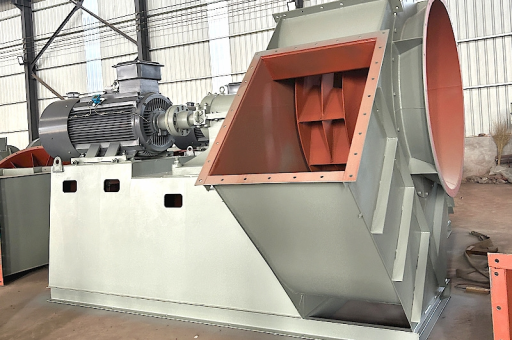
- What is this Fan? (Probable Type)
- Key Specifications Explained
- Typical Industrial Applications
- Key Design Considerations for Long Life & High Pressure
- Summary: Is it Right for You?
- Next Steps (What to look for in a datasheet)
Based on your provided specifications—Stainless Steel, Industrial Air Supply/Flue Gas Fan, 5575–15425 Pa pressure range, and Long Life—you are describing a high-performance, corrosion-resistant fan designed for demanding industrial applications.
Here is a breakdown of what this fan likely is, its key features, and where it would be used.
What is this Fan? (Probable Type)
This is most likely a Centrifugal Fan (also called a Blower) specifically designed for forced draft (air supply) or induced draft (flue gas) systems. Its high pressure range (5.5–15.4 kPa) categorizes it as a Medium to High Pressure fan.
- Stainless Steel Construction: The use of stainless steel (typically 304 or 316/316L) is the key to its "Long Life" promise. It resists corrosion from:
- Acidic flue gas condensate (sulfur, chlorine compounds).
- High humidity and thermal cycling.
- Abrasive particles in the gas stream.
Key Specifications Explained
| Specification | Value | Meaning & Impact |
|---|---|---|
| Pressure | 5575 – 15425 Pa | This is a medium-to-high pressure range. It confirms the fan is not for simple ventilation but for overcoming significant system resistance (e.g., pushing air through a boiler, a long duct system, or a baghouse filter). |
| Material | Stainless Steel | The entire fan (impeller, housing, shaft, inlet cone) is likely made of SS304 or SS316. This is the primary reason for "Long Life" in corrosive environments. |
| Long Life | Durability Feature | Achieved through: Corrosion-resistant materials. Heavy-duty bearings (often rated for 100,000+ hours). Reinforced impeller design to handle high speeds. Vibration-tolerant construction. |
Typical Industrial Applications
Fans in this pressure class are used in systems that need to overcome significant resistance. Common applications include:
-
Boiler Systems (Flue Gas & Combustion Air):
- Induced Draft (ID) Fan: Pulls flue gas through the boiler and stack. The acid-resistant stainless steel is critical here.
- Forced Draft (FD) Fan: Pushes combustion air into the burner.
-
Fume Exhaust & Scrubbing Systems:
Moving corrosive chemical fumes through scrubbers, ductwork, and stacks.
-
Cement & Power Plants:
Handling hot, dusty, and corrosive air from kilns or coal mills.
-
Waste-to-Energy & Incineration:
Managing highly corrosive flue gas from burning mixed waste.
-
Dust Collection (High Pressure):
Serving large baghouse or cartridge collectors.
Key Design Considerations for Long Life & High Pressure
To achieve the stated pressure and long life, the fan must have:
- Backward-Curved (BC) or Radial Blades:
- BC Blades: More efficient, lower noise, non-overloading power curve. Best for clean to moderately dirty air.
- Radial/Radial Tip Blades: Stronger, self-cleaning, better for dirty or sticky flue gas, but slightly less efficient.
- Robust Shaft & Bearings:
- Requires oversized bearings to handle the radial load from high-pressure operation.
- Often includes a bearing temperature sensor and vibration monitoring ports.
- Proper Drive System:
- Direct Drive (Coupling): For precise speed control & high reliability.
- Belt Drive: For flexibility in speed/flow adjustments.
- Casing Design:
- Heavy-gauge steel to withstand the internal pressure without flexing (which causes fatigue failure).
- Often includes a stiffening ring around the scroll.
Summary: Is it Right for You?
YES, this fan is ideal if you need:
- To move hot (up to 350-450°C with shaft cooling) or corrosive gases.
- To overcome high resistance (long ducts, scrubbers, heat exchangers).
- Long-term reliability in a harsh environment (chemical plant, power plant, incinerator).
NO, if you need:
- A low-pressure, low-cost ventilation fan (e.g., for a warehouse).
- A fan for clean, dry air at moderate temperatures (a standard carbon steel fan would be much cheaper and work fine).
Next Steps (What to look for in a datasheet)
- Flow Rate (m³/hr or CFM): The pressure spec is meaningless without the flow rate. Is it 5,000 m³/hr at 15,000 Pa, or 50,000 m³/hr?
- Temperature Rating: Is it continuous 150°C, or 400°C? This affects the material (SS316 better at high temp than SS304) and bearing cooling.
- Motor Power (kW): High pressure requires significant power. The motor must be matched to the fan's required shaft power.
- Drive Type: Direct or Belt? Direct is more reliable; Belt offers more flexibility.
- Specific SS Grade: Confirm if it's SS304 (good) or SS316/L (best for chlorides & harsh acids).
If you have a specific flow rate or application (e.g., "for a 10-ton boiler"), I can help you refine the selection.





